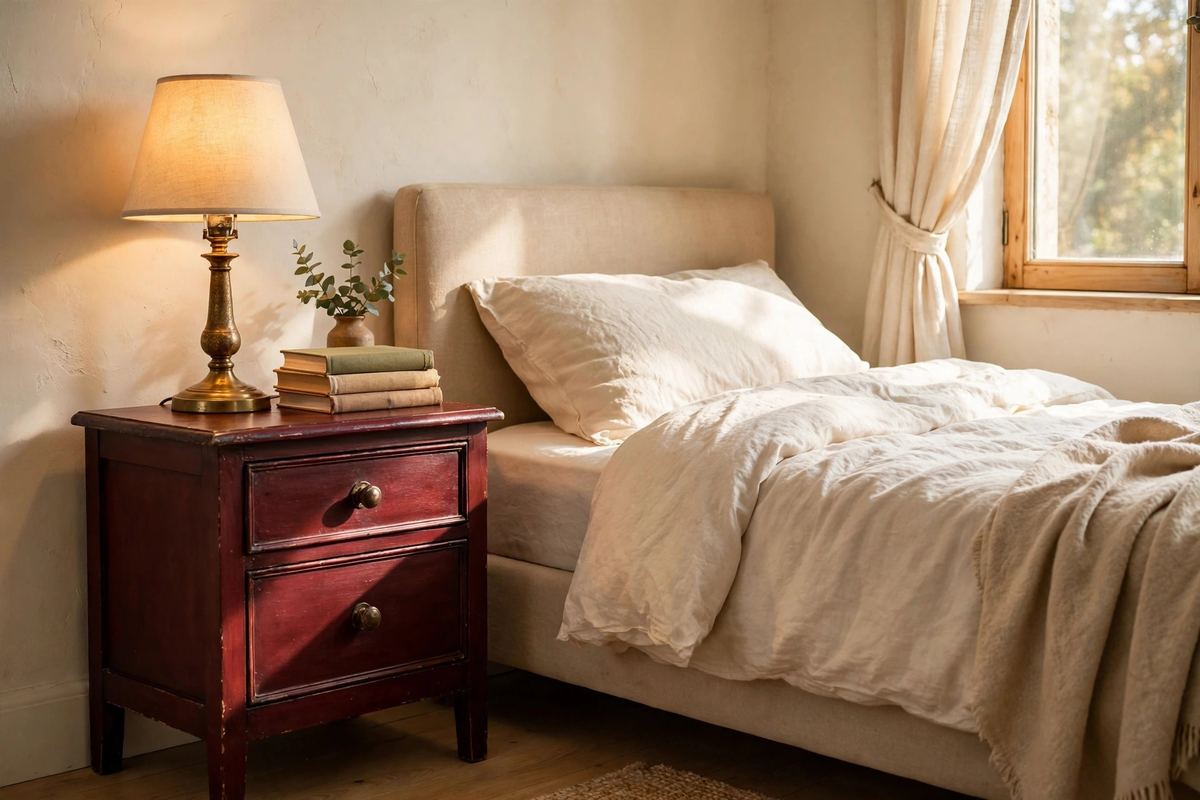
A painted burgundy nightstand is the $20 thrift flip that looks like a $200 boutique find — and it is one of the most-saved DIY projects on our Pinterest this month. Take one dated wooden nightstand, a sample quart of deep burgundy paint, and a pair of brass knobs, and you get a statement piece that anchors a whole bedroom.
It sounds almost too easy, which is why so many painted furniture flips go wrong: skipping the sanding, using the wrong paint, or picking a burgundy that looks muddy in daylight. This guide covers the exact paint colors that read expensive (with real names), the full step-by-step process, the real $20 budget breakdown, and the six mistakes to avoid — everything you need to nail this furniture flip in one weekend.
Why Burgundy Is the Furniture Color of 2026
This is the right color at the right moment. Pinterest's 2026 color forecast reports deep burgundy searches up 230%, Drew and Jonathan named a blushing burgundy their October 2026 Color of the Month, and several 2026 Colors of the Year are burgundy-plum shades. On furniture specifically, the trend is everywhere: thrifted dressers and nightstands painted in deep wine reds dominate the furniture-flip feeds on Pinterest and social media, with painted furniture searches spiking in December as people plan their winter refresh projects.
Burgundy works on furniture because it does two things at once. It reads as neutral from a distance — dark enough to ground a room like navy or charcoal — but up close it glows with warmth that grays and blacks never have. A burgundy nightstand beside a bed gives you that jewel-tone richness without committing to a burgundy sofa or burgundy walls. It is the lowest-risk way to try the season's biggest color, and if you ever tire of it, it is one quart of paint to change again.
What You'll Need (and What It Actually Costs)
The whole project fits in one shopping basket. Here is the real budget:
- The nightstand: $5–$10 at a thrift store or Facebook Marketplace. Look for solid wood — it takes paint better than laminate, which fights adhesion. Drawers should slide smoothly; wobbly legs are fine (tighten them).
- 120-grit sandpaper: $3–$4 for a multi-pack. You only need a scuff-sand, not a full strip.
- Bonding primer: $8–$10 for a quart. This is the non-negotiable step that keeps burgundy paint from chipping.
- Burgundy paint (sample quart): about $12 for a cabinet-grade enamel or high-quality latex in satin. One quart easily covers a nightstand with two coats.
- Aged-brass knobs: $3–$6 each, two needed. New hardware is the single detail that makes a thrift flip look custom — the same aged-brass knob swap we used on our brass kitchen hardware refresh.
- Painter's tape and a water-based topcoat: $4–$6. The topcoat protects the paint on drawer edges and the top surface.
Total: $20–$25 if you thrift the nightstand, under $40 if you already own brushes. Compare that to $150–$250 for a new nightstand in this color — and most new ones do not come in burgundy anyway. If you love thrifting transformations, our budget home makeovers under $100 has nine more projects built on the same logic.
Step-by-Step: How to Paint a Nightstand
Set aside a weekend — most of the project is drying time, so start Saturday morning and you will be styling it Sunday evening:
- Remove the hardware and clean. Take off the old knobs and drawer pulls. Wash the whole piece with warm water and a drop of dish soap to remove years of grime, then let it dry completely.
- Scuff-sand with 120-grit. Sand just enough to dull the glossy old finish — you are not stripping it, just giving the primer something to grip. Wipe the dust off with a damp cloth.
- Tape the details. Run painter's tape around the insides of drawers and any glass or decorative insets you want to keep bare wood.
- Prime with one thin coat of bonding primer. A bonding primer (not regular primer) sticks to varnished wood and keeps the burgundy from chipping later. Let it dry two hours.
- Paint the first thin coat of burgundy. Brush in the direction of the wood grain with a 2-inch angled brush. Thin coats dry harder and smoother than one thick coat — resist the urge to cover in one pass.
- Paint the second coat after 2–3 hours. The second coat is what gives you that even, saturated wine color. Check for drips on drawer edges before they dry.
- Seal with a water-based topcoat. One thin coat of water-based polyurethane in satin protects the finish without yellowing the burgundy. Oil-based topcoats will yellow dark reds over time — avoid them.
- Swap the hardware. Install the aged-brass knobs, reinsert the drawers, and remove the tape. Step back — that $5 nightstand just became a statement piece.
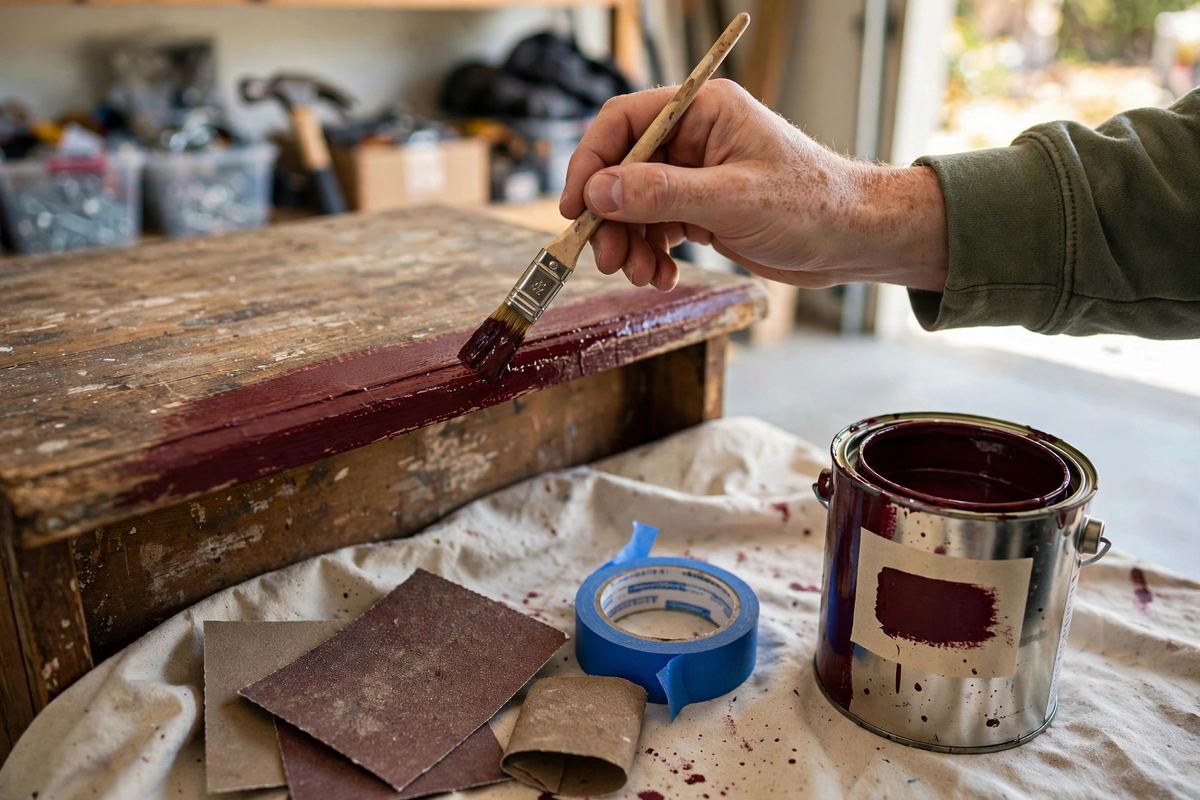
One pro tip for drawers: paint them one at a time and slide each back in only after it is fully dry — 24 hours to be safe. Painted drawer edges that rub before curing is the number-one cause of chipping on furniture flips.
The Exact Burgundy Paint Colors to Ask For
Not all burgundies are equal — the wrong one looks muddy or flat in daylight. Ask for one of these by name:
- Benjamin Moore Dinner Party AF-165 — the most expensive-looking burgundy you can buy. A deep wine red with brown undertones that reads rich in every light. This is the one to ask for if you want the boutique look.
- Sherwin-Williams Burgundy SW 6300 — bolder and more red-leaning, a true wine color with presence. Perfect if your room needs the nightstand to be the star.
- Farrow & Ball Eating Room Red No. 43 — the heritage pick. A faded, European burgundy with depth and history in it. Lovely in bedrooms with cream walls and antique brass.
- Behr Vintage Merlot — the budget-friendly match. If you want to keep the whole flip under $20, a sample quart of this deep merlot gets you 90% of the look.
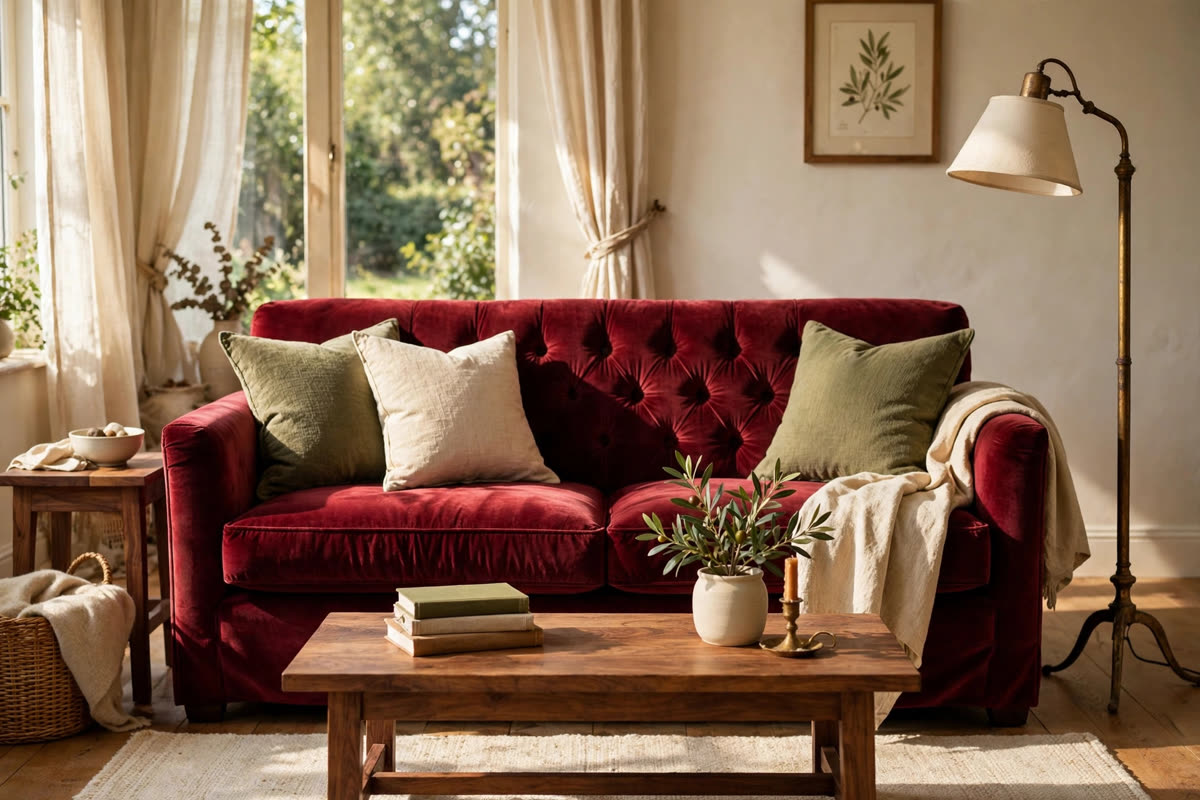
Finish matters as much as color: choose satin, never flat (it scuffs) and never full gloss (it shows every brush mark). Satin reflects just enough light to make the burgundy glow — and it photographs beautifully, which is part of why this flip performs so well on Pinterest. This is the full tutorial behind our most-saved DIY pin this month — and the same jewel-tone logic works on walls, as in our burgundy velvet sofa living room ideas.
Styling Your Finished Nightstand
A freshly painted nightstand looks bare until you style it — and styling is what makes the burgundy feel intentional rather than random. Follow the three-item rule: a lamp, something living, and something flat.
- The lamp: a small brass table lamp with a warm 2700K bulb. Brass and burgundy are the season's power couple — the warm metal makes the wine color glow instead of sitting flat.
- Something living: a small potted plant or a sprig of eucalyptus in a bud vase. Green sits opposite red on the color wheel, so the contrast makes both colors pop.
- Something flat: a stack of two or three books, or a small tray. This grounds the vignette and gives the nightstand a reason to exist beyond storage.
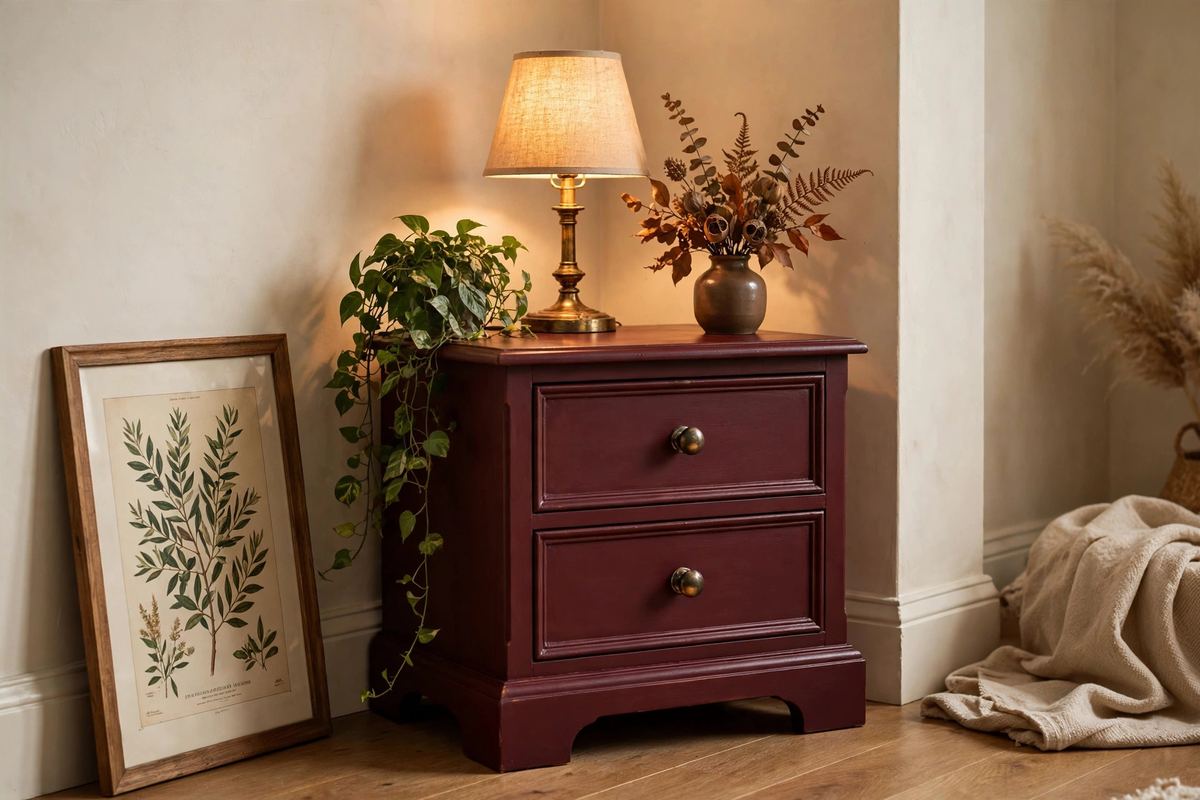
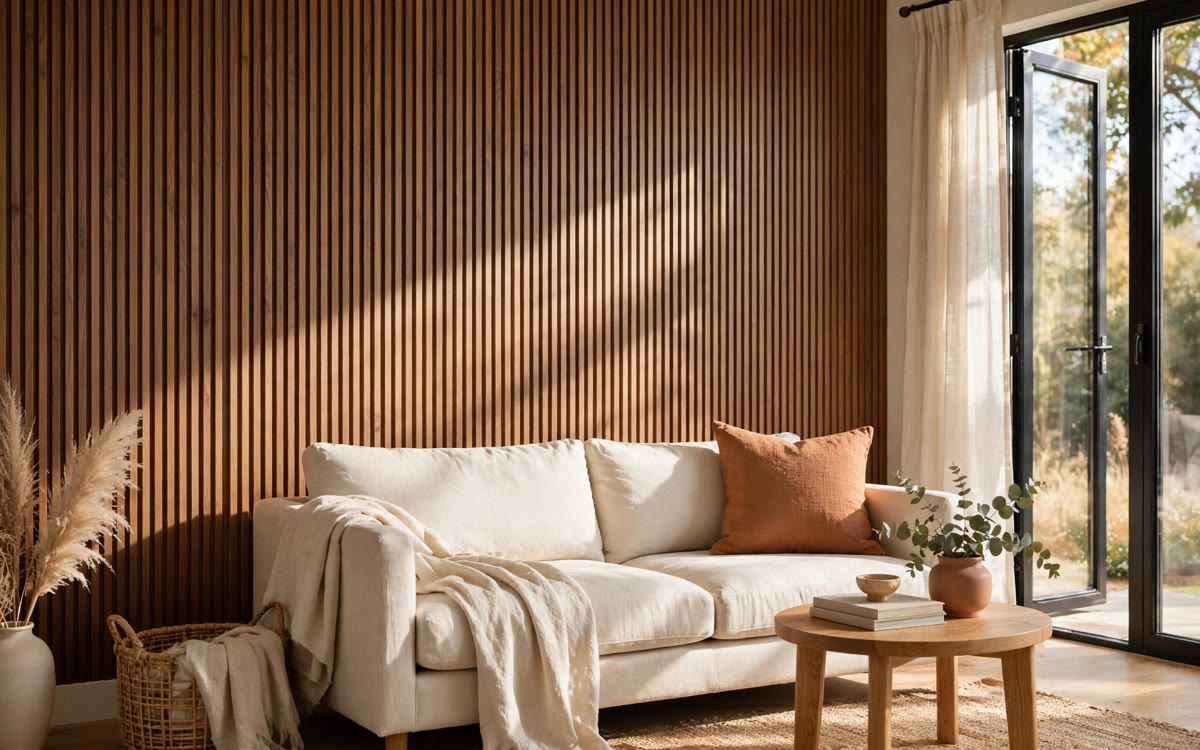
For fall, swap in a small vase of dried foliage or pampas stems — the amber tones echo the burgundy beautifully. If the bedroom walls are cream or warm white, the nightstand becomes the room's anchor instantly. And if you want to carry the wood-and-warmth palette further, a fluted wood panelling accent wall in walnut is the natural next weekend project.
6 Mistakes That Ruin a Painted Furniture Flip
Every failed furniture flip we have seen came down to one of these six:
- Skipping the scuff-sand. Paint over glossy varnish without sanding will peel within months, starting at the drawer edges. Fifteen minutes of sanding prevents it.
- One thick coat instead of two thin ones. Thick coats drip, brush-mark, and cure soft — they chip if you look at them. Thin coats cure hard.
- Using wall paint on furniture. Flat latex wall paint scuffs on the first week of use. Furniture needs enamel or cabinet-grade paint with a satin finish.
- Keeping the old hardware. The original 1990s knobs will fight the new color every time. New knobs are $3–$6 each and do more for the finished look than anything else.
- Sliding drawers back too soon. Paint feels dry in hours but cures in days. Give drawer edges a full 24 hours before reassembling or the paint will stick and tear.
- Oil-based topcoat on dark red. Oil-based polyurethane yellows burgundy into an orange-red over time. Always use a water-based topcoat on dark colors.