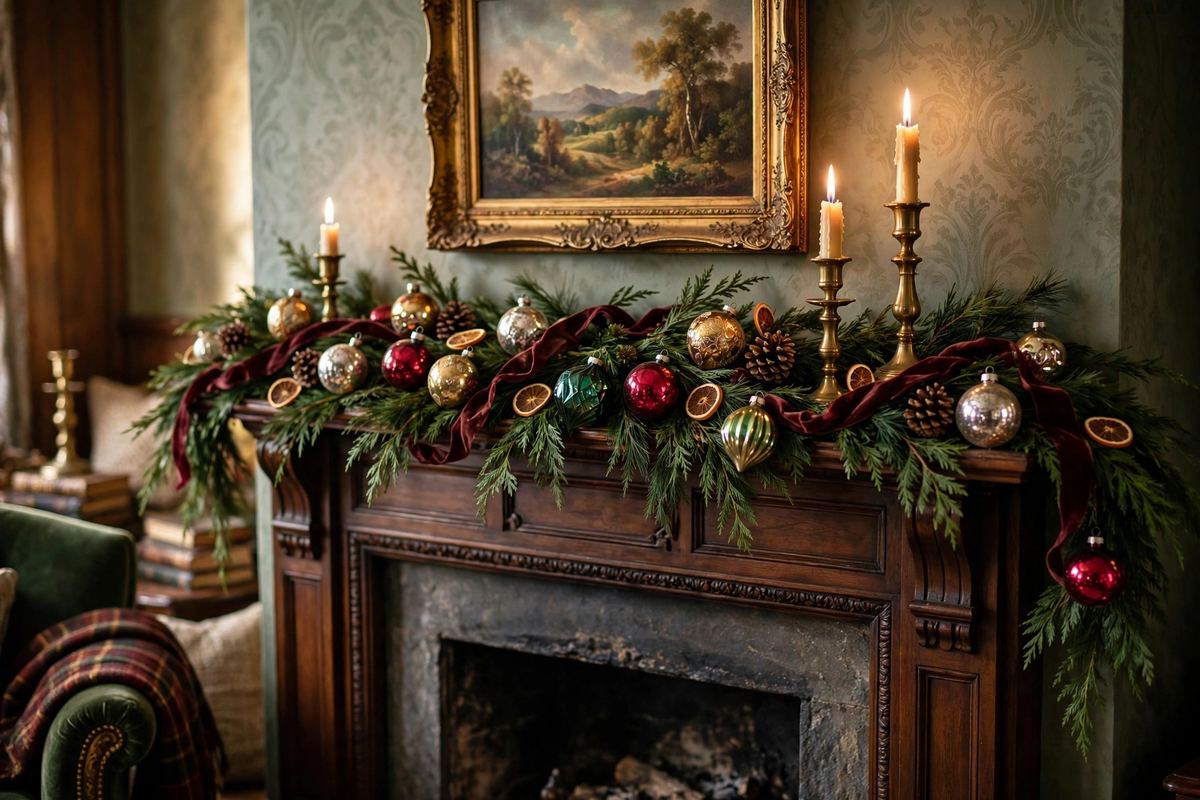
There is a reason the most saved mantel photos this season look like they were taken in 1890. Victorian Christmas mantel decor — deep green garland piled high, vintage glass ornaments, brass candlesticks in a row, and real candlelight flickering over all of it — is the exact opposite of the sparse, beige holiday styling we have had for a decade. It is warm, a little theatrical, and (this is the good part) mostly built from thrift-store finds.
In this guide, you get the full formula: the exact layering order that makes a mantel look antique instead of cluttered, the shopping list with real prices, where to hunt genuine vintage pieces for a few dollars, and the fire-safety rules that let you use real candles with a clear head. Give it one afternoon.
Why Victorian Mantels Are Everywhere This Christmas
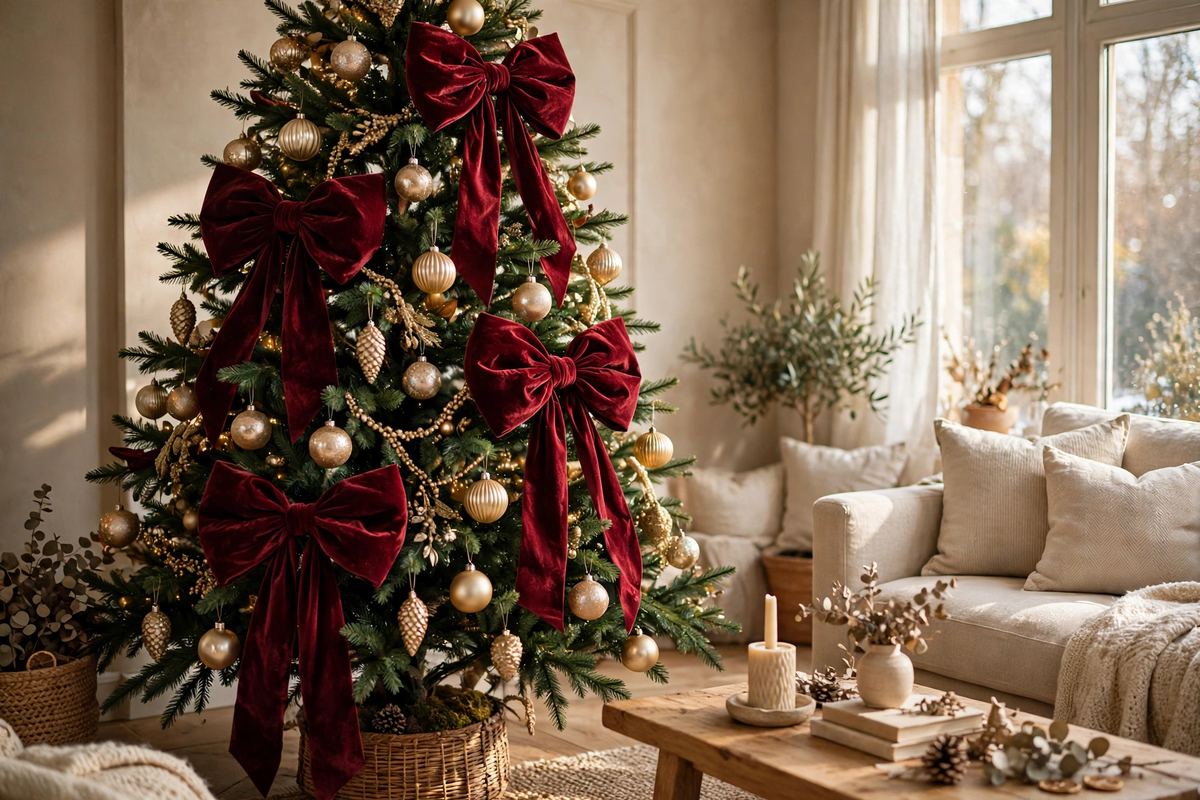
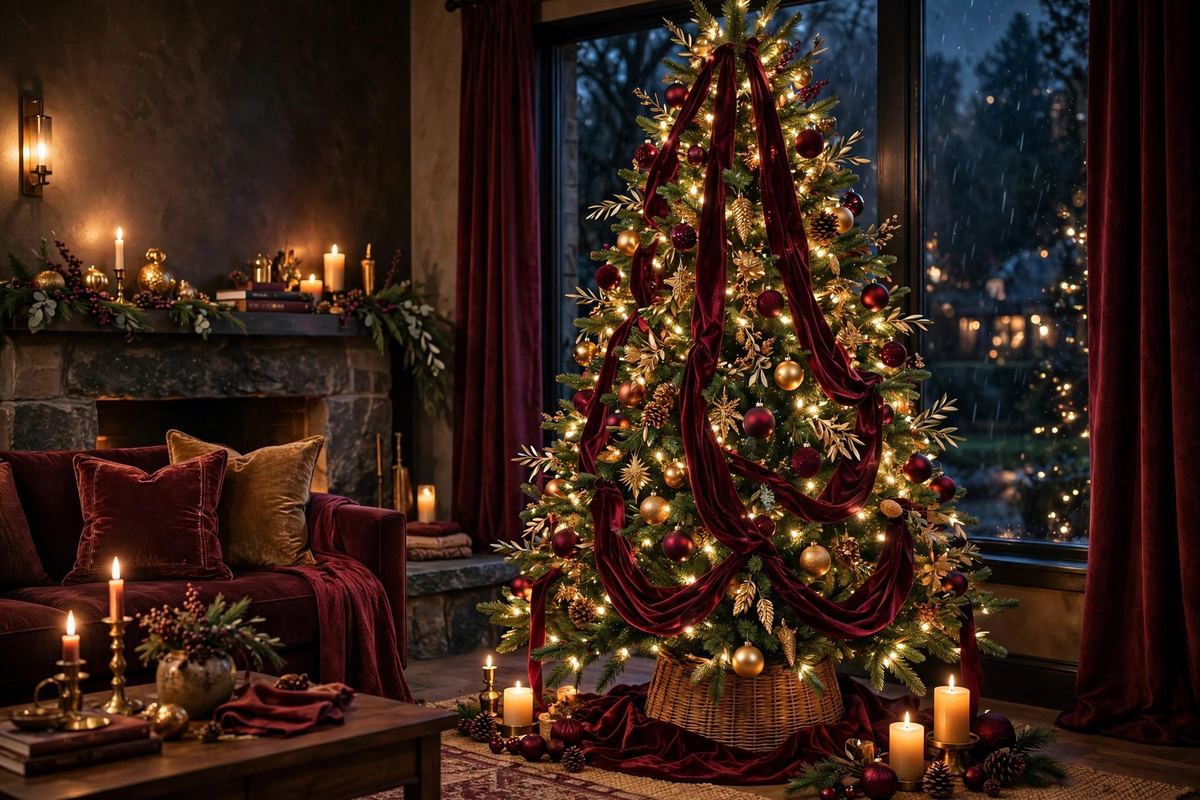
The Victorians basically invented the Christmas we recognize: the decorated tree, the mantel garland, the card on the mantelpiece, candles everywhere. Their rooms were layered, dark-wooded, and unapologetically ornate — and after years of minimalist holiday decor, that richness is exactly what feels fresh again. Deep jewel tones (burgundy, forest green, antique gold) are the same palette driving this season’s trees; our red velvet Christmas decor guide builds a whole room on it, and the mantel is where the palette concentrates best.
There is a practical reason too: a mantel is a small, contained surface. You can go full Victorian — five layers deep — on six feet of shelf without committing your whole house to the theme. It is the highest-drama, lowest-risk holiday project there is.
The Victorian Mantel Formula: What You Need
Everything on this list is either reusable for a decade or costs less than a pizza. For a standard 5 to 6 foot mantel:
- Garland: one 9-foot fresh or faux cedar garland ($15–$25). Fresh smells incredible; a good faux one pays for itself by year two. Too thin is the enemy — if your garland looks sparse, buy two cheap ones and twist them together.
- Vintage-look ornaments: 12 to 18 glass baubles in deep red, antique gold, and emerald ($5–$10 thrifted). Crackle finishes and mercury glass read the most antique.
- Brass candlesticks: 3 or 5, in mixed heights from 4 to 10 inches ($1–$3 each thrifted — never pay retail for brass).
- Taper candles: cream or ivory, 10 to 12 inch ($8 for a box of 12). Cream, not white — white reads modern.
- Wired velvet ribbon: one 10-yard roll, 2.5 inch width, burgundy or deep green (about $10). The wire edge is what lets you shape the loops and the big bow.
- Texture extras: pinecones, dried orange slices, a few walnuts or chestnuts, small brass bells — nearly free, and they fill gaps like a Victorian would (with nature, not plastic).
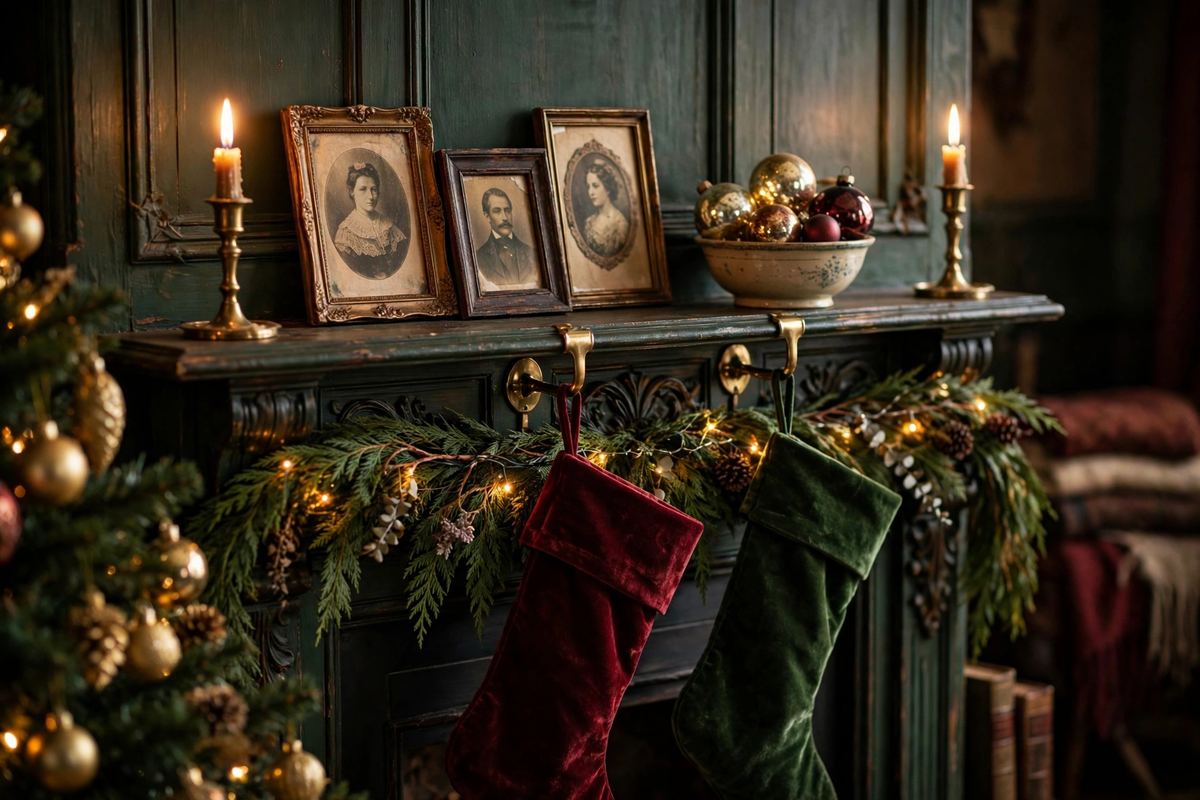
- One classical anchor: a gilded frame, a small landscape print, or a pair of framed portraits above or on the mantel. This is the piece that tips the whole arrangement from “traditional” to “Victorian.”
Full total: roughly $45 to $70, and almost all of it comes back out of the box next year.
Step by Step: Layering a Victorian Mantel
Order is everything. Layer in this sequence and the mantel builds itself; layer out of order and you will be pulling ornaments out of garland tangles for an hour.
Step 1 — The anchor first. Hang or lean your framed piece before anything else. Center it, and let its bottom edge sit 4 to 6 inches above the mantel shelf. Everything else frames it.
Step 2 — Garland, draped heavy. Lay the garland along the shelf with a gentle swag in the middle and let both ends spill 8 to 12 inches over the sides. Anchor it with removable hooks or a discreet nail at each end — a loaded garland is heavier than it looks. Fluff every branch upward and outward; flat garland is sad garland.
Step 3 — Ribbon in waves, then the bow. Weave your wired velvet ribbon through the garland in loose S-waves, tucking it deep every 12 inches so the greenery carries it. Save the last 2 yards for one oversized bow at the center or one corner — the same wired-bow technique from our velvet bow Christmas decor ideas, sized up. Long tails, always: tails are what make it look expensive.
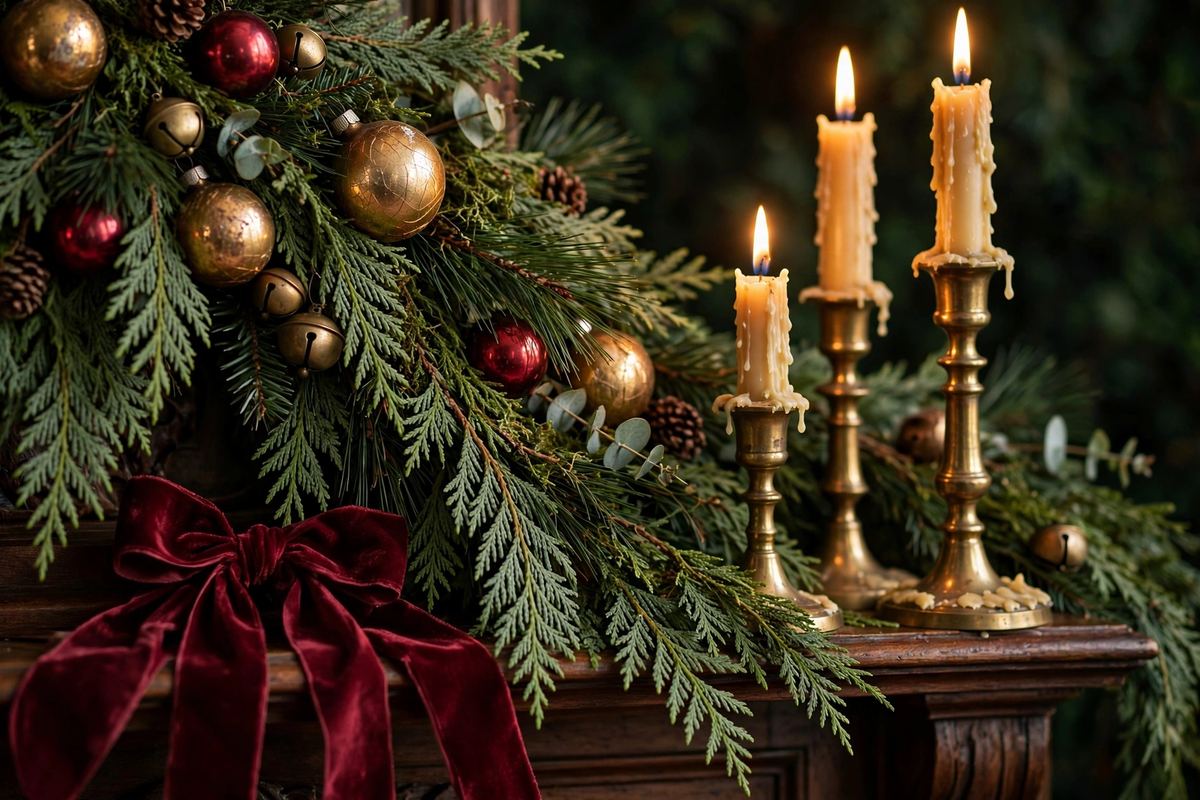
Step 4 — Ornaments tucked, not hung. Here is the Victorian trick nobody tells you: mantel ornaments are not hung, they are nestled. Push each bauble into the garland on a short twist of floral wire or its own cap hook bent around a branch, sitting at different depths — some half-buried, some perched on top. Cluster in threes, leave breathing gaps, and put the prettiest mercury glass where candlelight will hit it.
Step 5 — Candlesticks up top, in odd numbers. Set your brass candlesticks on the shelf behind and above the garland line, grouped 3 on one side and 2 on the other (or a row of 5 across the back). Three heights minimum. They go in last so nothing drips on them while you work, and so their flames clear the greenery (more on that below).
Step 6 — Fill the gaps with nature. Pinecones, dried orange slices, and nuts tucked into every thin spot. Finish with stockings on brass holders at the front edge if you hang them — deep burgundy or forest green velvet keeps the palette. Step back six feet and squint: you want one continuous, glowing band of green, gold, and red, not separate objects.
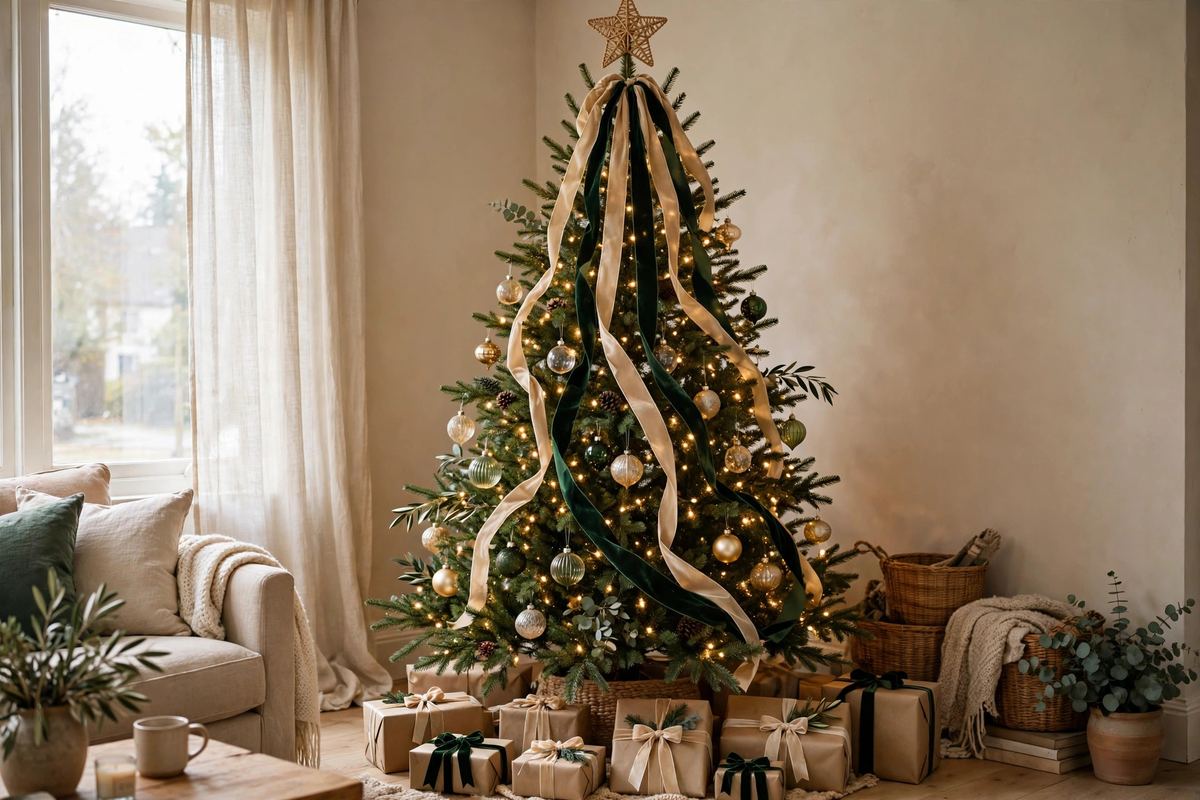
Prefer your ribbon skills on the tree instead? The 7 designer ways to put ribbon on a Christmas tree use the same wired-ribbon foundation.
Candlelight Without the Worry: Safety Rules
Victorians lit their mantels with real flames and, frankly, burned down a fair number of houses doing it. You get the glow without the risk by following four rules:
- 12 inches, minimum. Keep every flame at least 12 inches from greenery, ribbon, stockings, and dried decorations — in every direction. Candlesticks sit on the bare shelf above the garland, never nestled inside it.
- Heavy holders, short wicks. Use solid brass or weighted holders that cannot tip if a stocking gets bumped. Trim wicks to a quarter inch before lighting; long wicks smoke, flare, and drip.
- Lit only while you are in the room. No exceptions, no “just for the party.” Blow them out when you leave — dried cedar by late December is tinder, however fresh it was in November.
- Know when to go LED. Faux garland, small kids, pets, or a mantel you want glowing all evening while you cook? Switch to warm-white flicker LED tapers with real wax bodies. From three feet away, nobody can tell — and you can wrap them lower into the display safely.
One more Victorian-authentic touch that is genuinely safe: hurricane glass chimneys over two of the tapers. The glass shields the flame, throws a beautiful magnified glow, and was standard practice in 1890 for a reason.
Where to Thrift Real Vintage Pieces
The secret of this whole look is that actual antiques are cheaper than new imitations. Brass, glass, and gilt survive decades in thrift stores because nobody throws out good metal. Hunt in this order:
- Brass candlesticks — thrift stores and estate sales. $1 to $3 each, usually tarnished. Tarnish is good: a 10-minute polish (or not — a little patina reads more Victorian) and they are indistinguishable from $40 retail versions.
- Glass ornaments — church rummage sales and charity shops. Sold in mixed bags for $5 to $10 after every holiday. Look for crackle finishes, mercury glass, and deep jewel tones; leave the glitter plastic behind.
- Gilt frames — any thrift store, year-round. Ornate gold frames run $3 to $8. Print a free public-domain landscape or portrait at home, and you have the classical anchor piece for pocket change.
- Velvet anything — the clothing aisle. A $4 burgundy velvet dress becomes ribbon, stockings, and a table runner. Fabric thrifts better than finished decor almost every time.
Timing tip: shop for Christmas decor in January and October. January clearance at thrift stores is when the donated good stuff lands; October is when shelves are full but the December crowds have not started. And if a playful theme is more your household’s speed, our gingerbread Christmas mantel ideas build on the same garland-and-brass base with a cookie-cottage twist.
4 Mistakes That Make It Look Like a Costume
1. Everything at the same height. A flat row of identical candlesticks reads hotel lobby, not Victorian parlor. Mix heights ruthlessly — 4, 7, and 10 inches — and let the garland swag dip in the middle.
2. Shiny new brass and bright white candles. Mirror-polished brass and stark white tapers are modern signals that break the spell. Patina, antique gold, and cream or ivory wax keep it in period.
3. Skipping the anchor piece. Without a frame, mirror, or wreath above it, a loaded mantel looks like a shelf of stuff. One classical piece above gives every layer below it a reason to exist.
4. Symmetry so perfect it looks staged. Victorians clustered and piled; they did not measure. Group in odd numbers, let one end of the garland drape lower than the other, and resist adjusting the bow for the tenth time. Slightly imperfect is the whole point.