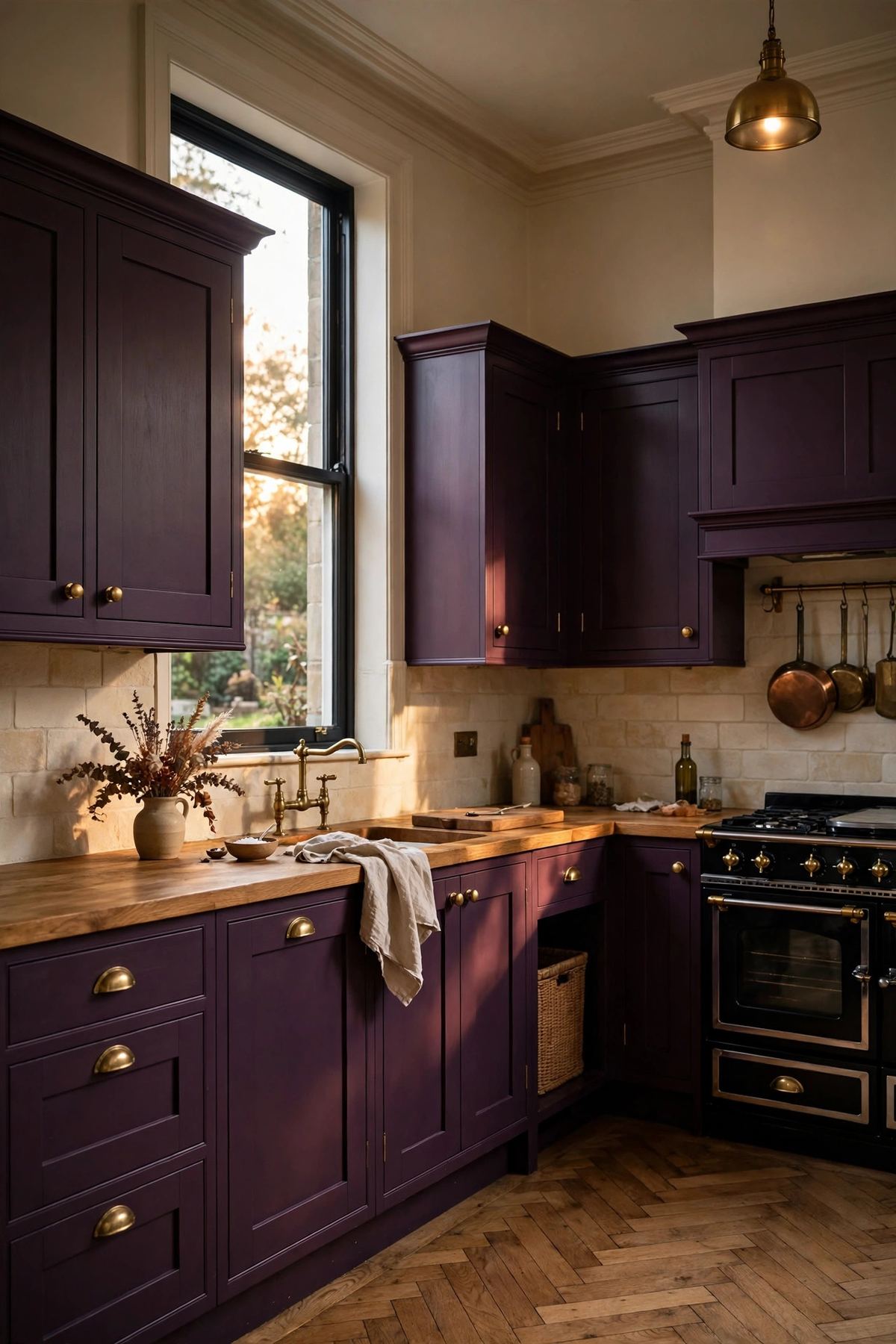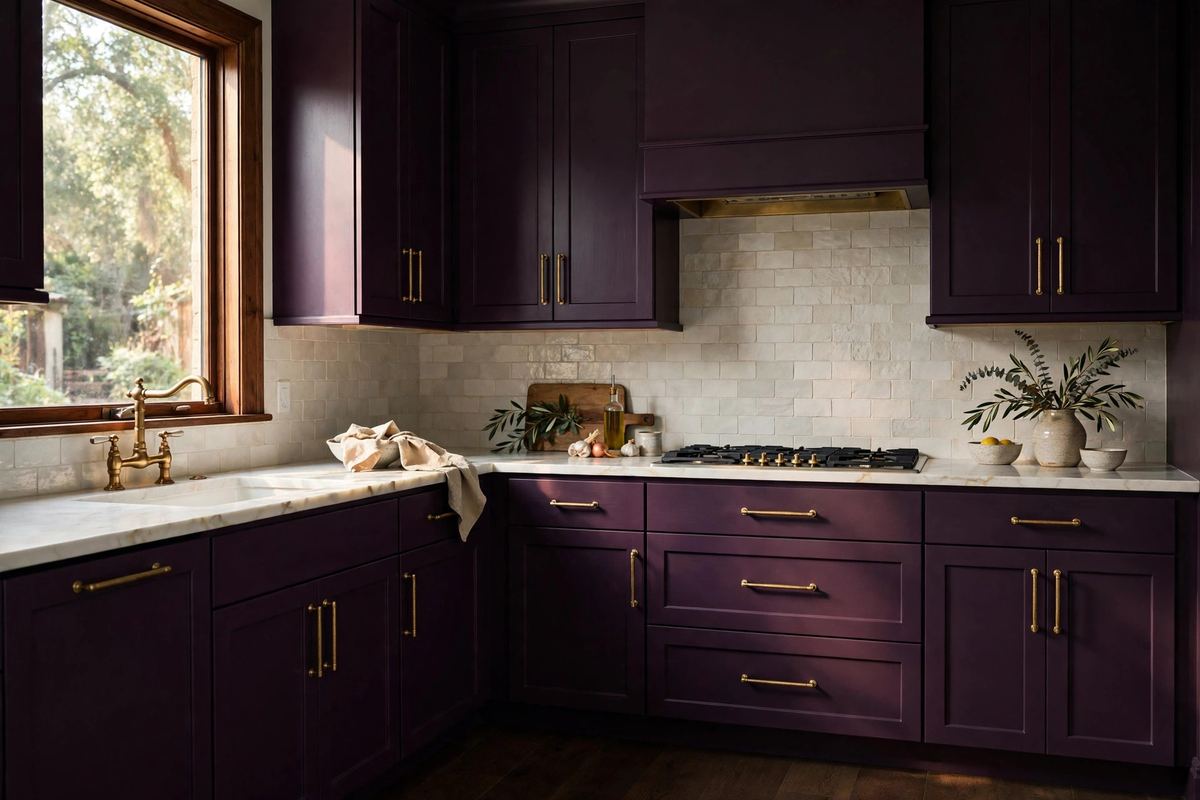
There is a kitchen color taking over 2026 that nobody predicted five years ago: aubergine kitchen cabinets. Deep, wine-dark, and unapologetically purple, aubergine has jumped from "brave choice" to full-blown trend — searches for dark plum shades are up over 200% on Pinterest, and designers keep naming it the bold cabinet color of the year. Interior designer Ben Kempton of 202 Design told Homes and Gardens that aubergine "is emerging as a standout choice" for 2026 kitchens, with a depth that carries "an understated opulence and creates an immediate sense of atmosphere."
In this guide, you will learn the seven best aubergine and deep plum paint shades for cabinets in 2026, how to decide between painting every cabinet or just the island, the exact DIY steps to get a professional finish, and the brass-and-walnut pairings that make this dramatic color feel warm and livable instead of gloomy. Real costs, real paint names, and the mistakes to avoid — all here.
Why Aubergine Wins in 2026
Aubergine wins for a reason that goes beyond trend-chasing: it is the color that lets you have drama and warmth at the same time. Unlike navy, which can feel cold, or black, which can feel flat, deep purple carries a red-brown undertone that reads cozy even in a dark kitchen. It is moody without being depressing, bold without being garish — and it pairs beautifully with the two materials 2026 kitchens love most: warm brass and natural walnut.
The timing is no accident either. After years of white-and-gray kitchens, Pinterest trend data shows a hard swing toward rich, saturated color, with "dark plum" searches climbing 220% and Pinterest naming Plum Noir one of its top colors of 2026. Aubergine also has history on its side — it is a traditional country-house color that was painting grand kitchen furniture long before it was a trend. This one is not a one-season fad; it has the bones of a classic.
The 7 Best Aubergine Paint Colors for 2026
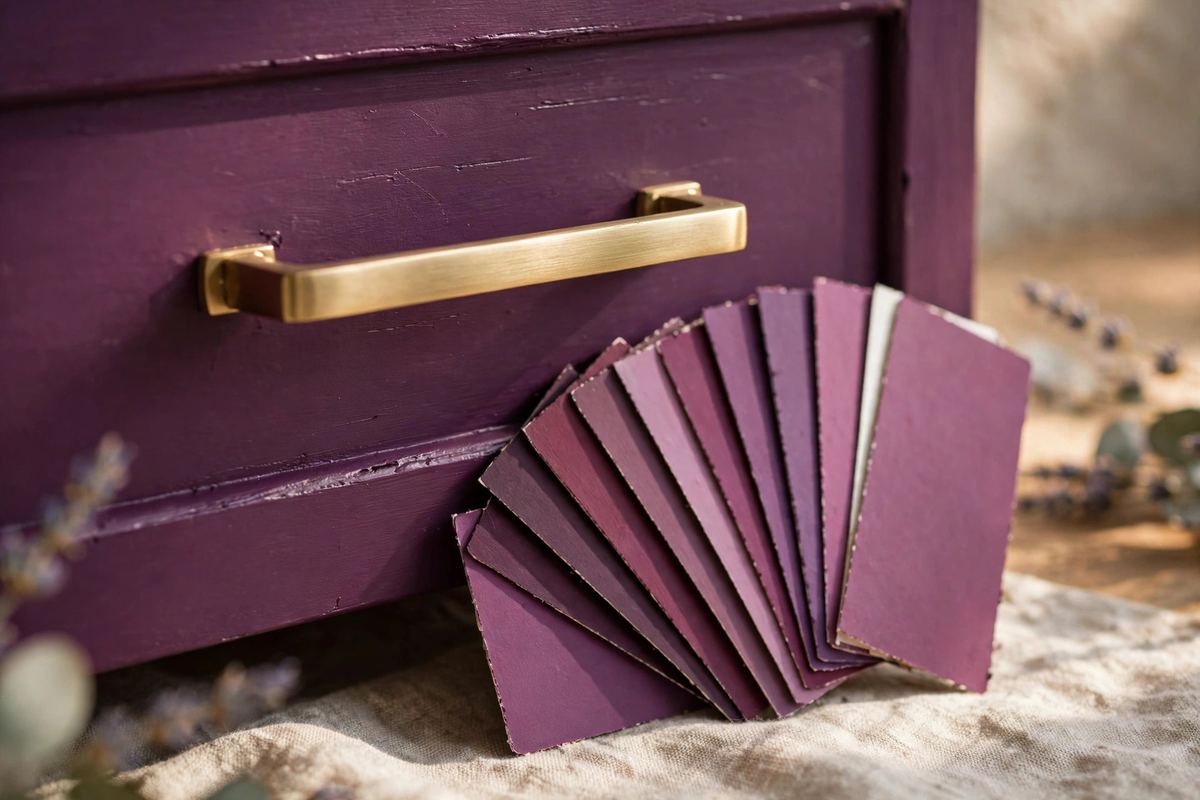
Purple is a tricky family — lean too blue and your kitchen looks like a child's bedroom; lean too red and it reads as cherry wood. These seven aubergine and deep plum shades sit in the sweet spot, and every one works on cabinets:
- Farrow & Ball Brinjal (No. 256). The aubergine purists reach for. A rich, red-undertoned eggplant that looks grand in traditional kitchens and surprisingly modern in flat-panel ones. Works in almost any light.
- Farrow & Ball Pelt (No. 254). A deep purple with burgundy undertones — widely called the most photographed plum shade in 2026 kitchens. Slightly warmer than Brinjal, incredible next to brass.
- Little Greene Adventurer (No. 231). A vibrant warm plum with real depth. Little Greene named an aubergine its 2026 Color of the Year, and this is the shade to look at first if you want that designer seal of approval.
- Benjamin Moore Caponata (HC-119). A deep berry-plum with sophisticated warmth. Best on lower cabinets or an island, where its richness grounds the room without overwhelming it.
- Farrow & Ball Preference Red (No. 297). Despite the name, this reads as a deep wine-plum — regal, dramatic, and stunning on cabinet doors. The one for people who want maximum atmosphere.
- Behr Black Garnet. A nearly-black plum with purple depth hiding inside. The boldest pick on this list — in bright light you see the plum, at night it reads almost black. Budget-friendly and available everywhere.
- Sherwin-Williams Burgundy (SW 6321). A classic wine-red plum that leans slightly red. Easier to live with than the bluer purples and forgiving if your kitchen has mixed warm and cool light.
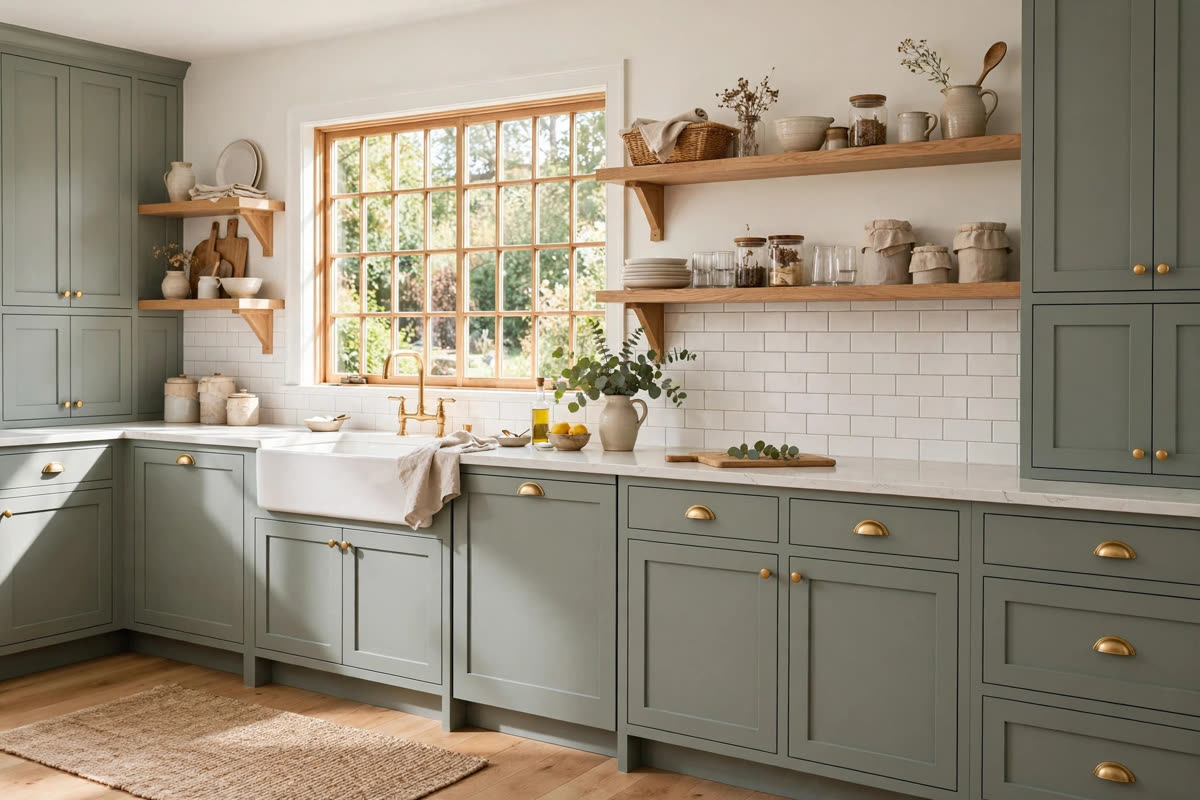
If purple feels like a step too far, the calm alternative is already on this blog — these sage green kitchen cabinets deliver a colored-cabinet look with a much softer landing.
Island-Only vs. Full Cabinets
This is the single most important decision with aubergine, and the answer depends on your kitchen's size and light. In a large kitchen with good natural light, full aubergine cabinets — uppers and lowers — look incredible. The color envelops the room like a wine cellar in the best way, especially in a space that opens to a dining area.
In a small or dark kitchen, go island-only or lowers-only instead. Paint the island and lower cabinets aubergine, and keep the uppers in a creamy white. You get the full drama of the color at eye level and below, where it matters most, while the light upper cabinets keep the room feeling open and airy. It also cuts your paint and labor costs roughly in half — and honestly, the two-tone look is the more current of the two options in 2026.
How to Paint Kitchen Cabinets Aubergine
Dark colors punish sloppy prep more than light ones — every drip and brush mark shows. Follow this sequence and you will get a finish that looks sprayed:
- Remove doors, drawers, and hardware; label everything. Painter's tape on the back of each door with its location saves hours of reassembly guessing.
- Degrease twice. Kitchens coat cabinets in an invisible grease film that dark paint will not bond to. Scrub with a TSP substitute or degreasing cleaner, rinse, and repeat once more.
- Scuff sand with 150-grit paper. You do not need to strip to bare wood — just dull the gloss so the primer can grip. Wipe every surface with a tack cloth.
- Apply one coat of bonding primer. For deep colors, ask the paint store to tint your primer toward the final shade — it means fewer topcoats to full coverage. Shellac-based primer for glossy or stained cabinets.
- Paint two to three thin coats of cabinet enamel. Deep purples often need a third coat for full depth. Use satin acrylic enamel: a foam roller on flat panels and a brush for detailed edges. Thin coats beat thick ones every time.
- Let it cure for 21 to 30 days. Doors feel dry in a day but stay soft for weeks. Reattach hardware carefully and treat the paint gently for the first month — full hardness is what keeps dark cabinets from chipping.
What Pairs With Aubergine Cabinets
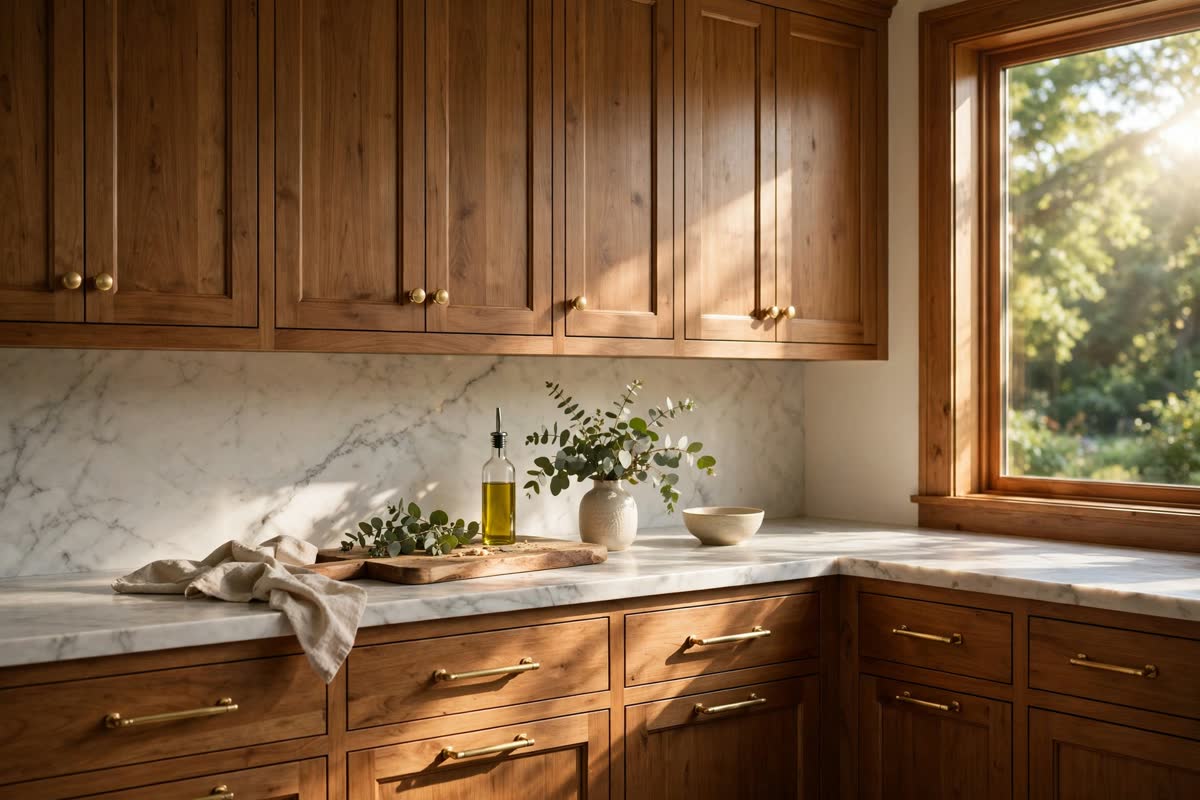
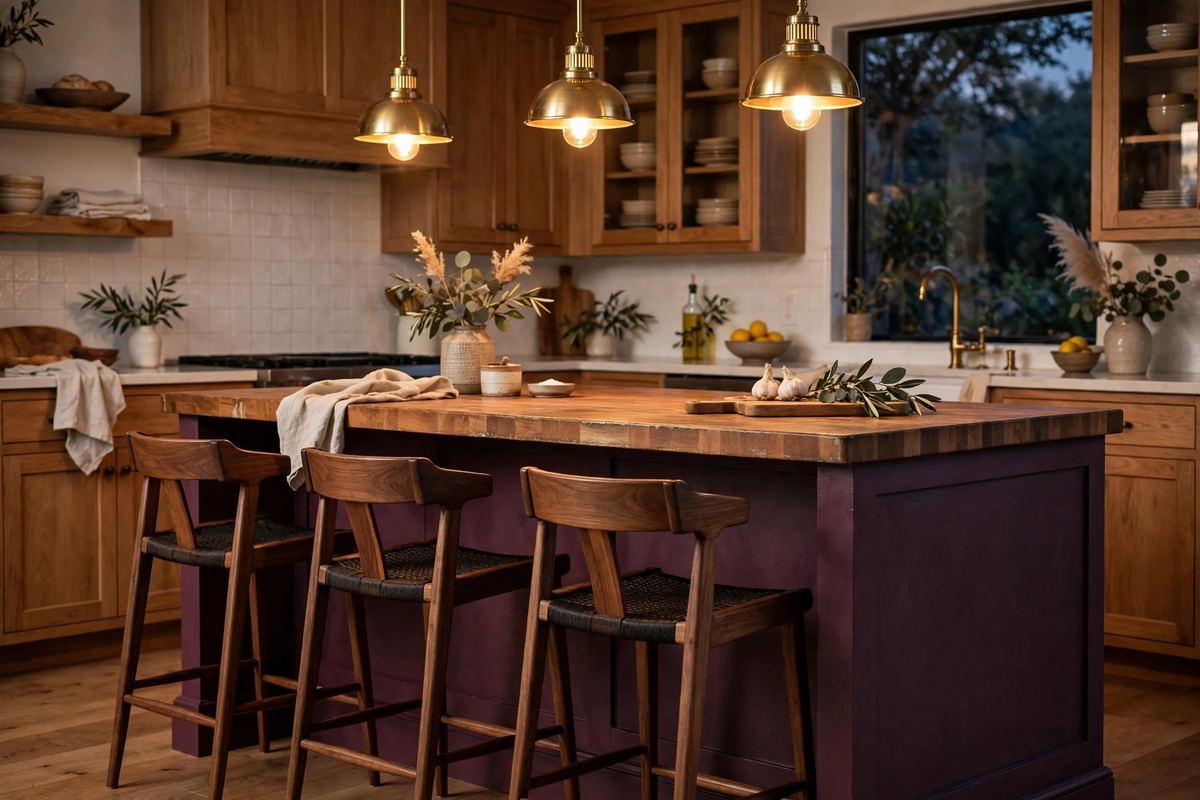
Aubergine is a team player if you choose the right teammates. Designer Ben Kempton points to the winning formula: aubergine "sits beautifully alongside walnut, antique brass, and warm, honed stone finishes." In practice that means walnut open shelves or a walnut butcher-block island top, unlacquered brass pulls and knobs (the warm metallic glow balances the cool purple), and counters in warm-veined marble or honed quartz instead of stark white.
For walls and ceilings, stay warm: creamy whites like Sherwin-Williams Alabaster or Benjamin Moore Swiss Coffee. And if you are rethinking hardware at the same time, this brass kitchen hardware refresh guide covers exact measurements, finishes, and cost-saving tips that apply perfectly here — brass is practically aubergine's best friend. The one pairing to avoid: chrome or brushed nickel hardware, which can make deep purple feel cold and flat. If you love the jewel-tone mood and want it beyond the kitchen, the same warm-brass formula works on a burgundy velvet sofa in the living room.
How Much Does It Cost?
The price depends on whose hands do the work. Painting your own cabinets aubergine typically costs between 150 and 400 dollars for an average kitchen: degreaser, tinted bonding primer, two gallons of cabinet enamel, sandpaper, brushes, rollers, and painter's tape. Because deep purples often need a third coat, budget one extra gallon over what a light color would require.
Hiring a professional changes the math: 3,000 to 7,000 dollars for a typical 10-by-10 kitchen, depending on your region and whether you want a sprayed factory-style finish. Pros spray dark colors for good reason — spraying hides brush marks that deep purples love to reveal. If budget forces a DIY roller job, keep your coats thin and your lighting good while you work, and nobody will know.
Mistakes to Avoid With Purple Cabinets
The three classic aubergine regrets are all preventable. First, choosing from a small paint chip: purple shifts more than almost any color between morning and evening light, so test large samples on actual cabinet doors for two full days before committing. Second, skipping the second degrease — grease is the silent killer of dark paint adhesion, and peeling shows fastest on dark colors. Third, pairing aubergine with cool gray walls or chrome hardware, which drains the warmth that makes the color luxurious.
And one aesthetic warning: do not go full color-drench with aubergine on cabinets, walls, and ceiling in a small kitchen unless you truly want a cave. The color has enough drama on its own — let the cabinets be the star and give everything around them room to breathe.