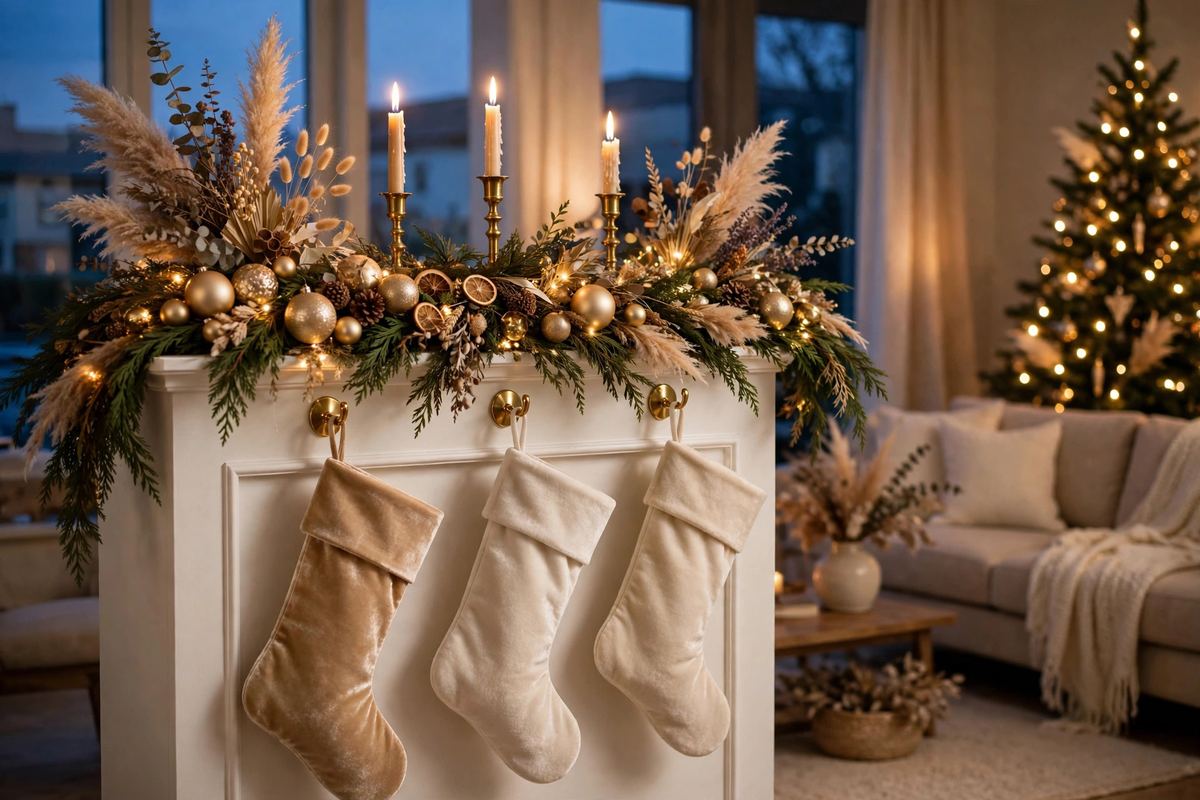
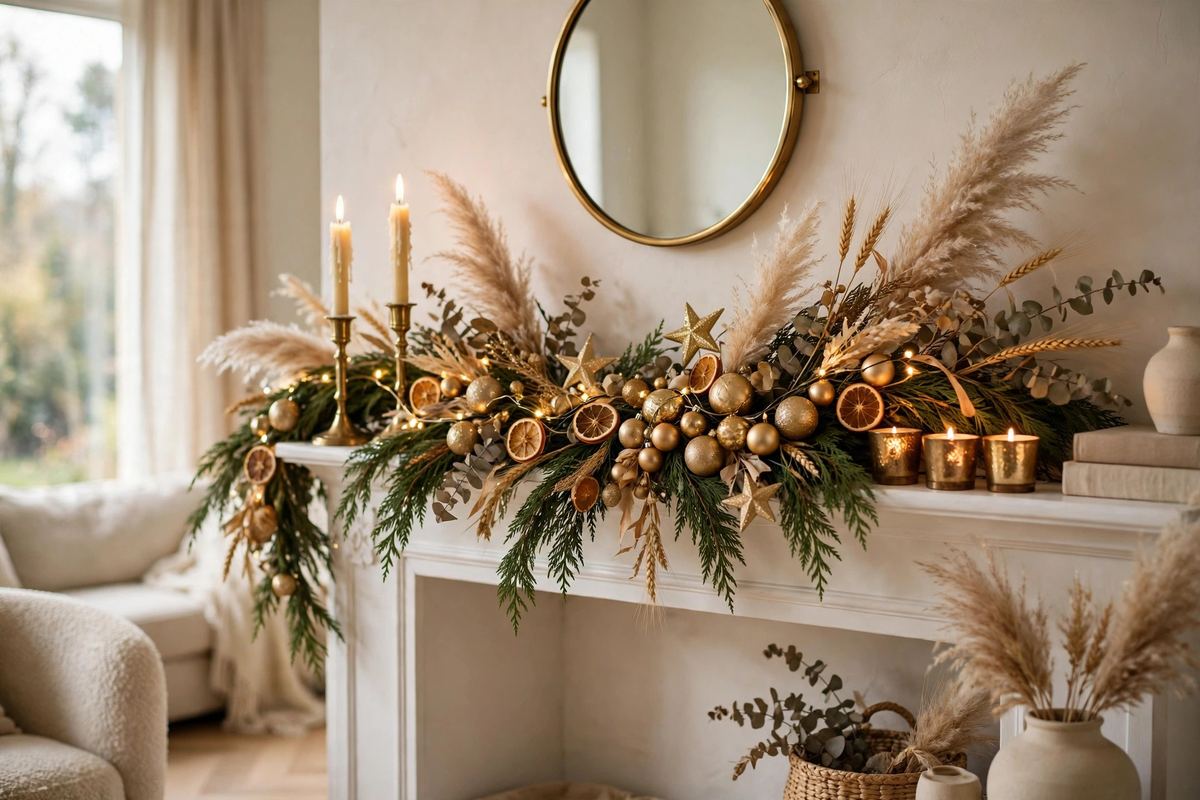
Your mantel is the most photographed spot in your home at Christmas — it is the backdrop for the tree photos, the stocking shots, and the quiet evening pictures nobody plans but everyone keeps. So if you are going to style one thing well this holiday season, make it the mantel. And this year, the look everyone is saving is the champagne gold Christmas mantel: warm metallic tones mixed with dried botanicals, glowing fairy lights, and brass candlelight.
In this guide, I will show you the exact layering formula that makes a champagne gold mantel look designer-level, the dried botanicals that photograph best with it, a real shopping list with honest prices, and the mistakes that make this look fall flat. No vague inspiration — a plan you can follow this weekend.
Why Champagne Gold Wins for Christmas Mantels
Champagne gold sits in the perfect middle ground. Classic yellow gold can read loud and formal; silver can feel icy. Champagne gold has a warm, blush-tinged glow that flatters warm lighting, cream stockings, wood tones, and the deep greens of a Christmas garland all at once. It is the metallic that behaves like a neutral.
That neutrality is exactly why it works on a mantel. A mantel is a long, horizontal surface where lots of small things compete — candles, stockings, garland, ornaments. A champagne gold Christmas mantel keeps all of those pieces visually connected, because the metallic tone repeats across the whole display like a thread. You get richness without noise.
The second reason this look wins right now: it photographs beautifully. Warm metallics catch candlelight and fairy lights in a way that looks expensive on camera, which is why you keep seeing champagne gold mantels saved on Pinterest. If this is your first year trying it, pair it with dried botanicals — pampas grass, dried oranges, eucalyptus — for a softer, more organic take on holiday glam. For a deeper, moodier palette, these red velvet Christmas decor ideas layer beautifully over the same champagne base.
The Champagne Gold Mantel Formula: 5 Layers
Every great champagne gold mantel I have studied follows the same five layers. Learn them once, and you can style this look for years.
Layer 1: The greenery base. Start with a full cedar or pine garland as your backbone — real or high-quality faux. Drape it in a gentle swoop rather than a straight line, letting the ends cascade a few inches off each end of the mantel. For a standard 5-foot mantel, you need about 8 to 9 feet of garland so the swoop has depth.
Layer 2: The metallic. Tuck champagne gold ornaments (shatterproof, in 3 sizes) deep into the garland, not perched on top. About 12 to 18 ornaments for a 5-foot mantel. Add one champagne velvet or wired ribbon threaded loosely through the greenery for shine that moves.
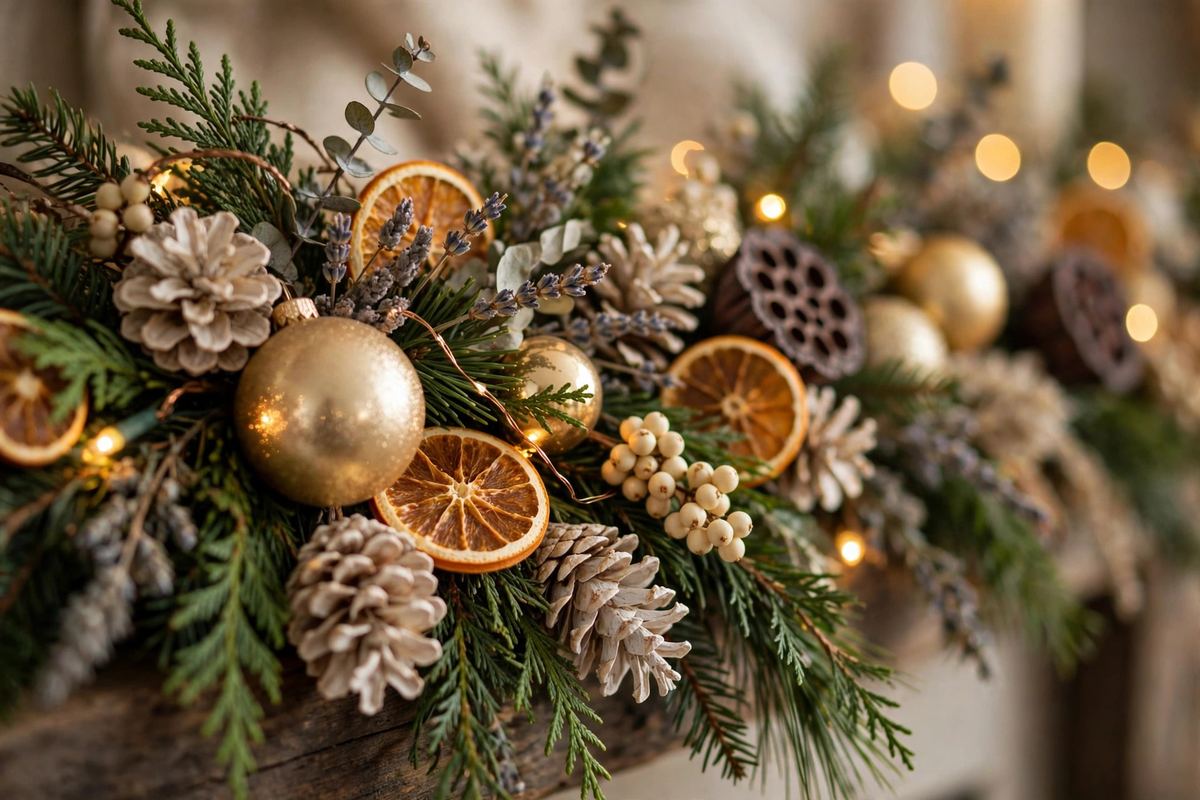
Layer 3: The dried botanicals. This is the signature. Pampas grass plumes, dried orange slices, wheat stems, and bleached pinecones tucked among the gold. Botanicals give champagne gold its warmth and keep the look from tipping into cold glamour.
Layer 4: The light. Weave two strands of warm-white fairy lights (copper wire, battery operated) through the garland so the glow comes from inside the arrangement. Add one lit garland strand behind the candles for evening depth.
Layer 5: The candles. Brass candlesticks in three heights with cream taper candles, grouped asymmetrically on one side. Finish with 2 to 3 small brass votives or tea light holders scattered at the base. Candlelight is what makes champagne gold glow — do not skip it.
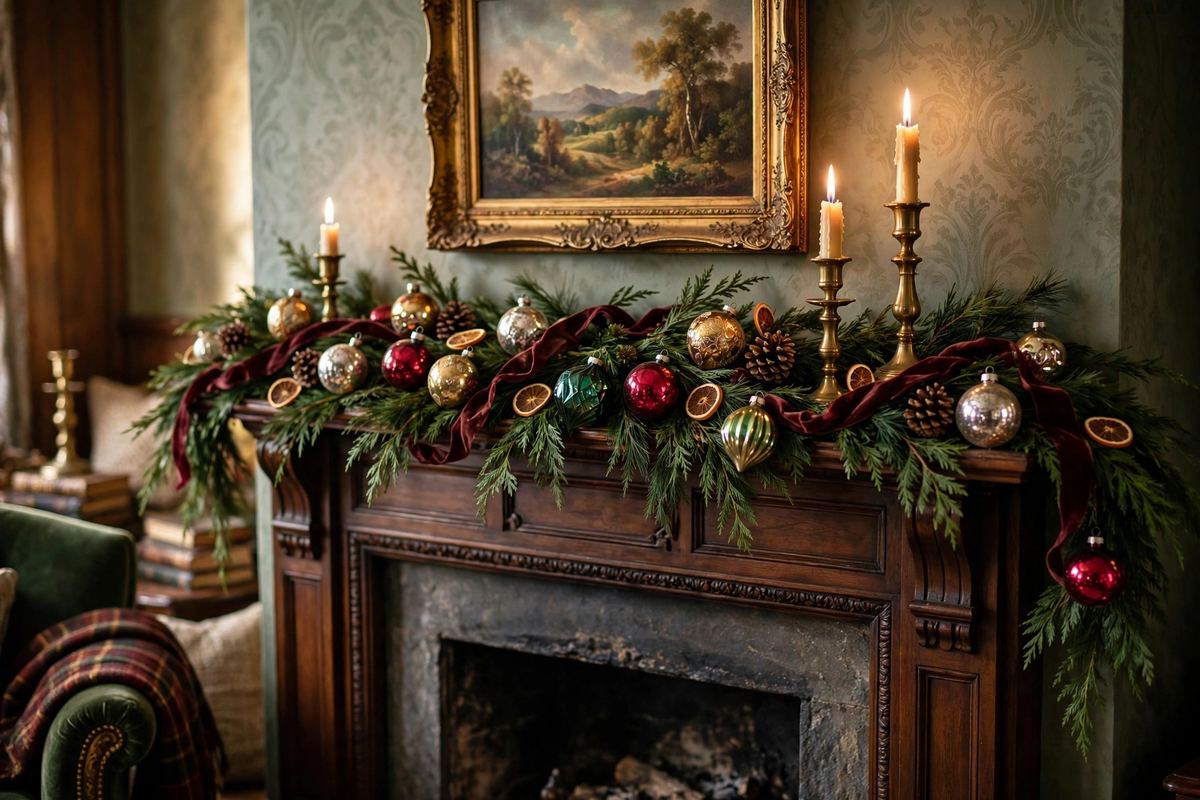
If you love a mantel moment with a more vintage, storybook feel, these Victorian Christmas mantel ideas use the same layering logic with burgundy velvet and antique ornaments.
Step-by-Step Styling Guide
Set aside about 90 minutes. Work from the back of the mantel forward, and from large to small.
Step 1: Clear and clean. Remove everything from the mantel and wipe it down. If you have a mirror or art above, clean it too — the camera will see it.
Step 2: Hang the anchor. Center a round brass mirror or a champagne-toned wreath above the mantel, with the bottom edge 4 to 6 inches above the mantel shelf. This gives the whole display a focal point to sit under.
Step 3: Lay the garland. Drape your garland in a loose swoop, lower in the center, tails over the ends. Pin it with clear command hooks on the back edge so it does not slide forward.
Step 4: Add lights first, decor second. Weave the fairy lights through the garland now, while you can still reach the wire. Turn them on and dim the room — this is your preview. Add the champagne ornaments next, deepest first.
Step 5: Tuck the botanicals. Push pampas and wheat stems into the garland at angles, cluster dried oranges in threes, and scatter bleached pinecones where the garland meets the mantel shelf. Step back every few pieces — botanicals need breathing room to look intentional.
Step 6: Place the candles. Group your brass candlesticks on one side (the left, if you look at photos) at three heights: 12, 10, and 8 inches is a safe trio. Use flameless taper candles if you will light them daily, or real ones you only light while you are in the room.
Step 7: Hang the stockings. Champagne or cream velvet stockings on gold stocking holders, spaced evenly but not rigidly — leave 6 to 8 inches between them. If you do not use the fireplace, weight the holders with small sandbags hidden behind the garland.
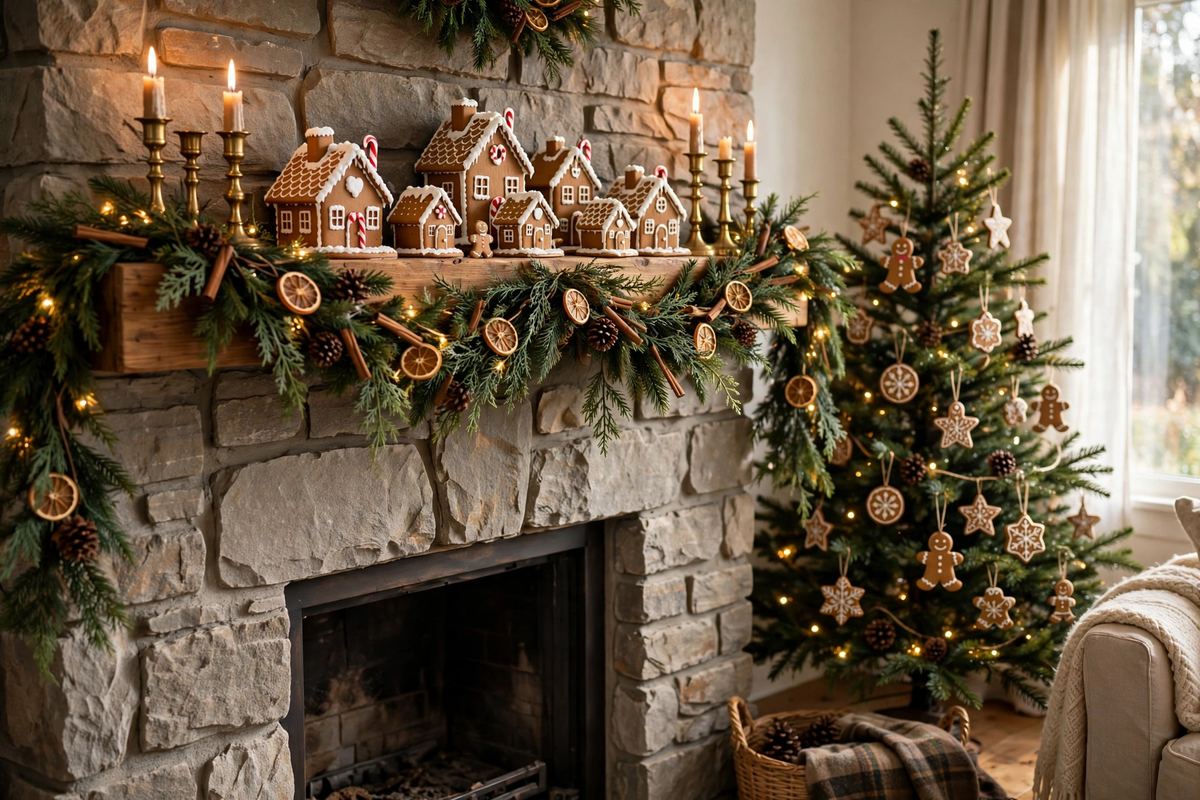
Want a playful, family-friendly mantel instead? The gingerbread Christmas mantel is a cozy alternative kids love.
Dried Botanicals That Look Best With Champagne Gold
Not all dried botanicals work equally well with warm metallics. These are the ones that flatter champagne gold specifically, and why:
Pampas grass — the feathery plumes catch light like champagne itself. Use 3 to 5 stems for a 5-foot mantel; more than that starts to look like a wheat field.
Dried orange slices — the amber translucency glows when fairy lights sit behind them. Make your own (slice thin, bake at 200°F for 2 to 3 hours) or buy a 20-pack for about $8.
Dried eucalyptus — the silvery-green softens the metallic and bridges the garland to the botanicals. Tuck short stems rather than long sprays.
Wheat stems and bunny tails — the fine textures that fill gaps between ornaments. Bunny tails are especially photogenic; a bunch of 20 costs around $6.
Bleached pinecones — lighter than natural pinecones, so they read as part of the champagne palette instead of a dark interruption. Soak and dry regular pinecones, or spray lightly with matte cream paint.
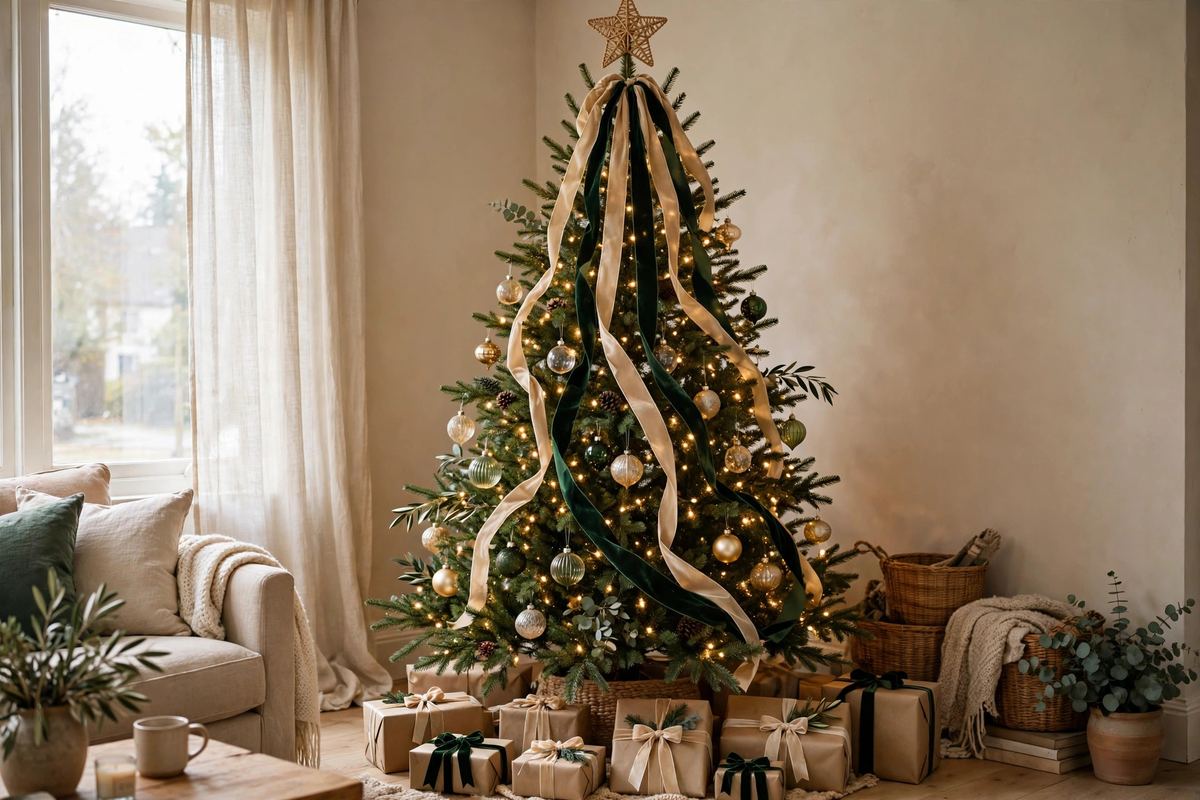
Skip burgundy dried flowers here — they fight the champagne palette. Save them for a deeper look like ribbon on a Christmas tree in burgundy and champagne, where the contrast has room to breathe.
The Shopping List: Real Costs
Here is what a champagne gold Christmas mantel actually costs, assuming you are starting with nothing. Buy the garland first — it is the piece that determines whether the whole thing looks lush or thin.
Garland: a quality faux cedar garland, 9 feet — $35 to $60 (real garland runs $25 to $40 but dries out). This is the one place worth spending.
Ornaments: one set of 24 shatterproof champagne gold ornaments in mixed sizes — $12 to $18.
Fairy lights: two strands of 33-foot copper-wire warm-white fairy lights, battery operated — $9 to $14 each.
Dried botanicals: pampas stems, dried oranges, wheat, and bunny tails — $20 to $35 total, less if you dry your own oranges.
Candles and holders: three brass candlesticks plus tapers, and a set of small brass votives — $25 to $45 (thrift stores are gold mines for brass).
Stockings and ribbon: four velvet stockings and two gold stocking holders — $20 to $35.
Total: roughly $120 to $205 from scratch, or under $60 if you already own candles and stockings. The botanicals and ornaments are reusable for years, so year two costs almost nothing.
For more seasonal styling on the same budget principles, this DIY fall mantel decor uses dried foliage and taper candles in autumn tones.
5 Mistakes That Ruin a Champagne Gold Mantel
1. Mixing cool and warm metals. Silver ornaments next to champagne gold make the champagne look muddy. If you own silver pieces you love, move them to another room for the season.
2. Perching decor on top of the garland. Ornaments and botanicals tucked inside the greenery look woven in; the same pieces sitting on top look like they fell there. Push everything at least an inch into the branches.
3. Forgetting the evening test. A mantel styled only in daylight can look flat at night. Do the final check with the room lights off and only the fairy lights and candles on — that is how it will look for most of December.
4. Real flames near dried botanicals. Dried pampas and wheat are flammable. Keep real taper candles at least 12 inches from any dried material, or use high-quality flameless candles near the botanicals. Never leave real flames unattended.
5. Hiding a beautiful mantel under too much. If your mantel is carved wood or marble, let it show. Leave 20 percent of the shelf visible — breathing room is what makes a styled mantel look confident instead of cluttered.