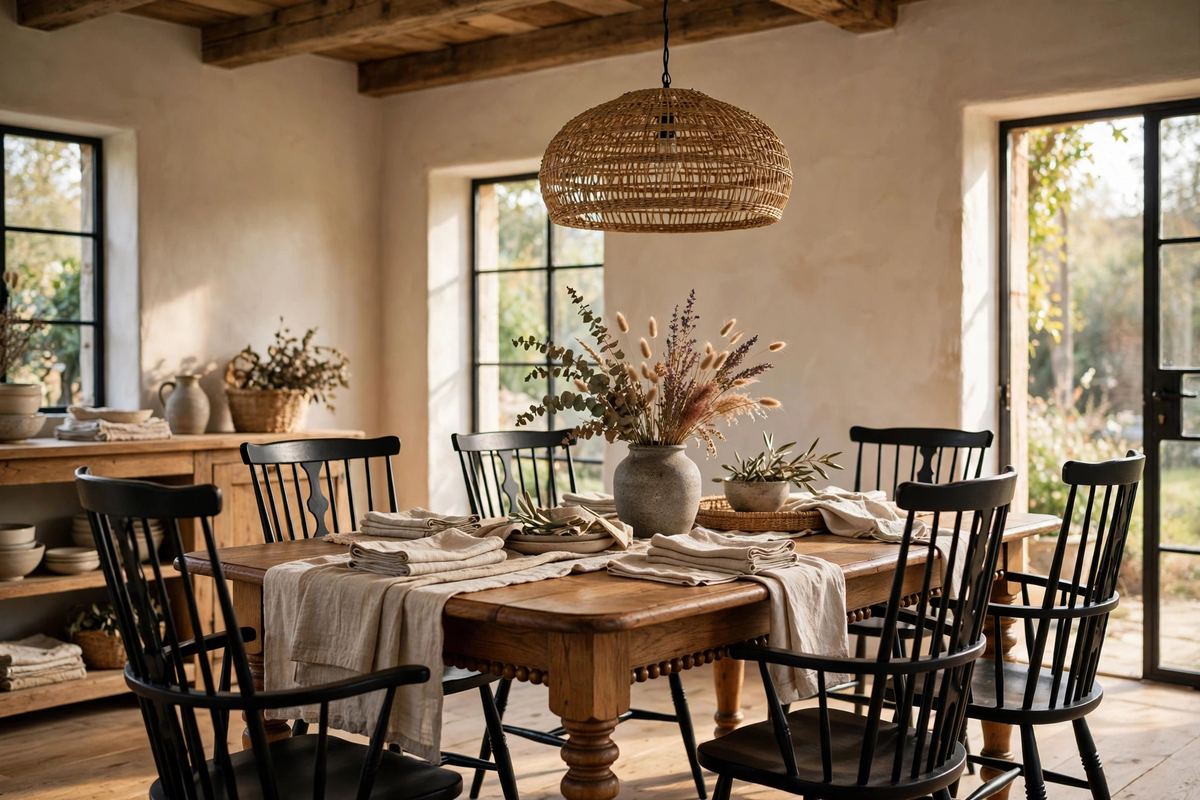
If your dining room still looks like a furniture showroom — matching table, matching chairs, matching sideboard, all bought in one afternoon — you are not alone. Most of us furnished that room fast and then never looked back. Modern organic style is the fix designers keep prescribing in 2026: warm wood instead of cold finishes, pieces that look collected instead of purchased, and shapes that feel like they grew rather than were manufactured.
These modern organic dining room ideas are not a full renovation. Most cost under 300 dollars and take a single weekend. You will get the exact formula: the table shape that anchors the room, the pendant that does the heavy lifting, the three materials that carry the whole look, and the styling rules that keep it from sliding into clutter.
What Modern Organic Style Actually Means
Modern organic sits between two styles you already know. It borrows the clean lines and breathing room of Scandinavian minimalism, but swaps the cool palettes for warm ones — oak instead of birch, clay instead of white ceramic, olive branches instead of stark bare branches. It also borrows from farmhouse, but drops the word signs, the distressing, and the ten-piece matching sets.
The style has staying power because it is rooted in materials, not trends. Warm woods, hand-thrown ceramics, natural stone, and linen do not go out of fashion the way a specific chair silhouette does. Think of it as the dining room equivalent of a good linen shirt: simple, natural, and impossible to date.
If you love the rustic end of this spectrum, these farmhouse dining room ideas lean warmer and cozier, while this guide stays on the clean, modern side.
Start With the Table: Round, Warm Wood, Solid
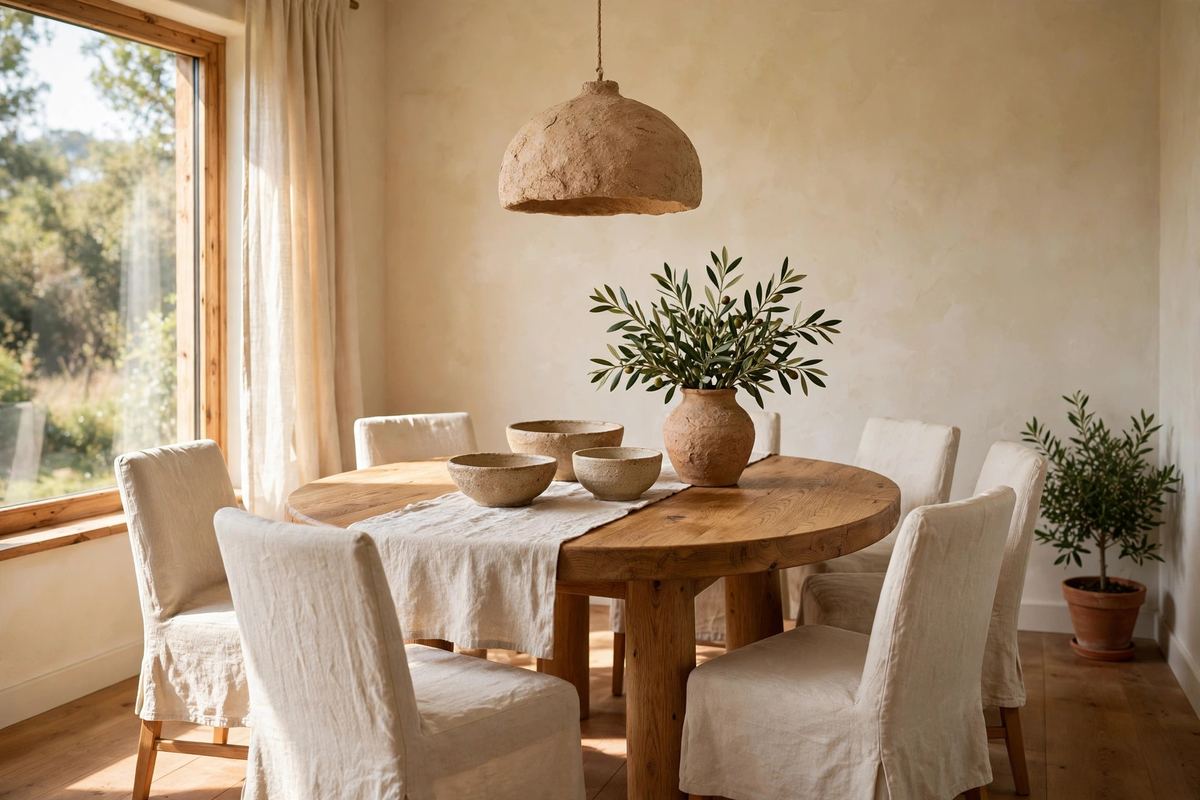
The single biggest move is the table shape. Designers have been moving toward round and oval dining tables for years, and 2026 is the tipping point: curves encourage conversation, soften the room, and work better in open floor plans than sharp rectangles. A 48 to 54 inch round table comfortably seats four to five and fits rooms where a 72 inch rectangle would dominate.
Material matters more than the shape. Look for warm oak, walnut, or ash with a hand-applied oil or wax finish — the grain should be visible and touchable, not sealed under a glassy gloss. Cold finishes like pale gray stain or high-gloss lacquer will fight everything else in this guide.
On a budget? Do not buy a new table. Sand a solid wood table you already own back to raw wood (120-grit, then 220-grit) and rub in two coats of hardwax oil — about 40 dollars in materials — and you have the centerpiece of the look for the price of a takeout dinner.
Chairs That Look Collected, Not Matched
The fastest way to kill a modern organic dining room is a six-piece matching chair set. The style lives on chairs that look gathered over time: cream or ivory linen slipcovered chairs for the sides, two upholstered host chairs in a warm boucle or textured weave at the ends, and maybe one vintage wood chair you actually found somewhere. Mismatched chairs that share a fabric color or a finish read as curated, not budget-driven.
Practically speaking, performance linen slipcovers are the workhorse of this look — they run 30 to 40 dollars per chair, survive spaghetti night, and soften with every wash. Avoid dining chairs in cool gray velvet or chrome-and-leather; they belong to a different decade and a different style.
The Pendant: One Sculptural Light, Not a Chandelier
If the table is the anchor, the pendant is the statement. One sculptural light — a handmade clay dome, a woven rattan drum, or a paper lantern — does more for this style than any other single purchase. Size it at roughly half the table width: 24 to 30 inches of pendant for a 48 inch round table. Hang it 30 to 36 inches above the tabletop so it lights faces, not foreheads, and put it on a dimmer.
Budget options are genuinely good here. A woven rattan pendant runs 60 to 120 dollars, and the texture it throws on the walls at night is half the charm. Avoid the tiny two-pendant row over a big table — the modern organic look wants one confident piece, centered.
For aged metal details elsewhere in the room, these aged brass hardware ideas show how warm metals play with natural wood.
Styling the Table: Stoneware, Linen, and Greenery
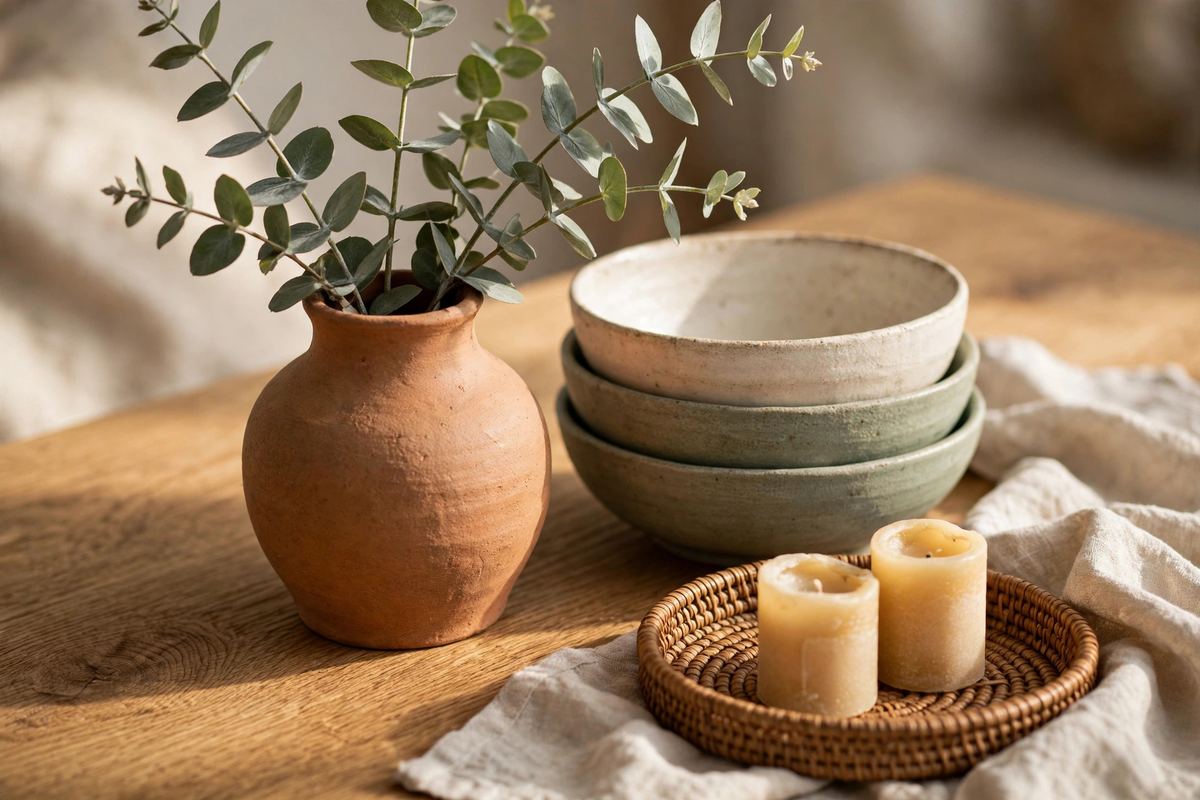
A modern organic table is styled for everyday life, not just dinner parties. The formula is three layers: something textural (a washed linen runner, 25 to 35 dollars), something handmade (a stack of hand-thrown stoneware bowls or plates in cream and sage), and something living (a clay vase of olive branches or eucalyptus). That is the whole recipe — three groups, odd numbers, breathing room between them.
The most common mistake is over-styling: charger plates, napkin rings, and a tall centerpiece that blocks conversation. This style wants a low, touchable table. If you cannot slide a casserole dish between the objects without rearranging, there is too much on it.
Walls, Corners, and the Sideboard Moment
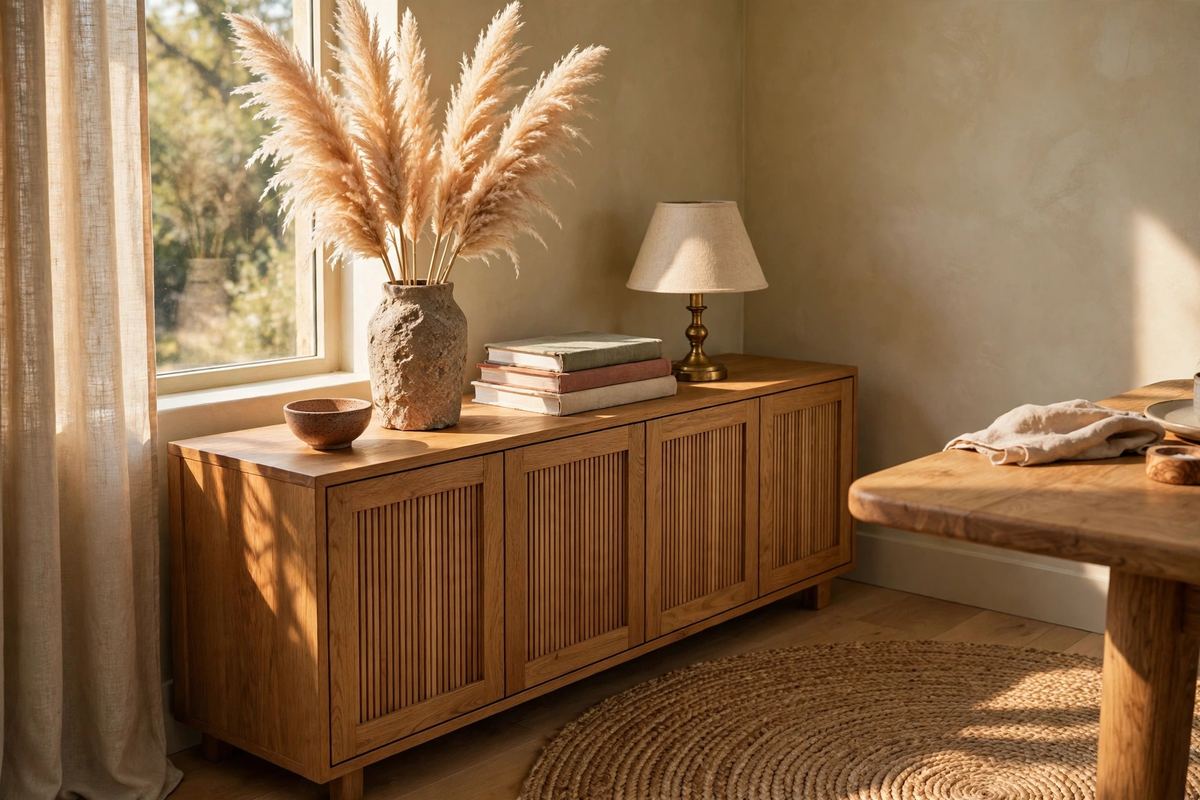
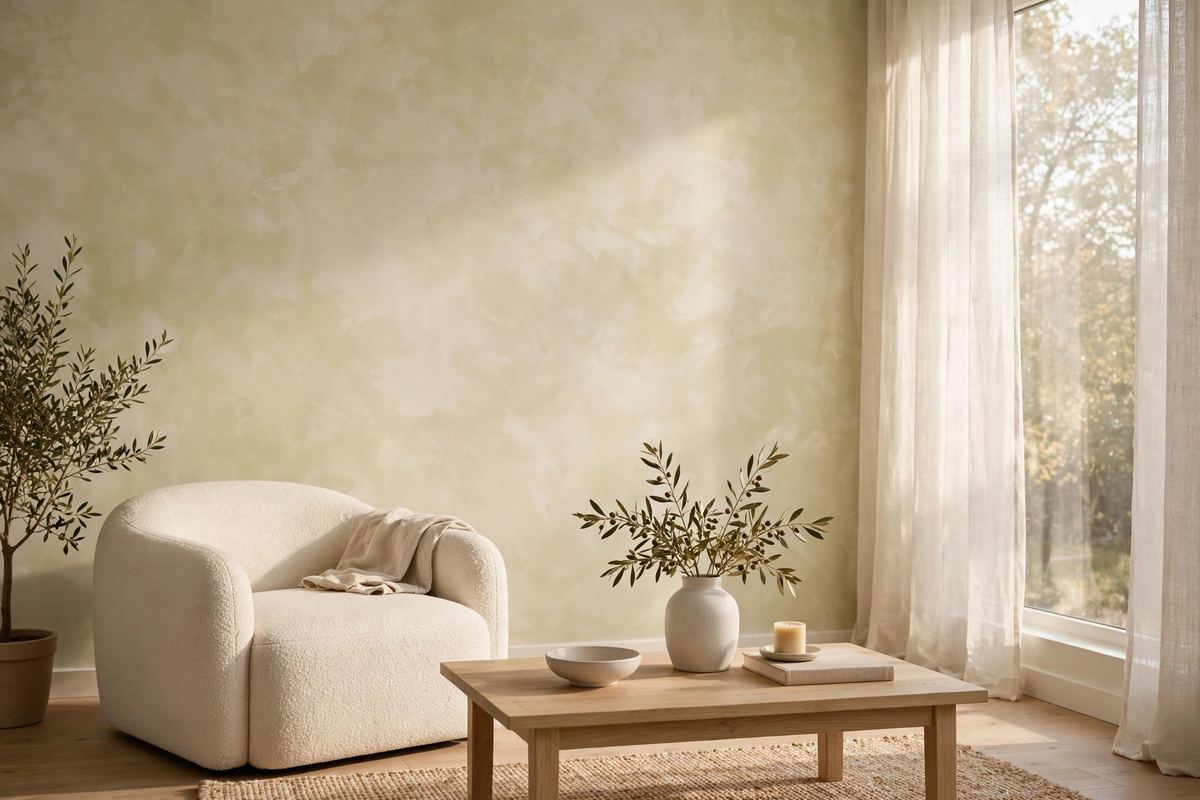
Walls should go quiet so the materials can talk. Warm plaster or limewash in an off-white with a yellow or peach undertone is the ideal backdrop — it gives the room depth without competing with the wood. If your walls are currently cool gray, repainting is the highest-impact move on this list; nothing reads warm wood colder than a blue-gray wall.
The sideboard corner gets the reliable designer formula: anchor it with something vertical (a leaning piece of art or a tall dried arrangement in a stone vase), add something horizontal (a stack of art books or a low tray), and include one living element (a real plant or fresh stems). A round jute or wool rug underfoot ties the corner to the table zone.
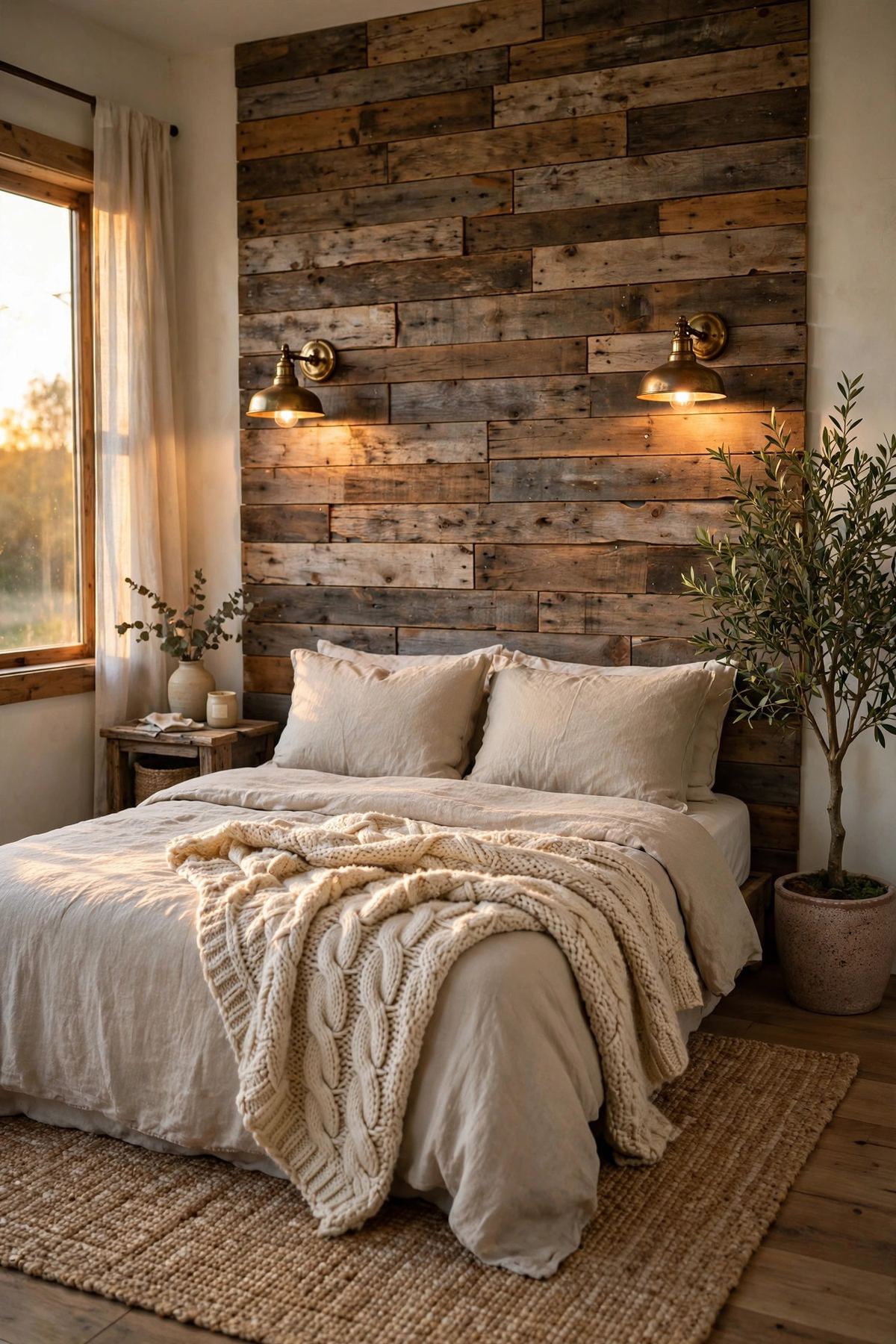
Try this DIY limewash wall technique for soft plaster-look walls that suit the style perfectly, or add texture behind the table with a reclaimed wood dining wall in honey-brown tones.
Mistakes That Kill the Look
Five traps, all avoidable: cool gray paint or flooring next to warm wood (the single biggest offender); a fully matching furniture set that reads like a showroom; fake plants in plastic pots — a real olive tree cutting costs less than a convincing fake and needs almost no care; recessed ceiling lights as the only light source, which flattens the warm textures; and the cluttered tabletop, where styling tips into a gift shop.
The rule of thumb: if a piece looks manufactured, swap it for something that looks grown, thrown, woven, or carved. Materials with fingerprints beat materials with barcodes, every time.
Follow The Decor Diary on Pinterest
What It Actually Costs
Here is an honest refresh budget, assuming you keep your table: hardwax oil and sandpaper 40 dollars; linen slipcovers for four chairs 140 dollars; a rattan pendant 80 dollars; a set of six stoneware bowls 45 dollars; a linen runner 30 dollars; a real plant in a terracotta pot 25 dollars. Total: about 360 dollars, and you can stage it over two weekends — lighting and textiles first (biggest visual change), table refinishing second.
Buying new instead? A solid oak round table runs 600 to 1,200 dollars, linen chairs 150 to 250 each, and a handmade clay pendant 200 to 400. The look scales to any budget because the materials do the work, not the labels.