Walk into a Japandi living room and your shoulders drop about an inch. That is the whole point. Japandi living room ideas are having a moment right now — searches for the style are up 50% in just the last three months — because it answers the exact feeling most homes have too much of: clutter, visual noise, and furniture fighting for attention.
Japandi is Japanese minimalism married to Scandinavian warmth. From Japan it takes restraint, natural materials, and wabi-sabi (the beauty of imperfection); from Scandinavia it takes warmth, comfort, and light. The result is a living room that feels edited rather than empty. Below are the 12 ideas that matter most, with the exact colors, measurements, and rules that separate a real Japandi room from a beige room with a plant in it.
What Japandi Actually Is (and Why It Is Surging)
Japandi is not a new style. It is a 150-year-old design conversation finally hitting the mainstream. Danish designers traveled to Japan in the late 1800s and both cultures discovered they loved the same things: honest materials, craftsmanship over decoration, and rooms that serve life instead of showing off.
What is new is the 2026 version. Early Japandi leaned stark — white, concrete gray, pale wood — and could feel distant. The 2026 update runs warmer: oat and toasted-almond base tones, moss green and terracotta as accents, softer curved shapes, and rougher textures like raw timber and heavy shearling. It is minimalism with a pulse. The surging interest makes sense: after years of fast trends and constant digital stimulation, a room designed to lower your heart rate sells itself.
The Japandi Color Formula
Get the palette wrong and no amount of furniture will save the room. Japandi walls in 2026 are warm, not white. The base should be a warm off-white with a yellow or beige undertone — think oat, sand, or toasted almond. Cool grays are the fastest way to kill the calm; they read Scandinavian 2015, not Japandi 2026.
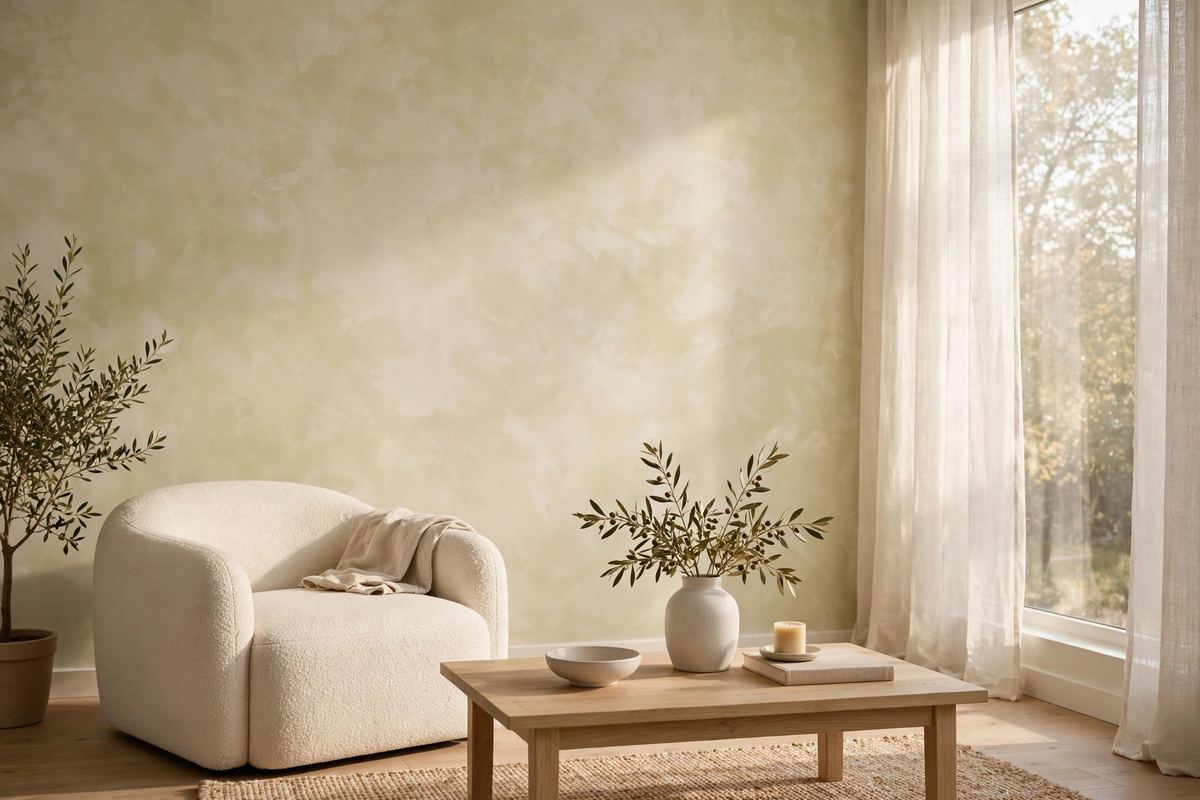
Exact colors that work: warm whites like Sherwin-Williams Shoji White or Benjamin Moore White Dove; soft beiges like Accessible Beige; accent walls in muted clay or moss green. If you want texture on the walls, a limewash accent wall in soft clay or sand tones is the single best Japandi wall treatment — the cloudy plaster finish adds warmth that flat paint cannot.
The formula per room: roughly 60% warm neutrals (walls, sofa), 30% natural wood tones (table, shelves, legs), 10% soft accents (moss green, terracotta, charcoal). Two accent colors maximum. When in doubt, remove one color.
The Low-Profile Furniture Rules
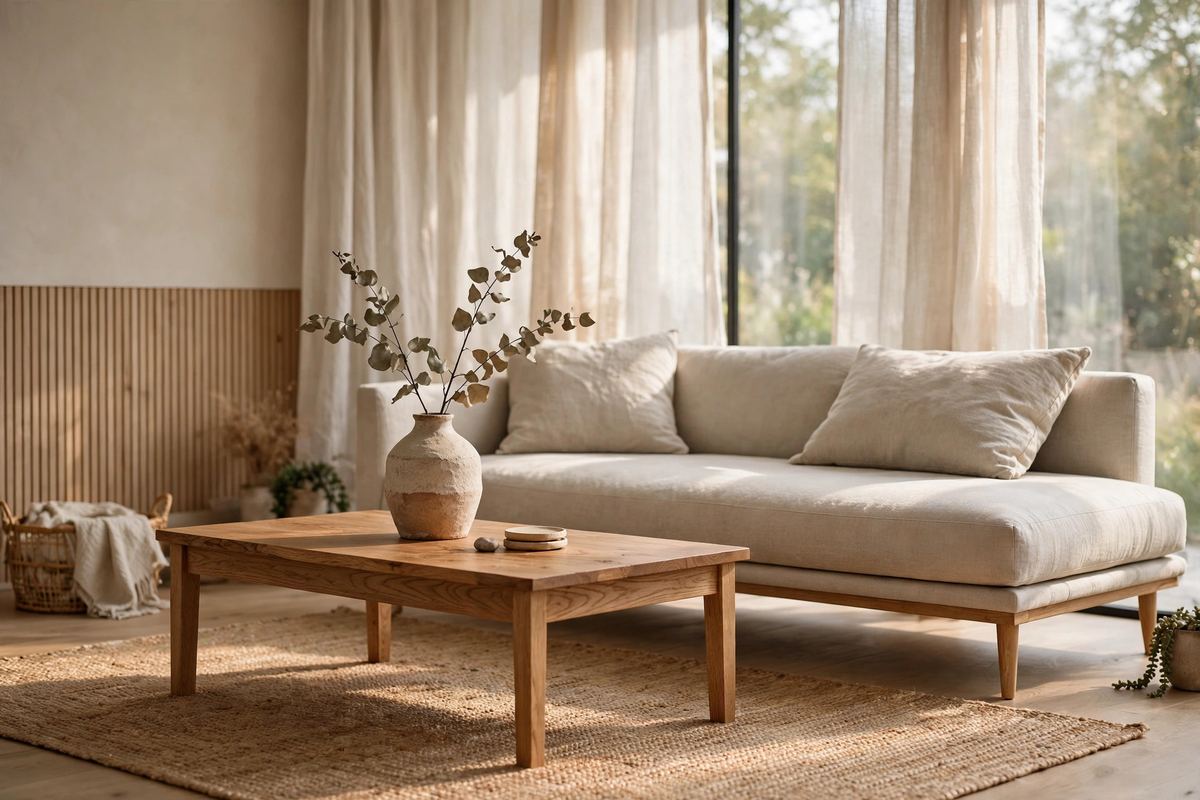
The most visible difference between Japandi and every other style is height. Japandi furniture sits low — Japanese floor-level living meets Scandinavian function. A low sofa (seat height 14 to 16 inches, with slim wooden legs adding another 4 to 6) changes how the whole room breathes. More wall shows above it, light travels farther, and the room feels larger than its square footage.
The measurements that matter:
- Coffee table to sofa: 14 to 18 inches of clear space — close enough to reach your tea, far enough to walk around.
- Coffee table height: 1 to 2 inches lower than the sofa seat, so sightlines stay clean from the seat.
- Rug sizing: the front legs of the sofa and all chair legs should sit on the rug. Leave 18 to 24 inches of bare floor between the rug edge and the wall — the bare border is part of the look.
- Walkways: keep 30 inches minimum on main paths. Japandi fails the moment you have to sidestep furniture.
12 Japandi Living Room Ideas
1. Start with a low-profile linen sofa
This is the anchor piece, so spend here. Look for a sofa in oatmeal or sand linen with a seat height around 14 to 16 inches and slim wooden legs. Linen over velvet or leather — linen wrinkles beautifully, and those wrinkles are the wabi-sabi texture the style is built on. If your current sofa is too tall, lower-profile legs (sold separately, 20 to 40 dollars) can drop it an inch or two.
2. Anchor with a large natural-fiber rug
Jute or wool, in a tone one shade darker than the floor. Flat-weave for high traffic, wool for softness underfoot. Size up rather than down — an 8x10 rug in a standard living room is usually right, with the front sofa legs on it and that 18-inch bare border showing around the edges.
3. Pick one warm wood, and use it twice
White oak or ash for the main pieces (coffee table, media console), walnut only as the deeper accent (a stool, a frame). One light wood plus one dark wood is the maximum. Mixing three or four wood tones is the most common reason a Japandi attempt looks busy instead of calm.
4. Limewash the walls in warm oat
Flat paint is fine; limewash is better. The cloudy, layered finish of limewash catches light like plaster and adds the handmade warmth Japandi demands. A soft oat or sand tone keeps the room bright while feeling infinitely warmer than plain white. The full technique takes a weekend and costs under 60 dollars — our limewash accent wall tutorial walks through the crisscross method step by step.
5. Hang a paper lantern pendant
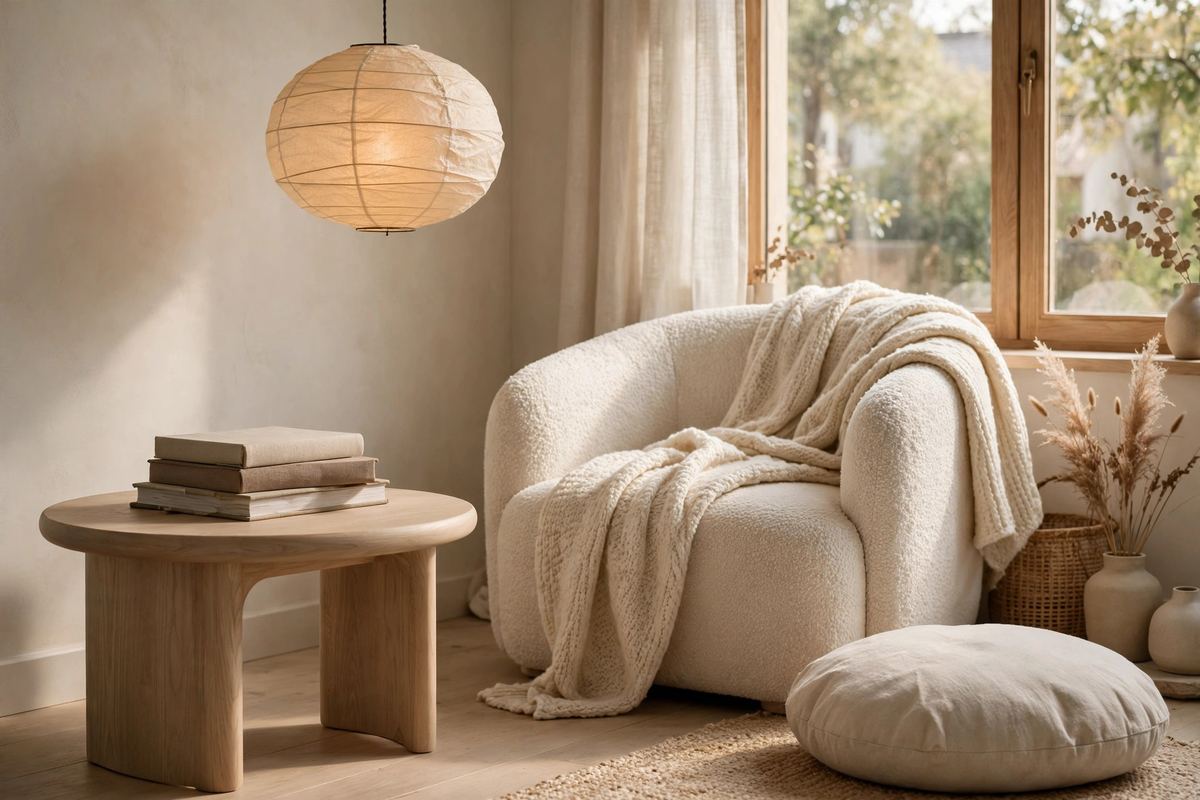
Nothing says Japandi lighting like a washi paper lantern. A large round paper shade (24 to 32 inches across) over the seating area gives soft, diffused light that flatters everything. Use a 2700K warm bulb, dimmable if possible. At 25 to 60 dollars, this is the highest-impact-per-dollar change on this list.
6. Build a quiet reading corner
Every Japandi living room earns its calm with one soft corner: a curved boucle or linen armchair, a small round side table, a floor cushion, and warm light. This is the spot the whole room is really for — a place to sit with tea and do nothing on purpose.
7. Style one floating shelf with handmade ceramics
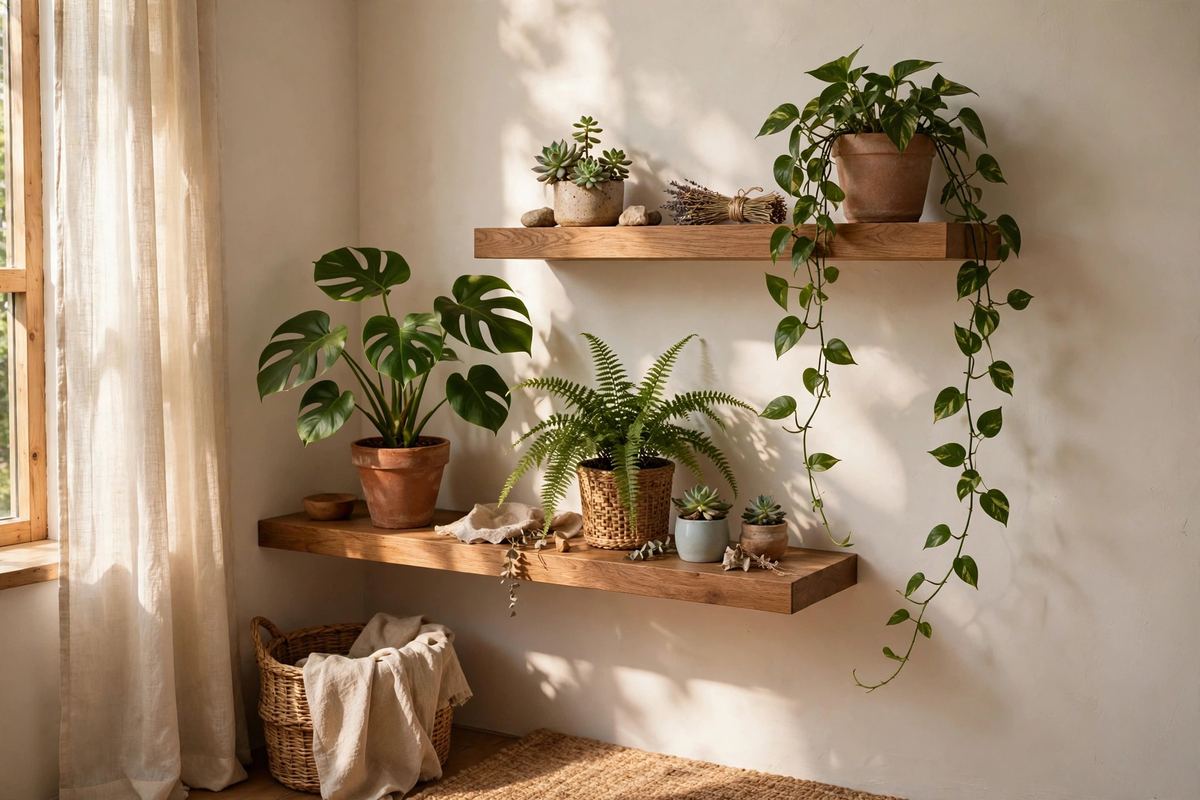
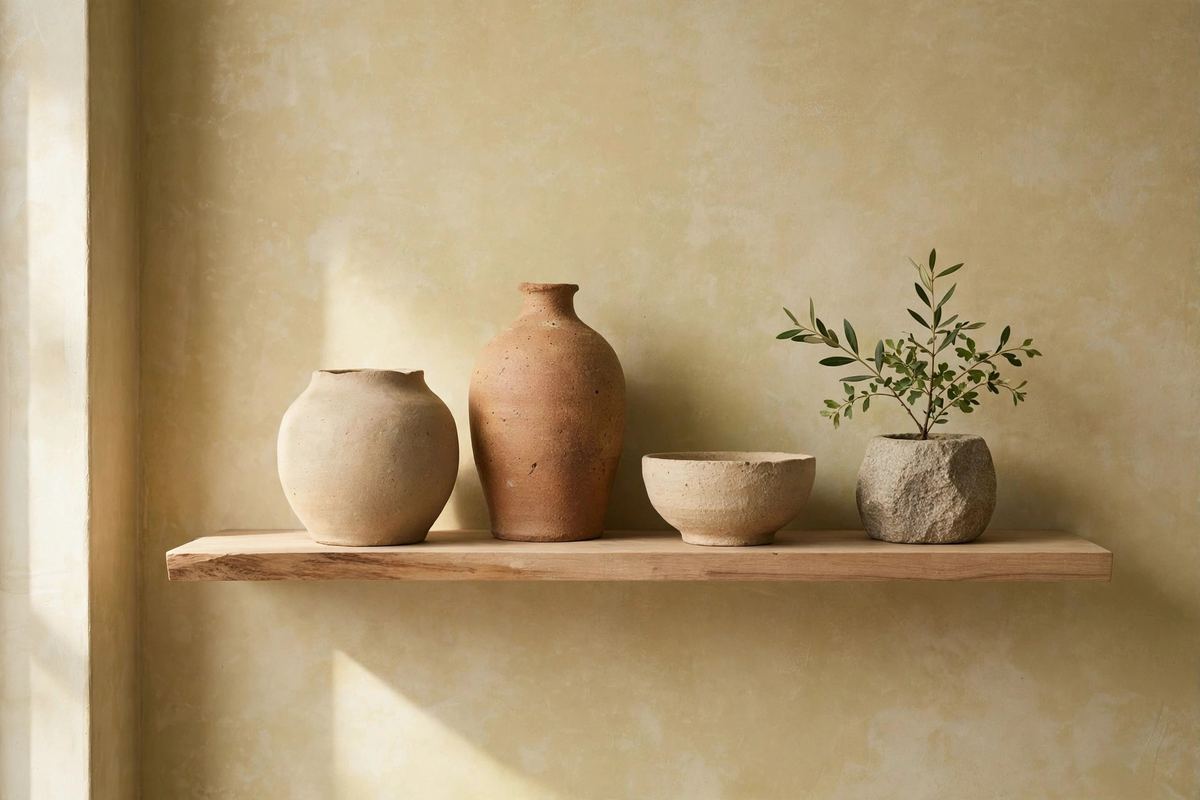
Japandi shelves follow the rule of restraint: 3 to 5 objects per shelf, each one earning its place. Handmade ceramic vessels in sand and clay tones, one small plant, one stack of books — that is a finished shelf. Leave empty space between objects; the gaps are design, not unfinished business. For mounting and styling details, our floating plant shelf guide covers the measurements and the styling tricks that make shelves look designer-made.
8. Add greenery, but keep it to 2 or 3 plants
Plants are essential — they are the living texture in a calm room — but Japandi is not a jungle. Two to three plants is the sweet spot: one sculptural branch (dried eucalyptus or a single olive branch) in a ceramic vase, one easy live plant (a snake plant or ZZ in a stone pot), and optionally one small one on the shelf. The single-branch-in-a-vase trick counts as greenery and costs almost nothing.
9. Swap cool gray textiles for warm oat
The fastest update costs nothing if you own the pieces: pull every cool-gray throw, cushion, and curtain and replace with warm oat, cream, sand, or toasted almond. Mix textures instead of colors — linen, boucle, raw cotton, and chunky wool all in the same warm family. One rust or moss-green cushion is the entire color accent the room needs.
10. Light it like evening, even at noon
Japandi rooms are lit warm. Three light sources per room: the paper pendant, one floor or table lamp with a fabric shade, and candles or a small warm lantern. All bulbs at 2700K or warmer. Cool daylight bulbs in a Japandi room are like serving tea in a paper cup — technically fine, spiritually wrong.
11. Add one wood-slat or panel moment
A single textured wood feature — slatted panels behind the media console, a fluted wood section on one wall — adds the architectural interest the style's simplicity needs. Keep it to one wall or one section; the texture is an accent, not wallpaper. A fluted wood panelling project is the classic weekend version and costs far less than it looks.
12. Carve out a quiet work corner
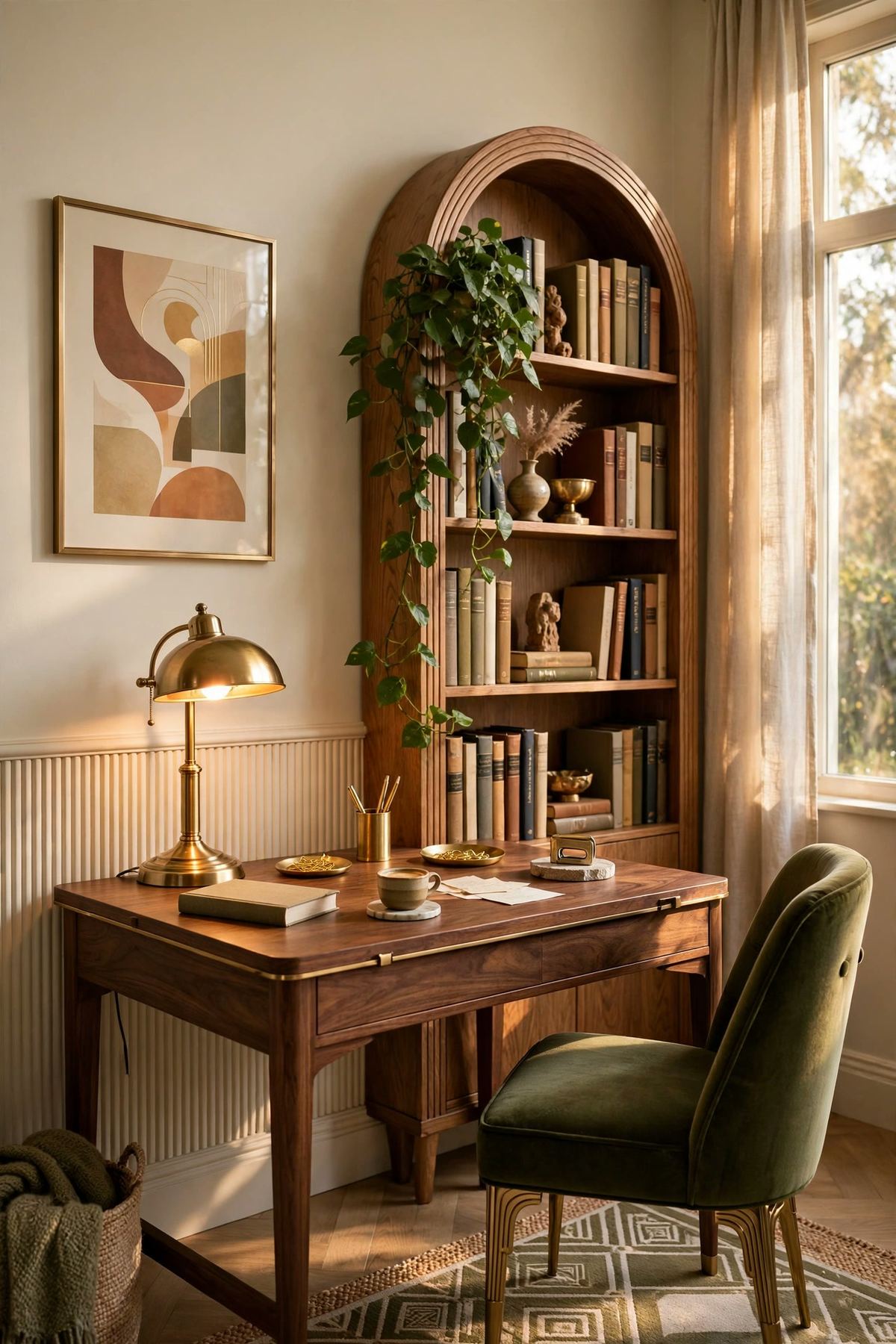
If your living room doubles as a workspace, give the desk the Japandi treatment instead of fighting it: a simple oak desk against the wall, one task lamp, everything else stored away. The style's restraint is a gift here — fewer objects means fewer distractions. These small home office ideas show how to fit a calm workspace into a living room without it taking over.
The 4 Styling Rules That Hold It Together
1. Negative space is a design element. Empty floor, empty shelf, empty wall — these are not gaps to fill. When you want to add something, remove something first. The one-in-one-out rule keeps a Japandi room Japandi.
2. Odd numbers and asymmetry. Three objects on a shelf, not four. One tall vase, one low bowl, one trailing plant. Asymmetry looks collected; symmetry looks staged.
3. Touch before look. Every textile should invite a hand: nubby boucle, washed linen, chunky knit, raw jute. If a material looks good but feels plasticky, it does not belong. The style is felt as much as seen.
4. Imperfection is the point. A handmade vase that leans slightly, linen that wrinkles, wood with visible grain — these are features, not flaws. Machine-perfect finishes read cold; the human hand reads calm.
5 Japandi Mistakes to Avoid
1. Going full beige with zero contrast. Japandi needs one dark note — a walnut stool, a charcoal cushion, a black picture frame — or the room goes flat. Calm is not the same as washed out.
2. Keeping the cool-gray sofa and calling it Japandi. If your big pieces are cool-toned, the warm textiles will fight them instead of complementing them. Slipcover or replace the gray first; it is the foundation everything else sits on.
3. Filling every surface. The most common failure mode. If every shelf, table, and corner has something on it, the room is Scandinavian-cluttered, not Japandi. Remove a third of what is there and live with it for a week.
4. Mixing too many wood tones. One light wood plus one dark wood, maximum. That third wood finish from the thrift store is probably what is making the room feel busy.
5. Forgetting scent and sound. Japandi is a full-sense style. An incense holder or essential oil diffuser, a soft rug that quiets footsteps — the calm is in the atmosphere, not just the furniture.