If your bedroom is 10 by 11 feet, you already know the math problem: the bed eats two-thirds of the floor and everything else fights over what is left. Here is the good news — the best small bedroom ideas are not about adding space. They are about removing the things that make your eye stop, stumble, and measure the room as tiny.
Below are 7 ideas that actually move the needle, with the exact paint colors, measurements, and prices that make them work. None of them needs a renovation. Most cost under 100 dollars, and the first one costs a Saturday and a can of paint.
Start With the Numbers: 3 Measurements That Matter
Before you buy anything, grab a tape measure. Almost every "my room feels cramped" problem traces back to one of these three numbers being off.
Walkway width: 24 inches minimum, 30 is comfortable. That is the gap you need beside the bed to walk, make the bed, and not feel squeezed. A queen bed (60 inches wide) centered in a 10-foot room leaves exactly 30 inches per side — comfortable. A king (76 inches) leaves 22, and the room starts to feel like an obstacle course no matter how you decorate it.
Visible floor: aim for about 40 percent. Stand in the doorway and look down. The more continuous floor you can see, the bigger your brain judges the room to be. Furniture that sits on legs, a rug that does not wall-to-wall the space, and clear paths all push this number up.
Ceiling line: keep it unbroken. Anything that draws a hard horizontal line partway up the wall — a contrasting ceiling, a tall dark headboard, a curtain rod at frame height — visually lowers the ceiling. Small rooms feel bigger when the eye runs floor to ceiling without interruption.
7 Small Bedroom Ideas That Make Your Room Feel Bigger
1. Paint the walls a warm, light color — ceiling included
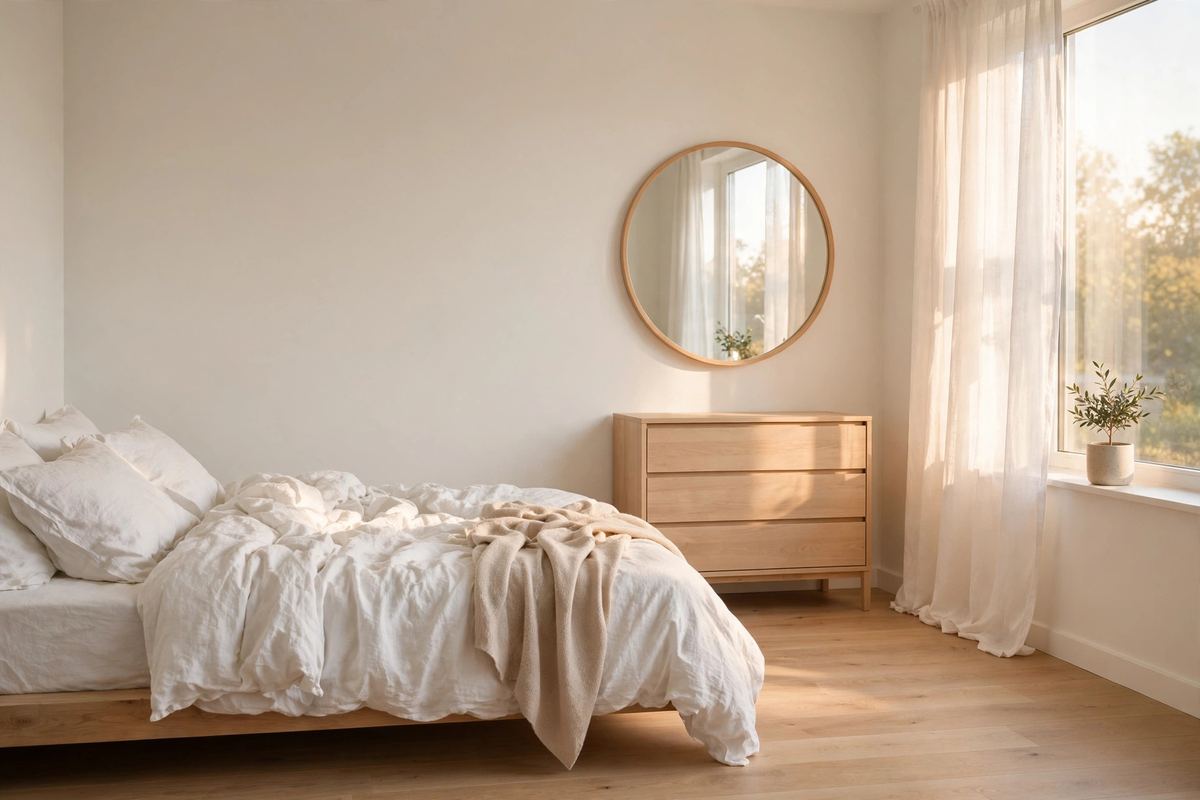
Paint is the cheapest space-expander there is, but the shade matters more than the lightness. You want a warm white with an LRV (light reflectance value) of 80 or above: Benjamin Moore White Dove OC-17, Sherwin-Williams Alabaster SW 7008, and Benjamin Moore Swiss Coffee OC-45 all sit around LRV 82–83 and bounce daylight around without going cold. Blue-toned whites are the trap — in a small room with one window they read gray and shadowy by afternoon.
Two moves double the effect. First, paint the ceiling the same color as the walls so there is no contrast line where the wall stops — your eye reads the whole box as one taller volume. Second, use eggshell or satin on the walls; the slight sheen reflects noticeably more light than flat. Budget about 60 to 80 dollars for a gallon plus a quart, which covers a 10 x 11 room in two coats.
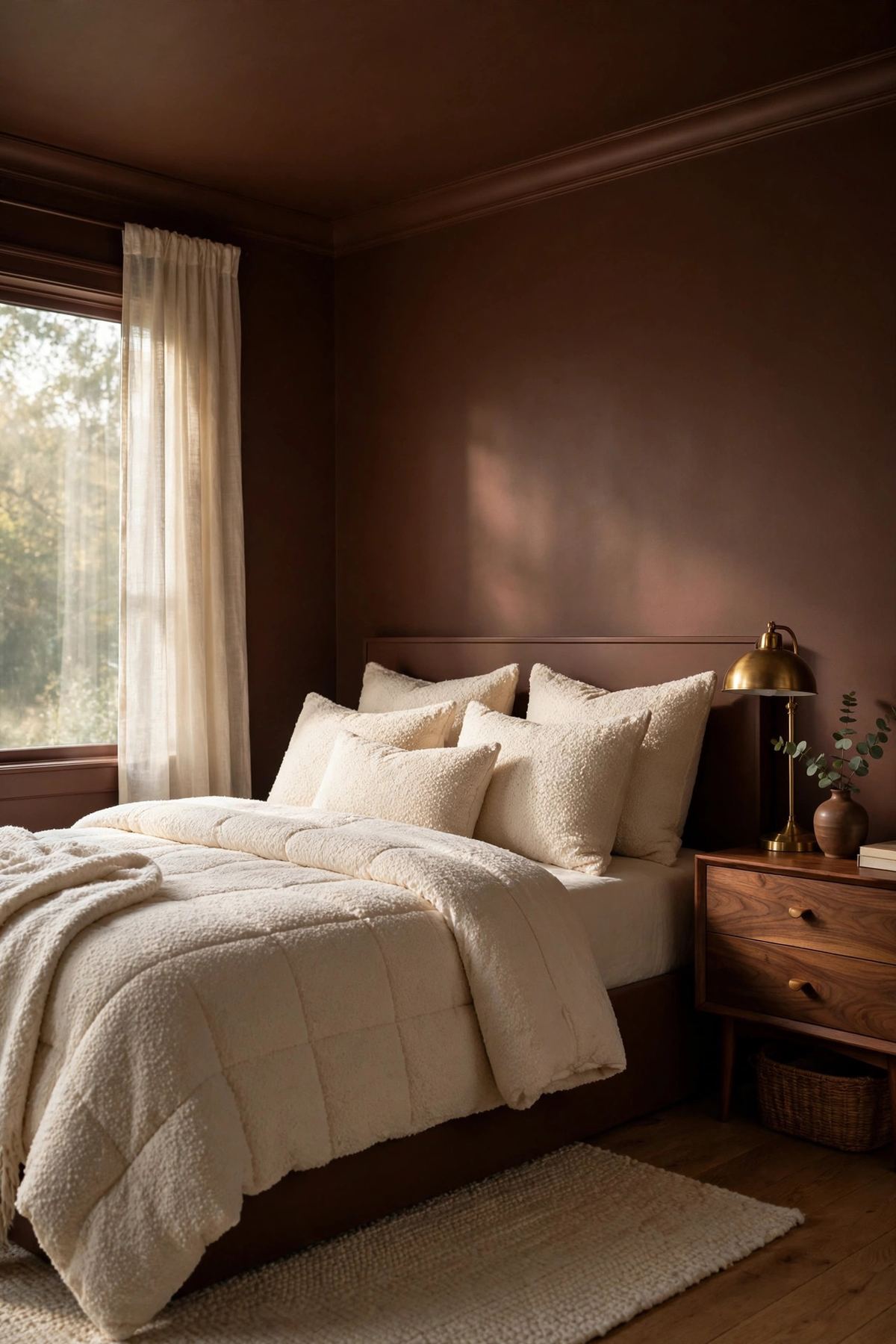
Love deep color? You do not have to give it up — one wall in a rich, warm brown can actually read as depth rather than darkness, especially behind the bed. Our guide to warm brown bedroom paint colors shows the shades that pull this off without closing the room in.
2. Hang one big mirror where it catches the window
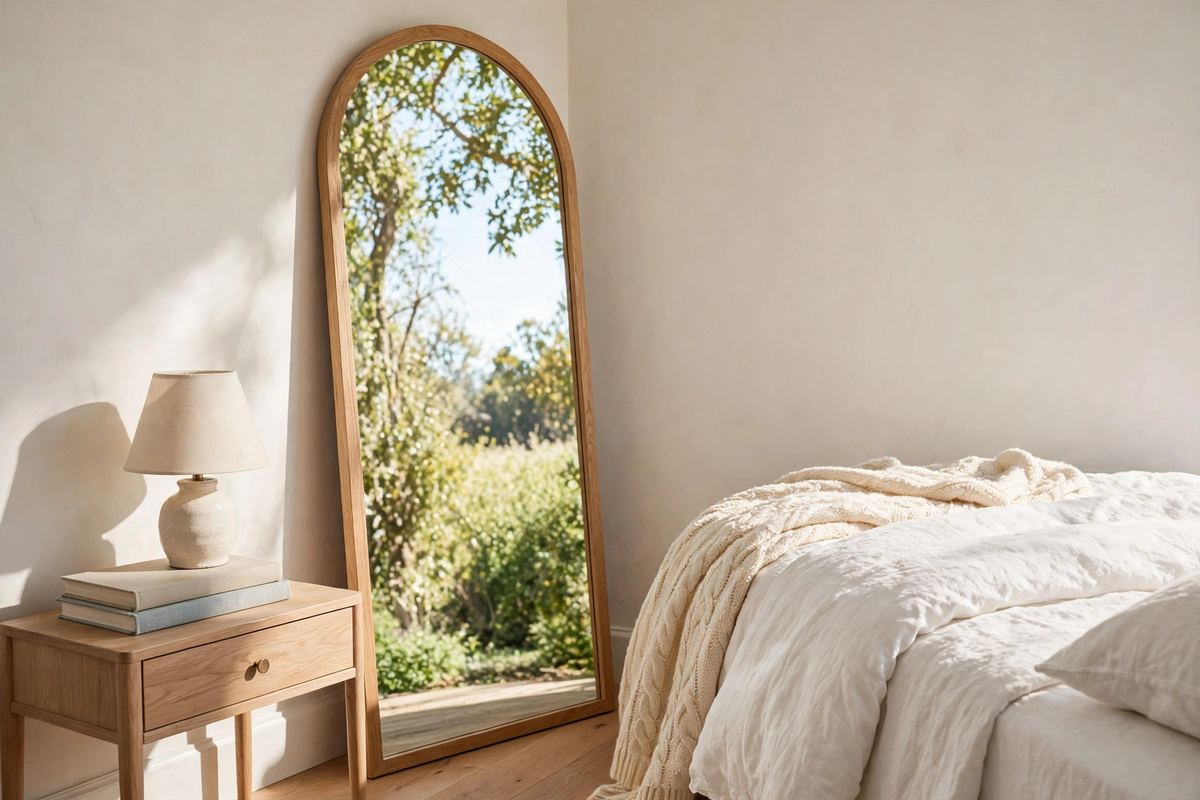
One large mirror beats a gallery of small ones every time in a small room — small mirrors chop the wall into pieces, while one big reflection reads as an opening. Go round or arched, 30 to 36 inches across, and hang it on the wall opposite or next to the window so it bounces the light and the view back into the room. Center it about 57 to 60 inches from the floor, standard eye level.
Placement mistakes to skip: a mirror facing a blank wall doubles nothing, and one facing the closet clutter doubles that. If the only available wall faces the bed, angle the mirror toward the window side of the room instead. Expect to spend 50 to 90 dollars at most home stores for a 32-inch round mirror with a slim wood or metal frame.
3. Choose furniture with legs — and keep the floor visible
This is the idea designers reach for first. Furniture raised on legs — 6 to 8 inches of visible leg is the sweet spot — lets light travel underneath and keeps the floor reading as one continuous surface. A bed frame, nightstand, or dresser that sits flush on the floor cuts the room into blocks; the same pieces on slim legs feel like they are floating.
Apply it everywhere you can: a platform bed with legs instead of a solid base, nightstands 12 to 16 inches wide with legs instead of heavy chests, a dresser on tapered legs. It is the same low, leggy principle that makes Japandi living rooms feel so calm and open, and it works even better in a bedroom. The one exception: if you genuinely need under-bed storage more than visual space, a storage bed can earn its keep — just know you are trading a little of the airy feeling for the drawers.
4. Move storage up the walls
Floor space is the scarcest resource in a small bedroom, so stop spending it on storage. Shelves, wall-mounted nightstands, and hooks give you the same function for zero square feet. A floating shelf used as a nightstand — 10 to 12 inches deep, mounted so the top sits level with the mattress — holds a lamp, a book, and a phone, and leaves the floor beneath it completely open.
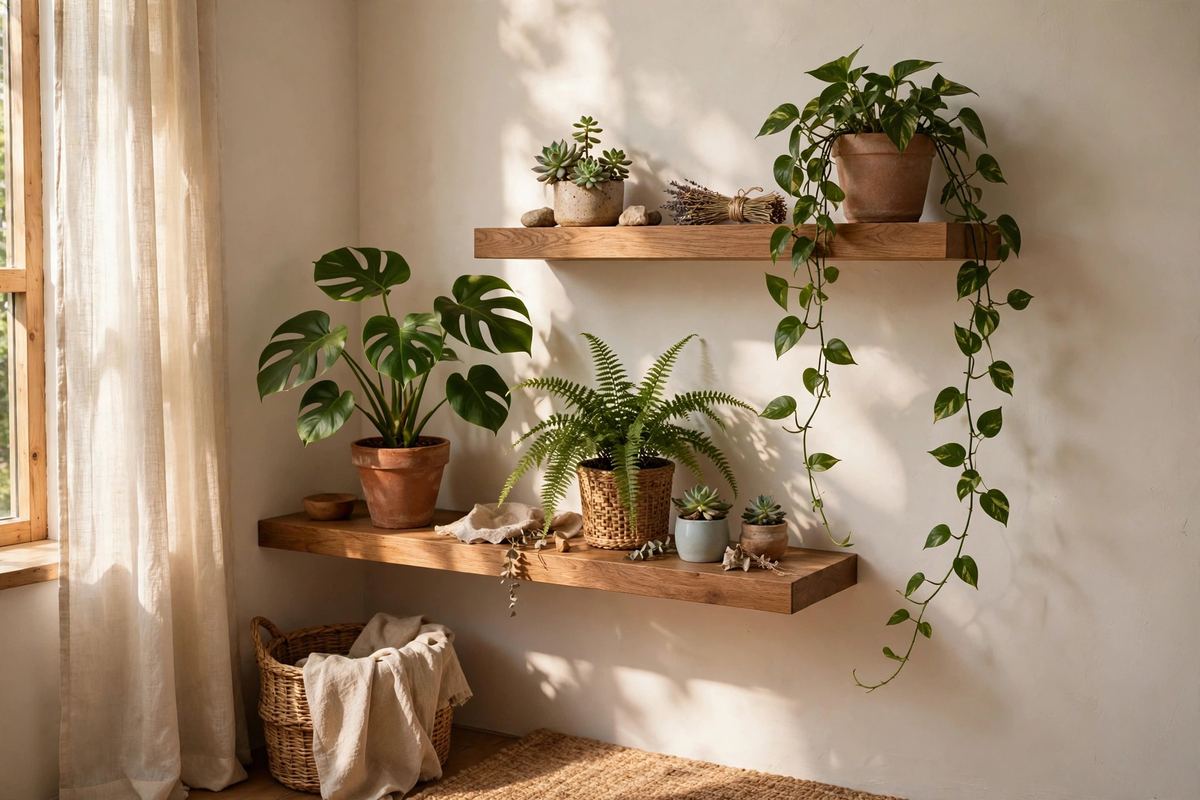
Go vertical elsewhere too: swap one wide, low dresser for a tall, narrow chest (30 inches wide, 48 to 54 tall) and you free up a whole wall run. For mounting, bracket ratings, and the styling rules that keep shelves looking intentional instead of cluttered, our floating shelf guide covers the details — the same principles apply whether the shelf holds plants or paperbacks. Keep each shelf to a handful of objects and leave gaps between them; a packed shelf reads as storage, a spare one reads as decor.
5. Keep the bed low, light, and layered thin
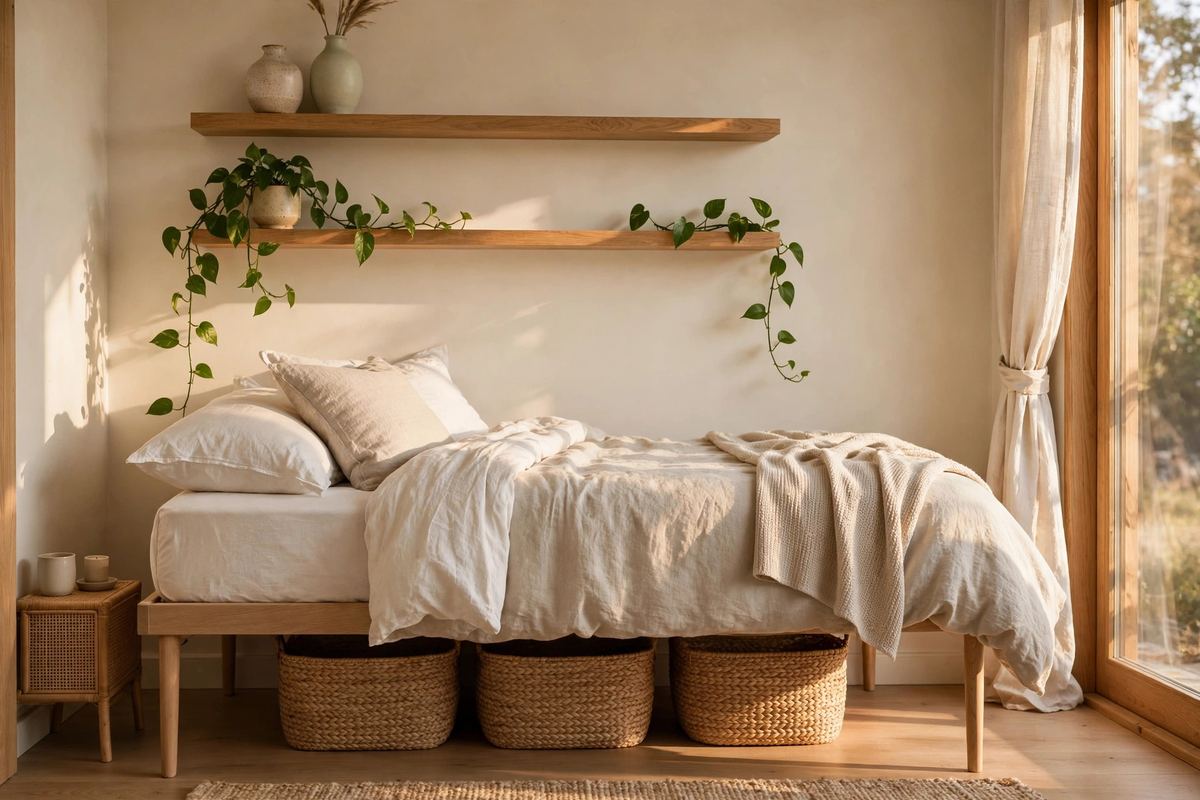
The bed is the biggest object in the room, so it sets the visual volume. Three adjustments shrink its footprint without touching its size. Keep the headboard low — 42 to 48 inches tall at most, or skip it entirely and let a large piece of art do the talking. Choose a slim profile: a simple upholstered or wood headboard reads far lighter than a bulky sleigh or tufted frame.
Then dress it thin. A puffy comforter adds visual inches on every side; a cotton quilt or a duvet folded at the foot keeps the lines close to the mattress. Stick to one light palette — white, cream, oat — with texture doing the decorating: linen, a knit throw, one lumbar pillow. And skip the bed skirt. Showing the legs and the floor underneath is the whole point of idea 3.
6. Hang curtains high, wide, and sheer
Window treatments are where small bedrooms quietly lose the most space. Curtains hung right at the frame chop the window down to its true size and draw a line across the wall. Instead, mount the rod 4 to 6 inches above the frame — or 2 to 3 inches below the ceiling — and extend it 8 to 12 inches past the frame on each side. The panels then cover wall, not glass, and the window reads dramatically taller and wider than it is.
Choose sheers or linen-look panels that let daylight filter through; privacy rarely requires blackout fabric on the window itself, and if it does, add a blackout liner behind the sheer layer. Length matters too: panels should kiss the floor or hover half an inch above it — the high-water look shrinks the wall. Two 84-inch sheer panels run about 20 to 35 dollars, making this the best dollars-to-drama ratio on the list.
7. Edit ruthlessly: one focal point, zero floor piles
Finally, the free one. A small room can only star one thing, and in a bedroom it should be the bed wall. Everything else — dresser top, nightstands, corners — stays quiet. Follow the surface rule: keep roughly 70 percent of every surface empty. A nightstand with a lamp, a book, and a small dish is styled; the same nightstand with nine objects is storage that shows.
Then hunt the floor piles, because nothing shrinks a room faster than laundry baskets, shoe rows, and the chair that became a closet. Closed, hidden storage is the fix: low bins under the bed (measure first — most leggy frames give you 6 to 7 inches of clearance), a lidded basket for the throw blankets, hooks behind the door for the robe. Give the room a 15-minute reset once a week and it stays edited instead of slowly refilling.
A Layout That Works in a 10 x 11-Foot Room
Here is the arrangement that puts all 7 ideas together. Center the bed on the longest wall that does not have the window — headboard on that wall, 30-inch walkways on both sides. Nightstands go tight to the bed; a 14-inch floating shelf on each side beats two bulky tables. Put the dresser on the wall opposite the bed, or under the window if it is low enough (32 inches or under) to stay below the sill.
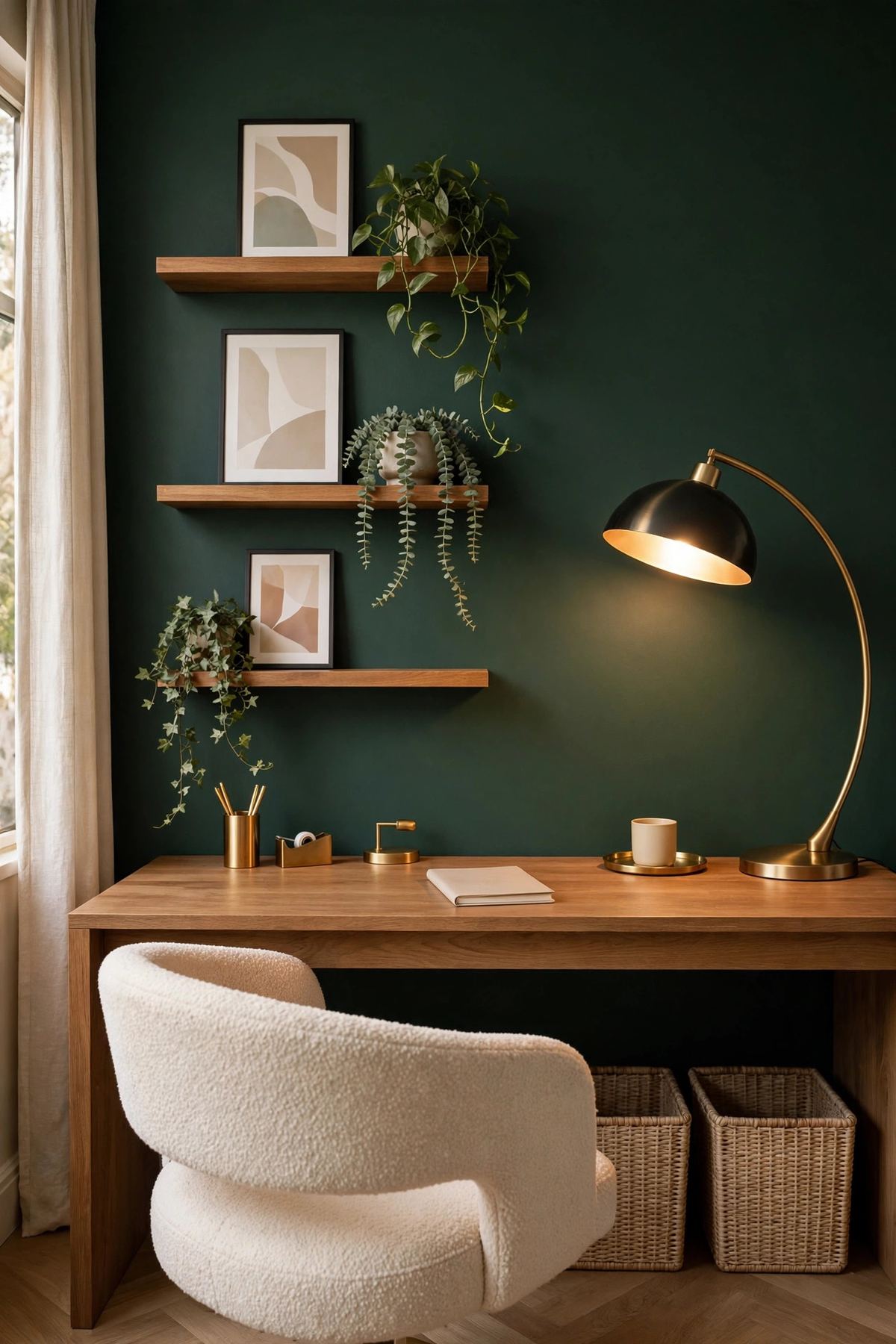
Keep a clear 30-inch path from the door across the room, and check the door swing before committing to anything in its arc. Skip the bench at the foot of the bed unless the room is at least 12 feet long — it steals the walkway you just protected. If the room also has to hold a workspace, a wall-mounted fold-down desk on the dresser wall beats a freestanding desk every time; we used the same trick in this small home office makeover, and the room still reads as a bedroom first.
5 Mistakes That Make a Small Bedroom Feel Smaller
1. A king bed in a 10-foot room. The 22-inch side gaps it leaves are below the comfortable minimum, and no styling trick compensates. Size the bed to leave 24 to 30 inches on each side.
2. Heavy curtains at frame height. Dark, lined drapes mounted on the frame cut the window in half visually and lower the ceiling line. High, wide, and sheer is the fix — see idea 6.
3. Dozens of tiny decor pieces. Twelve small frames and knickknacks read as clutter at a glance. One large piece of art or one big mirror reads as intention — and as space.
4. Cool daylight bulbs. Bulbs at 5000K and above turn warm white paint gray and make evening light feel like an office. Swap to 2700K warm bulbs throughout; it costs a few dollars and changes the room at night completely.
5. Blocking the window wall. A tall dresser or wardrobe parked in front of the light source darkens everything behind it. Keep the window wall the emptiest wall in the room and let the light do its job.