Your guests will forget the appetizer tray, but they will never forget how the table looked when they walked in. Good Thanksgiving table decor is built for that first moment: the candlelit, layered, harvest-warm scene that makes dinner feel like an occasion before a single dish arrives.
Below you get the 5-layer formula every designer table follows, 14 complete looks grouped by mood, a 30-minute centerpiece you can build this weekend, the exact place-setting stack that looks expensive, and honest budget math. Pick one mood and commit to it — mixed themes are the number one reason tables look cluttered instead of curated.
The 5-Layer Formula Every Tablescape Follows
Every good tablescape, from a casual family brunch to a formal dinner, is built in the same five layers. Work in this order and the table assembles itself:
- The base. Tablecloth or runner — linen for formal, bare wood for rustic, a kraft-paper runner with hand-written gratitude notes for playful. This is the background everything else sits on.
- The place settings. Charger, dinner plate, salad plate, folded napkin. Four layers at every seat is the visual sweet spot — more feels fussy, fewer feels sparse.
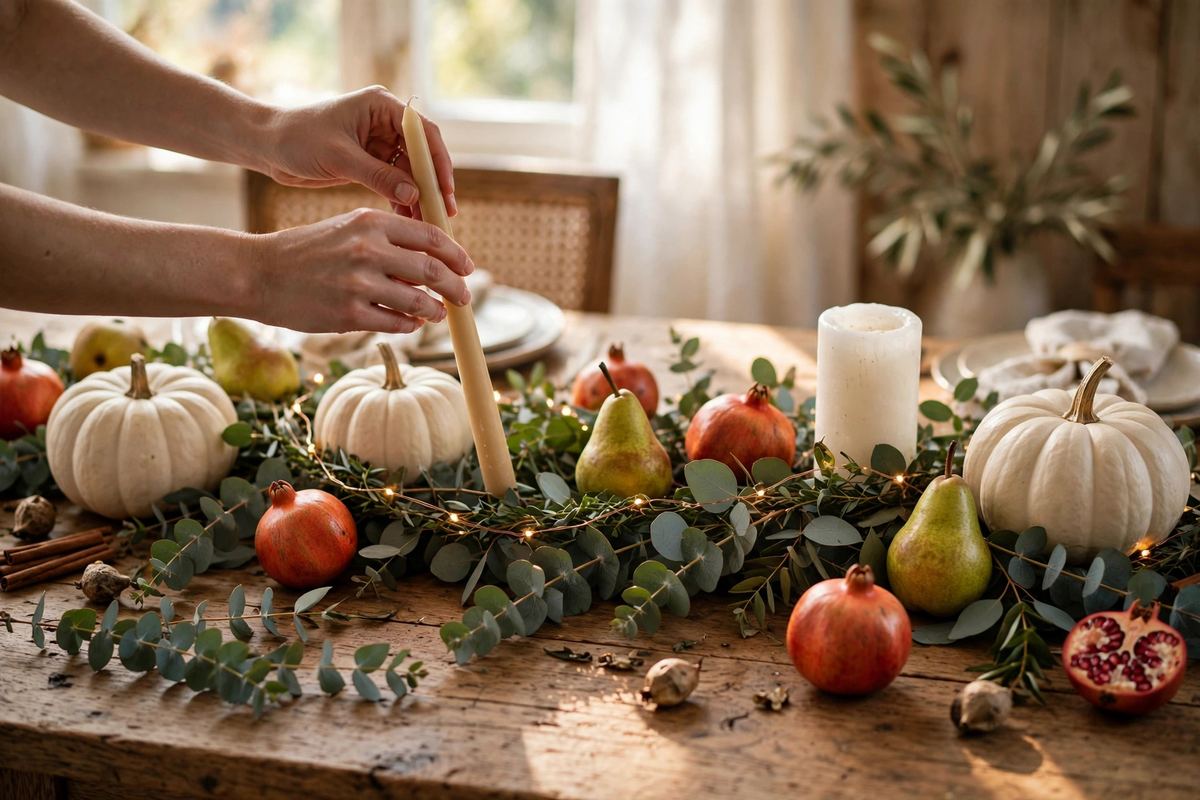
- The centerpiece. One long, low arrangement: a eucalyptus runner, clustered candles, or a row of small pumpkins and fruit. Keep it under 12 inches tall so conversation flows over it.
- The light. Candles in three heights — tapers, pillars, votives — plus one string of fairy lights woven through the greenery. One candle per 12 inches of table length is the rule.
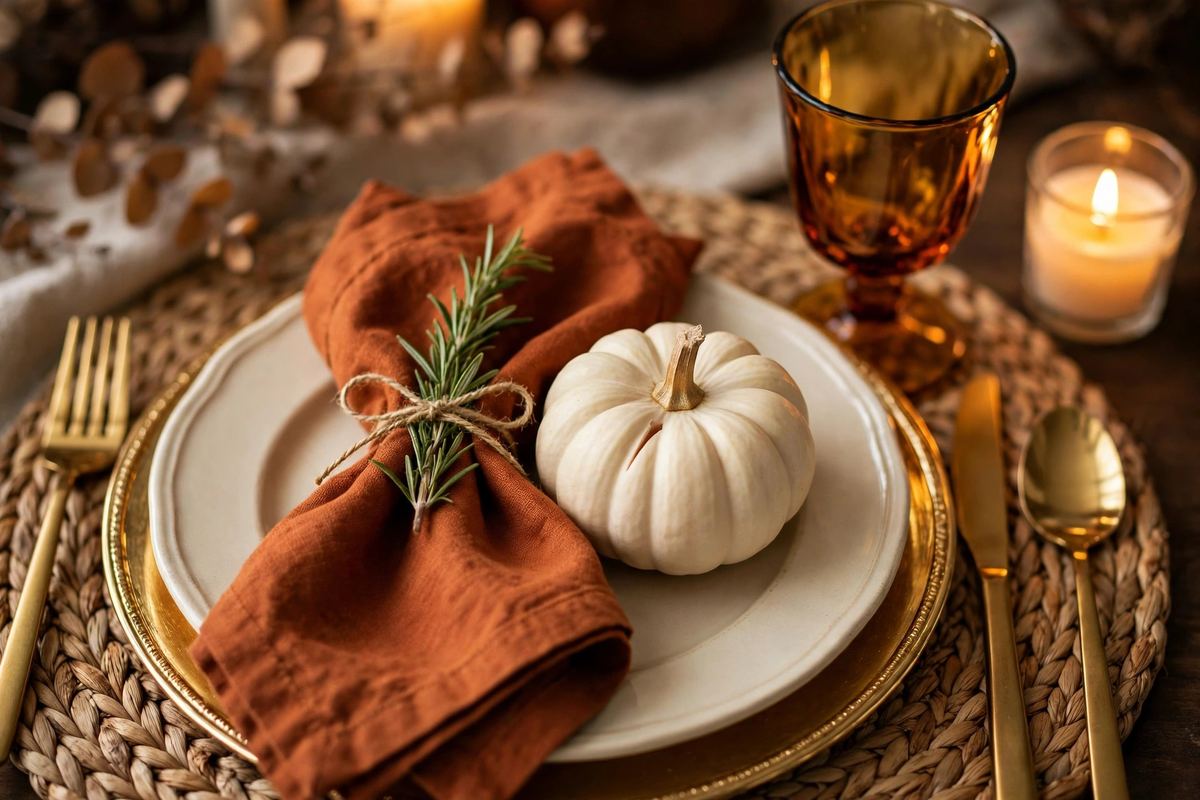
- The finishing 10 percent. One personal touch per guest: a name card, a sprig of rosemary tied to the napkin, a mini pumpkin at each seat. This layer is what people photograph.
14 Thanksgiving Tablescape Ideas, Grouped by Mood
Warm and Classic (looks 1–4)
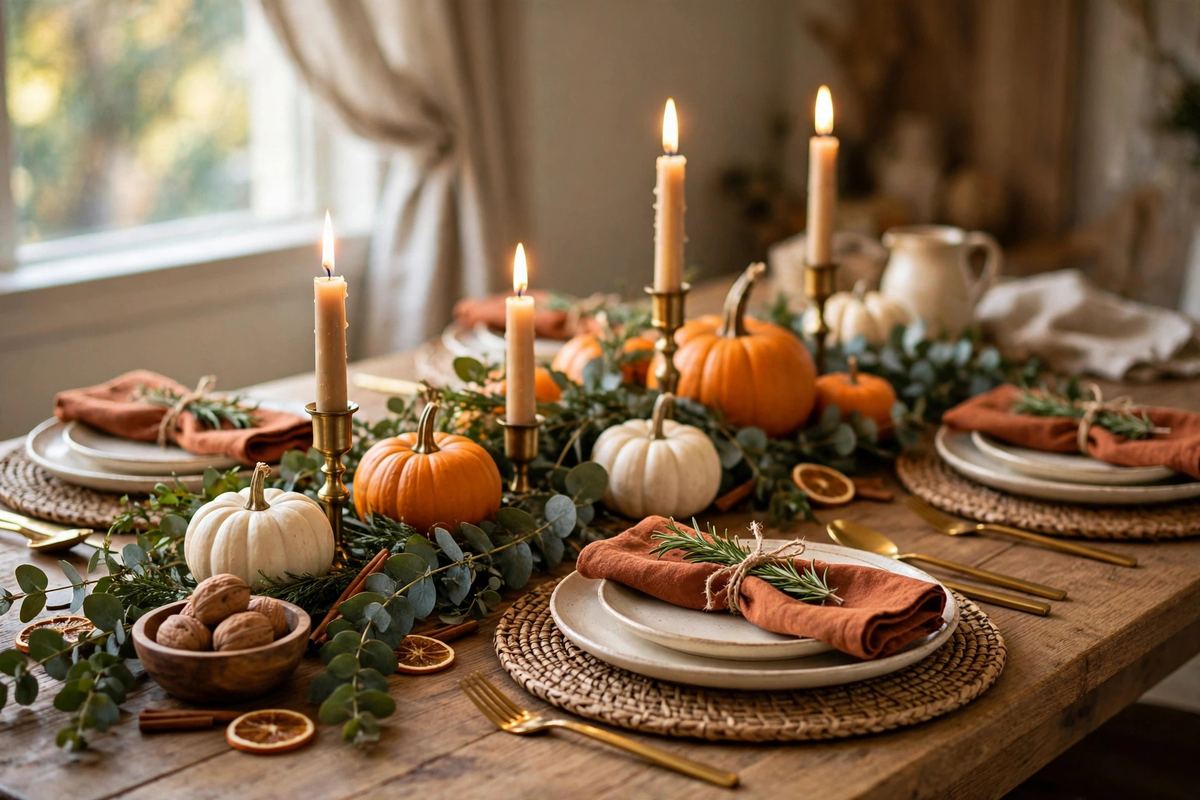
1. Rust and Cream Harvest. The 2026 default: cream plates, rust linen napkins, woven placemats, and a runner of eucalyptus with white and orange pumpkins. It is warm without screaming orange, and it photographs beautifully in candlelight.
2. Tartan and Brass. Brushed-brass chargers, cream plates, and tartan napkins tied with dried orange slices and rosemary. The plaid keeps the brass from feeling formal — this is the look for families who want tradition without stiffness.
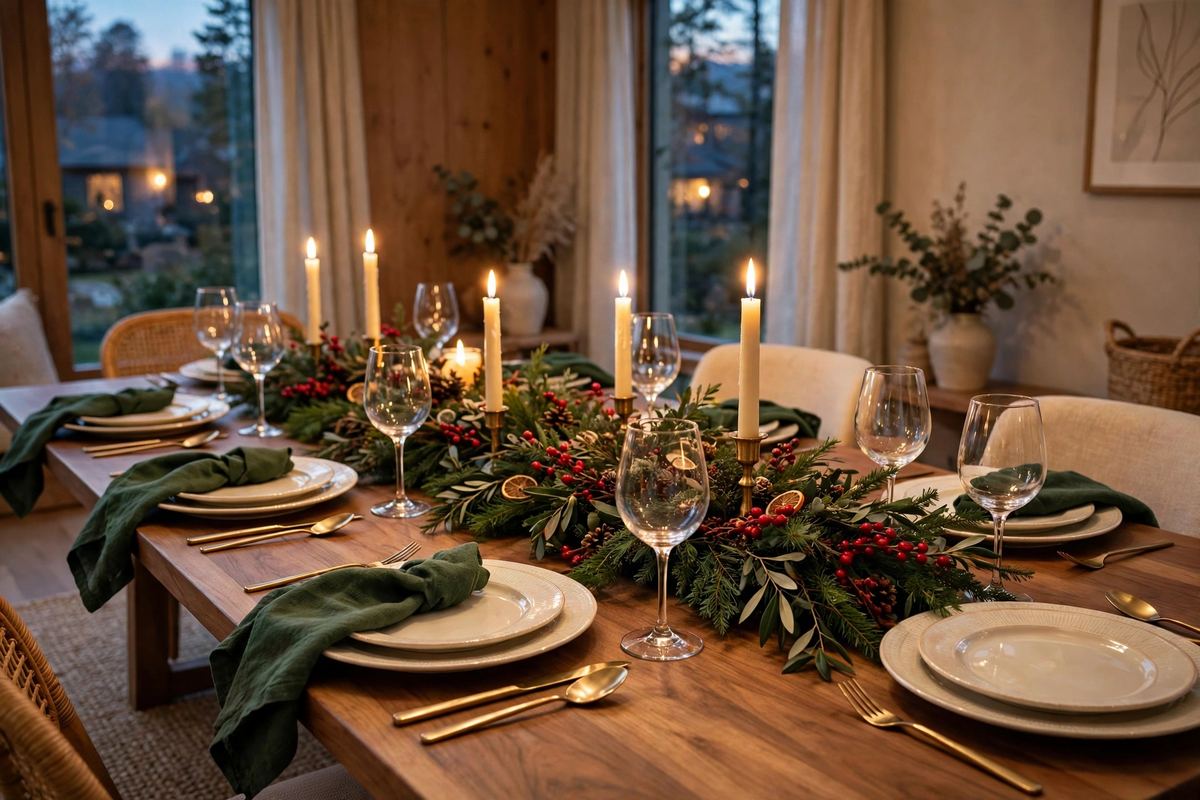
3. Cranberry and Gold. All-cream dinnerware with cranberry glass here and there, a cranberry-and-cedar runner, and ivory tapers. Keep the palette tight: just two colors plus candlelight, the same discipline that makes a Christmas tablescape feel designed rather than decorated.
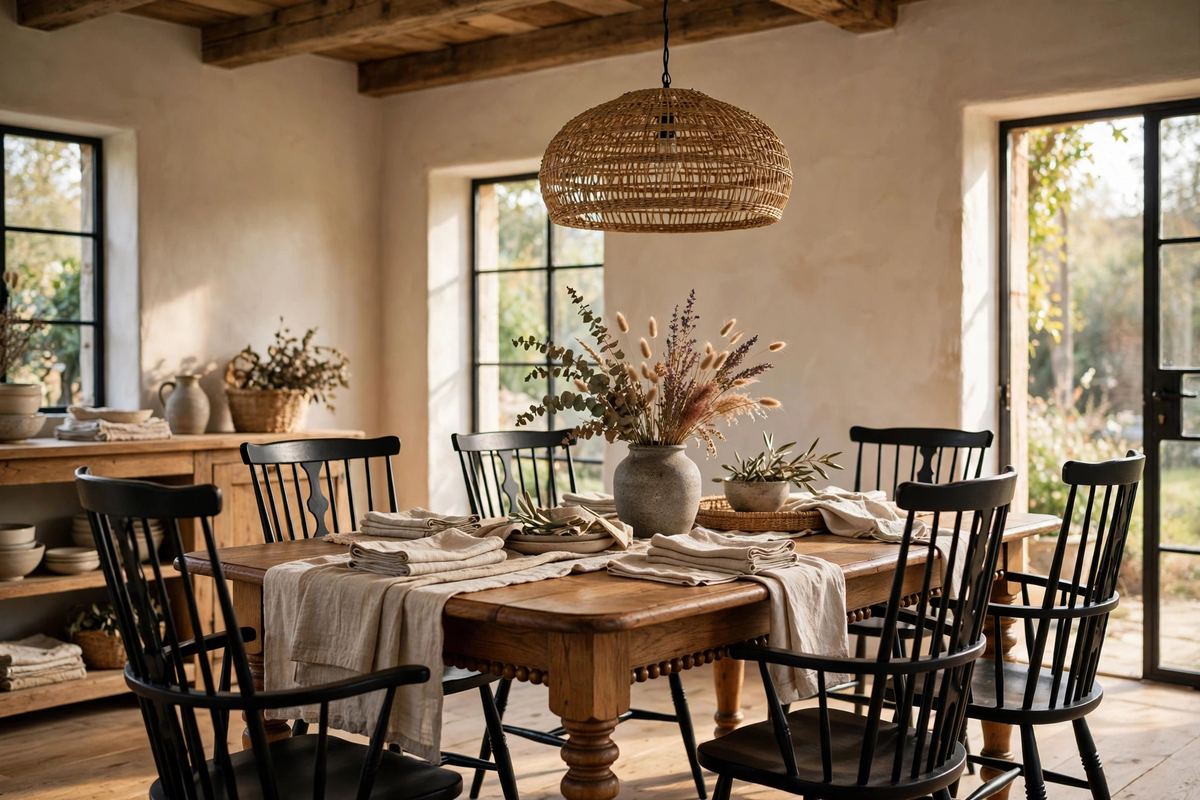
4. Rustic Farmhouse Wood. Bare wood table, woven placemats, white stoneware, and a foraged centerpiece of pinecones, dried leaves, and wood-slice candle risers. If your dining room leans farmhouse — like these warm farmhouse dining room looks — this tablescape will feel like it grew there.
Cozy and Natural (looks 5–8)
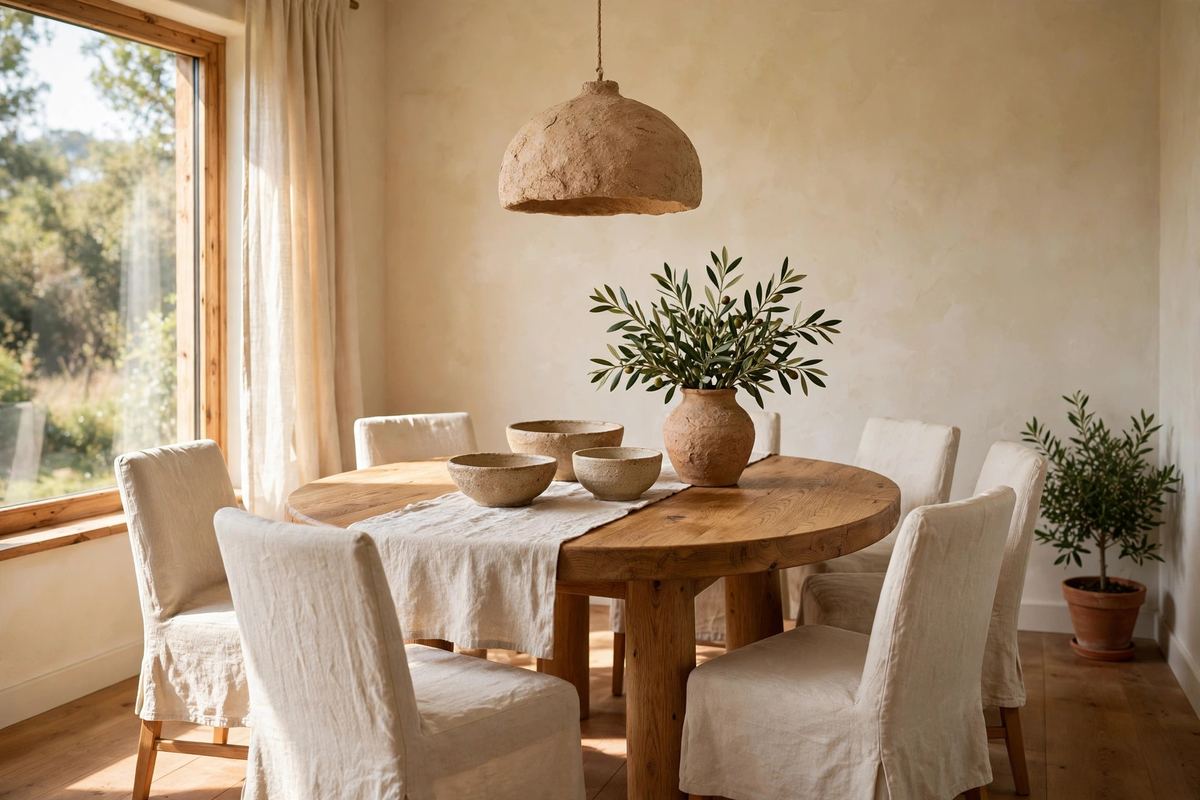
5. White Pumpkin and Eucalyptus. Skip the orange entirely: white pumpkins, seeded eucalyptus, cream candles, and natural linen. The monochrome palette reads calm and expensive, and it works in a modern dining room where traditional harvest colors would clash.
6. Orchard Fruit Centerpiece. The 2026 nature trend in full: a low bowl or runner of pears, figs, pomegranates, and walnuts in the shell, tucked into greenery. It doubles as a snack board after dinner and costs less than a florist arrangement.
7. Foraged and Free. Fallen maple and oak leaves, bare branches, pinecones, and acorns from your own yard — shaken out and dried overnight. If you painted pumpkins for Halloween, those painted pumpkin ideas carry straight through to the Thanksgiving table in cream, sage, and blush tones.
8. Herb Garden Thanksgiving. Small potted rosemary and thyme plants as the centerpiece, one per two guests, so everyone takes home a party favor. Terra cotta pots wrapped in linen napkins look surprisingly chic.
Luxe and Metallic (looks 9–11)
9. Olive and Gold. The grounded-greens palette of 2026: olive velvet napkins, gold flatware, cream stoneware, and a forest-green and wheat centerpiece. The velvet catches candlelight in a way flat cotton never does.
10. Burgundy Drama. Deep burgundy velvet runner, gold flatware, black candlesticks, and wine-red glassware. One strong color, repeated three times across the table, is what makes a luxe table read intentional.
11. Terracotta and Camel. Terracotta chargers, camel linen, amber glassware, and dried grasses in a tall vase at each end of the table (not the middle — keep the conversation line clear). Warm, earthy, and very 2026.
Playful and Family-Friendly (looks 12–14)
12. Kraft Paper Gratitude Table. A kraft-paper runner with a hand-drawn turkey outline at each seat for kids to color, plus paper leaves for guests to write what they are thankful for. The decor keeps children busy while adults finish eating.
13. Mini Pumpkin Place Cards. One mini pumpkin per guest with a name tag tucked into the stem — the place card doubles as a favor. Use a paint pen on white pumpkins for the most legible names.
14. The Kids' Table Done Right. Give the little table the full treatment instead of the afterthought: same greenery runner, battery candles, unbreakable melamine plates, and a coloring-sheet runner they can actually draw on. They will remember being treated like guests.
Follow The Decor Diary on Pinterest
Build the Centerpiece in 30 Minutes
You do not need a florist. A harvest-runner centerpiece is the highest-impact, lowest-skill arrangement in fall decorating:
- Lay the base. One 6-foot eucalyptus garland (or two 3-foot ones overlapped) down the center of the table. Fluff it wide — it should span about a third of the table's width.
- Weave in lights. One 33-foot strand of warm fairy lights, threaded loosely through the branches. Battery packs hide under the greenery at the ends.
- Add candles. Five pillar candles (3-inch, 4-inch, and 6-inch heights) nestled into the garland, spaced 12 to 15 inches apart. Odd numbers always look better.
- Tuck in the harvest. Mini pumpkins, pears, pomegranates, pinecones, and dried orange slices — wedge them into the branches so they peek out between candles.
- Final check. Sit in a guest chair and look down the table. Anything blocking the view across? Lower it. Anything falling off the edge? Tuck it.
Place Settings That Look Expensive
A place setting is just a stack, and the stack has a formula: charger (13-inch) at the bottom, dinner plate (10.5-inch) on top, salad plate (8-inch) on top of that, and the folded napkin either on the salad plate or to the left of the forks. Forks left, knife right with the blade facing the plate, spoon right of the knife. Glassware above the knife.
The upgrades that read expensive are small: a real charger instead of placing plates on bare linen, cloth napkins folded simply rather than elaborately, and one natural element tied to each napkin — a rosemary sprig, a cinnamon stick, a dried orange slice. A handwritten name card costs pennies and makes every guest feel expected. None of this takes more than five minutes per setting once you find your rhythm. The same layering logic works year-round — a modern organic dining room stays warm when the table follows the same warm-oak, handmade rules.
5 Mistakes That Ruin a Thanksgiving Tablescape
- Too-tall centerpieces. Anything above 12 inches cuts the table in half visually and turns dinner into a shouting match across greenery. If your arrangement is tall, keep it narrow and position it between seats, not in front of anyone.
- Every color at once. A tablescape is one palette, not a rainbow. Two to three colors maximum — the fourth color is where "curated" turns into "cluttered."
- Scented candles everywhere. Strong fragrance fights the food. One unscented candle per place-setting zone is fine; heavy pumpkin-spice scent on the table itself is not.
- Forgetting the chairs. Bare chair backs are a missed opportunity: a sprig of greenery, a small dried bouquet, or a simple linen bow tied to each one pulls the whole table together.
- Setting it day-of in a panic. Rushing guarantees broken glass and wrinkled linen. Set the base layers two to three days ahead and add fresh greenery Thanksgiving morning.
Budget Math: What a Thanksgiving Tablescape Costs
A full designer-looking table for eight costs less than most people think, because most of it is reusable year after year. Honest numbers: a 6-foot fresh eucalyptus garland runs 15–30 dollars; five pillar candles cost 12–25 dollars; one strand of fairy lights is 8–15 dollars; mini pumpkins and orchard fruit cost 10–20 dollars; a set of eight woven placemats runs 20–40 dollars; cloth napkins are 15–30 dollars for a set of eight.
Total for a first-timer buying everything: 80–160 dollars, and the placemats, candles, lights, and napkins all come back next year. The smart play: buy candles, chargers, and lights the week after Thanksgiving at 50–70 percent off, and stash them for next season. Your table will look twice as expensive as it cost.