You know that moment you sink into a hotel bed and the whole room feels like a warm hug? Chocolate brown bedroom paint creates exactly that feeling at home — and no, it does not have to feel like a cave. Done right, deep brown walls read as calm, cocooning, and quietly luxurious, like the room itself is giving you permission to switch off.
The secret is not the color itself. It is the shade you pick for your light, the trim you pair it with, and the light, soft layers you style against it. This guide walks through all three, with exact paint colors to sample, the bedding and lighting that keep chocolate walls serene, and the mistakes that tip a cozy brown bedroom into a dark one.
Why Chocolate Brown Walls Feel So Calm
Brown is an earthy, low-drama color. It is the shade of wood, soil, leather, and cocoa — things your brain already files under warm and safe. In a bedroom, that matters. Stark white walls reflect light and stay visually "awake" after dark, while warm brown walls soften contrast, mute glare, and make the room feel hushed the moment you dim the lamps.
Chocolate tones are also incredibly forgiving to live with. They hide scuffs and dust far better than pale walls, they flatter skin tones in lamplight, and they sit in the same warm family as most wood furniture and natural textiles, so the room comes together almost by itself. If your bedroom currently feels a little cold or unfinished no matter what you add, the walls are usually the missing layer.
The Best Chocolate Brown Paint Colors to Try
Not all chocolate is the same temperature. Some shades lean red and warm, others lean gray and cool, and that undertone decides whether the color glows or goes muddy in your light. Start with these five proven shades:
Sherwin-Williams Turkish Coffee (SW 6076) — the crowd favorite. A deep, true chocolate with a whisper of red undertone that glows amber in evening lamplight. If you want the classic cozy chocolate bedroom, start here.
Benjamin Moore Bittersweet Chocolate (2114-10) — a rich, slightly softer chocolate that feels warm without going orange. Beautiful with creamy whites and natural linen, and one of the most forgiving deep browns in tricky light.
Benjamin Moore Wenge (AF-180) — the darkest of the group, an espresso-chocolate that is nearly black. Dramatic and sophisticated, especially with brass accents and crisp white bedding. Best in medium-to-large rooms or on one statement wall.
Farrow & Ball London Clay (No. 244) — a warm, mid-deep chocolate with an earthy feel. This is the "not too dark" pick: it gives you the cocoon mood with more light bounce, so it is a great first step if you are nervous about going deep.
Sherwin-Williams Sealskin (SW 7675) — chocolate with a cool, gray-violet depth. It reads modern rather than rustic, and it is the one to reach for when strong warm sunlight makes red-undertone browns flare.
Whichever shades make your shortlist, sample them properly: two coats on poster board, moved around the room, checked in morning light, afternoon light, and lamplight over 48 hours. And if you are still deciding between the wider brown family, our roundup of 12 warm brown bedroom paint colors compares the caramel, mocha, and espresso cousins side by side.
Which Light Direction Suits Chocolate Brown?
Chocolate brown can work in any bedroom — but the right shade depends on where your light comes from:
North-facing rooms get cool, blue-gray light that can make brown look flat or muddy. Choose warm, red-undertone chocolates like Bittersweet Chocolate or London Clay, and warm your bulbs to 2700K. The warmth in the paint does the work the sun is not doing.
South-facing rooms get strong, warm light all day, which intensifies red and orange undertones — a red-leaning chocolate can flare almost orange by midday. Cooler chocolates like Sealskin or Wenge stay composed here. Or ignore the rule and lean in: Turkish Coffee in south light is pure glow.
East-facing rooms are bright in the morning and dim by afternoon, and west-facing rooms are the reverse, with a golden blast in the evening. Since a bedroom is mostly used at night, judge your swatches by lamplight and, for west-facing rooms, at sunset — that is when chocolate looks its richest and when you will actually be in the room.
Trim and Ceiling Colors That Make It Work
Trim is where chocolate bedrooms are won or lost. The safest partner is a warm white: Benjamin Moore White Dove (OC-17) or Sherwin-Williams Alabaster (SW 7008). Both give you crisp contrast with a creamy softness that suits brown. Skip blue-leaning whites — next to warm chocolate they read icy and cheap.
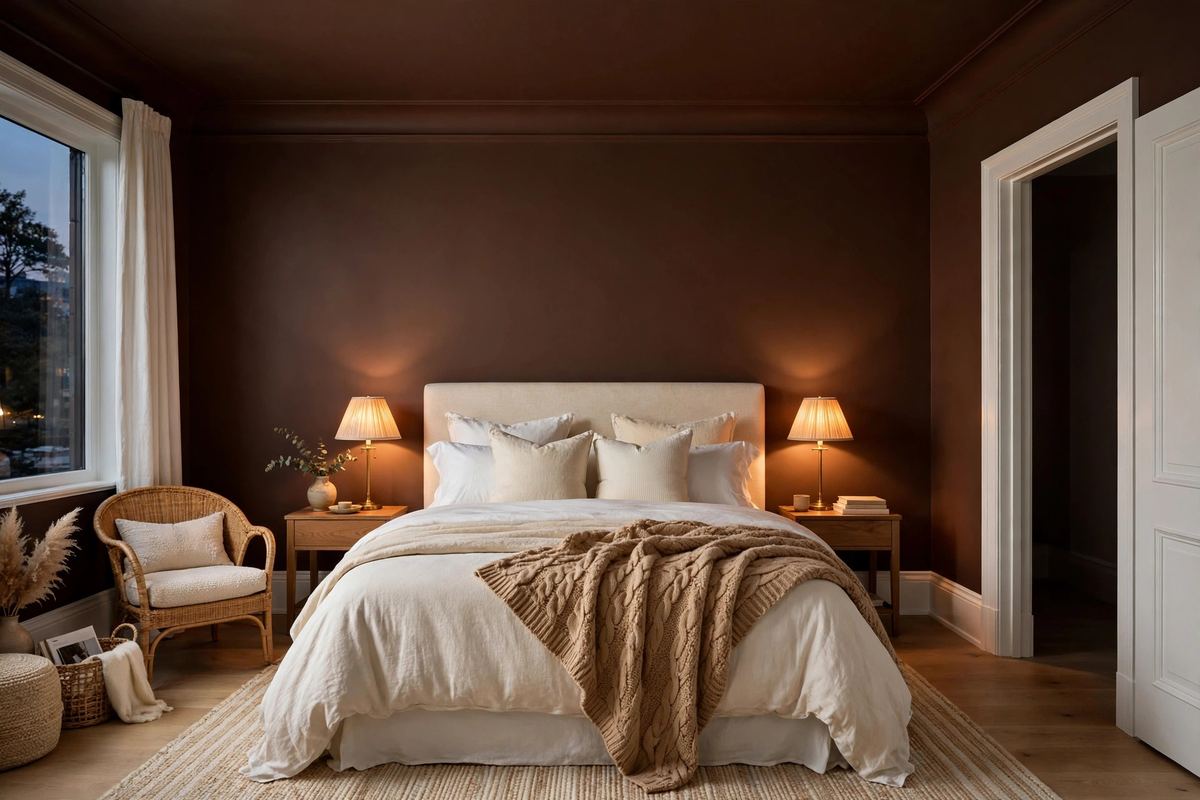
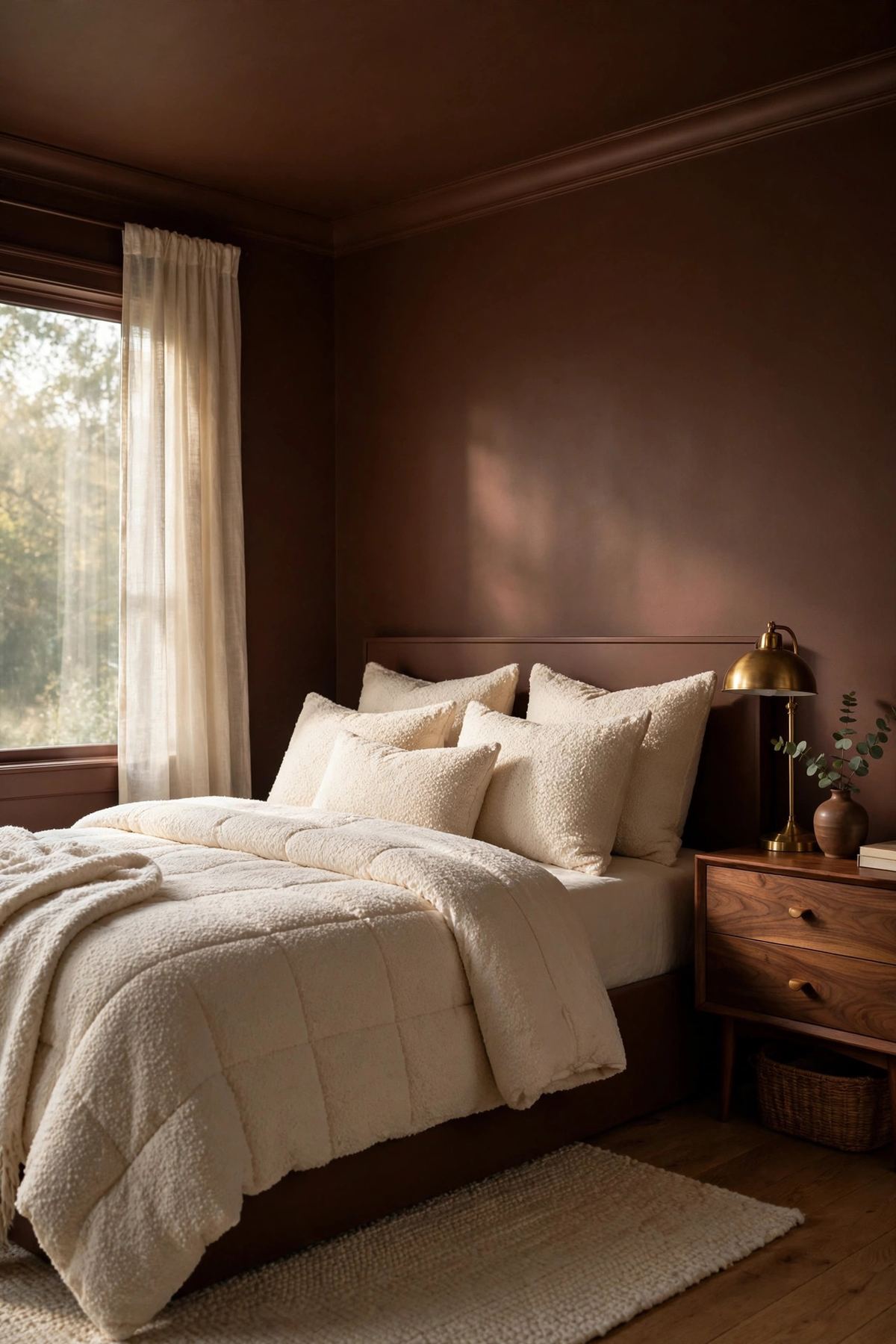
Your ceiling has three good options. Paint it warm white to match the trim for a classic, lifted look. Go one step softer with a pale tint of the wall color for a gentle transition. Or commit to the full color-drench: walls, trim, and ceiling all in the same chocolate, with satin on the trim and matte on the walls so the surfaces still separate. Drenching blurs the edges of the room, makes the ceiling feel higher, and produces the ultimate cocoon — it is the look in the photo above, and it is far more calming than cave-like in person.
Have stained wood trim or doors? Keep them. Walnut and medium oak against chocolate walls is a tonal, restful combination that needs no paint at all.
Bedding, Lighting, and Decor Pairings
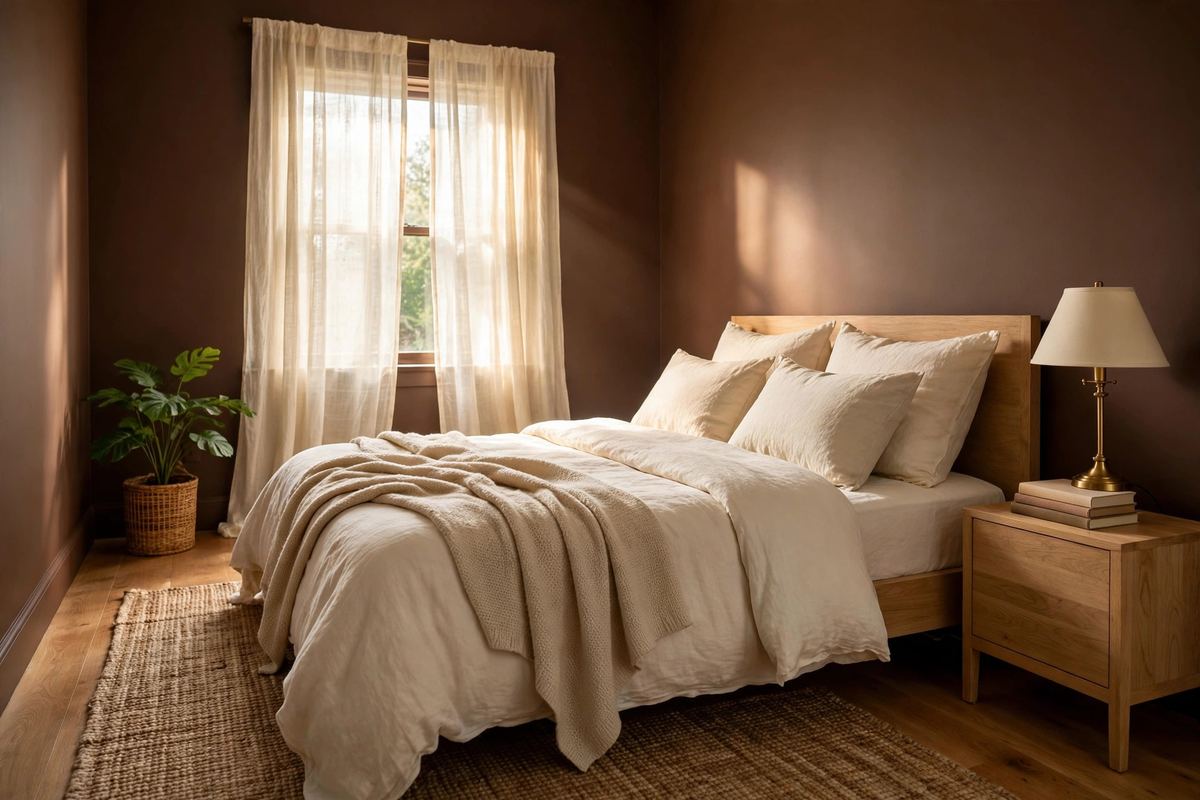
Here is the rule that keeps chocolate walls calm instead of cave-like: everything large and soft in the room should be light. Washed cream or ivory linen bedding is the non-negotiable — the pale bed against dark walls is the contrast the whole look hangs on. Layer an oatmeal or camel throw for a tonal middle note, then pick ONE accent color for the pillows. Sage green brings out brown's earthy side; dusty terracotta echoes its warmth. Both look like they were always meant to be there.
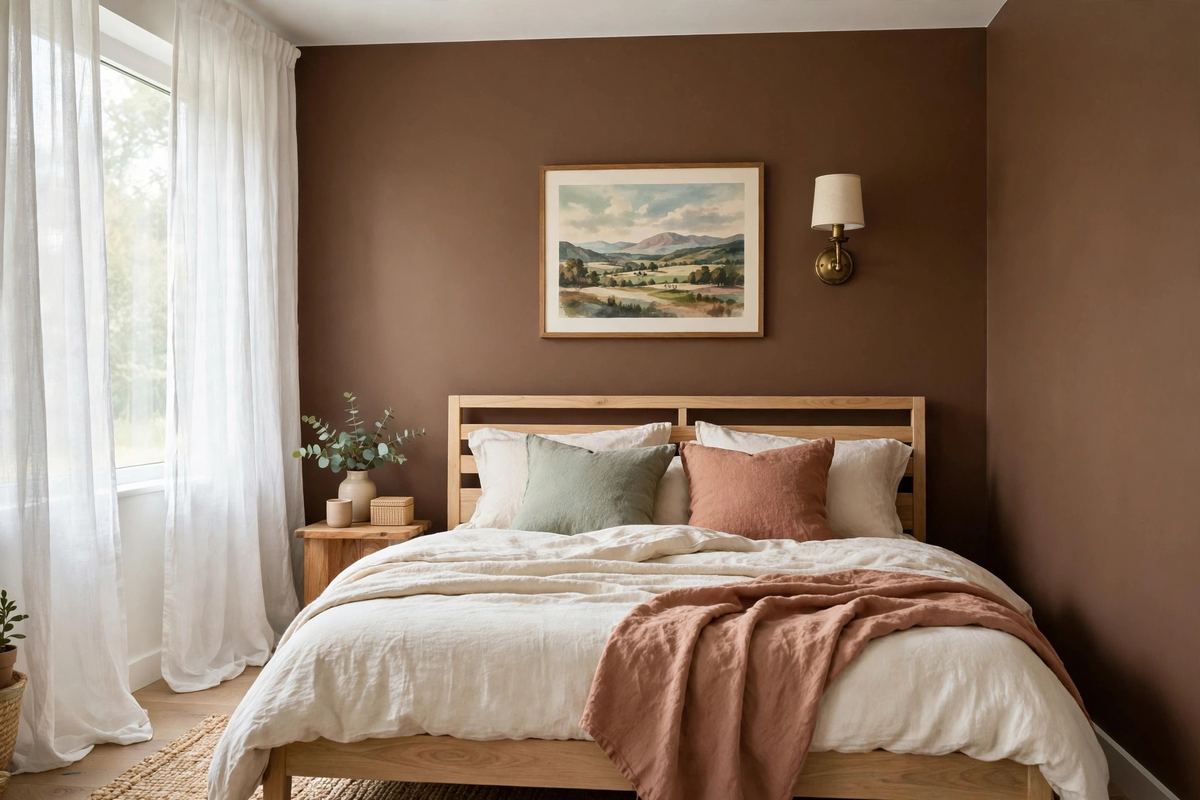
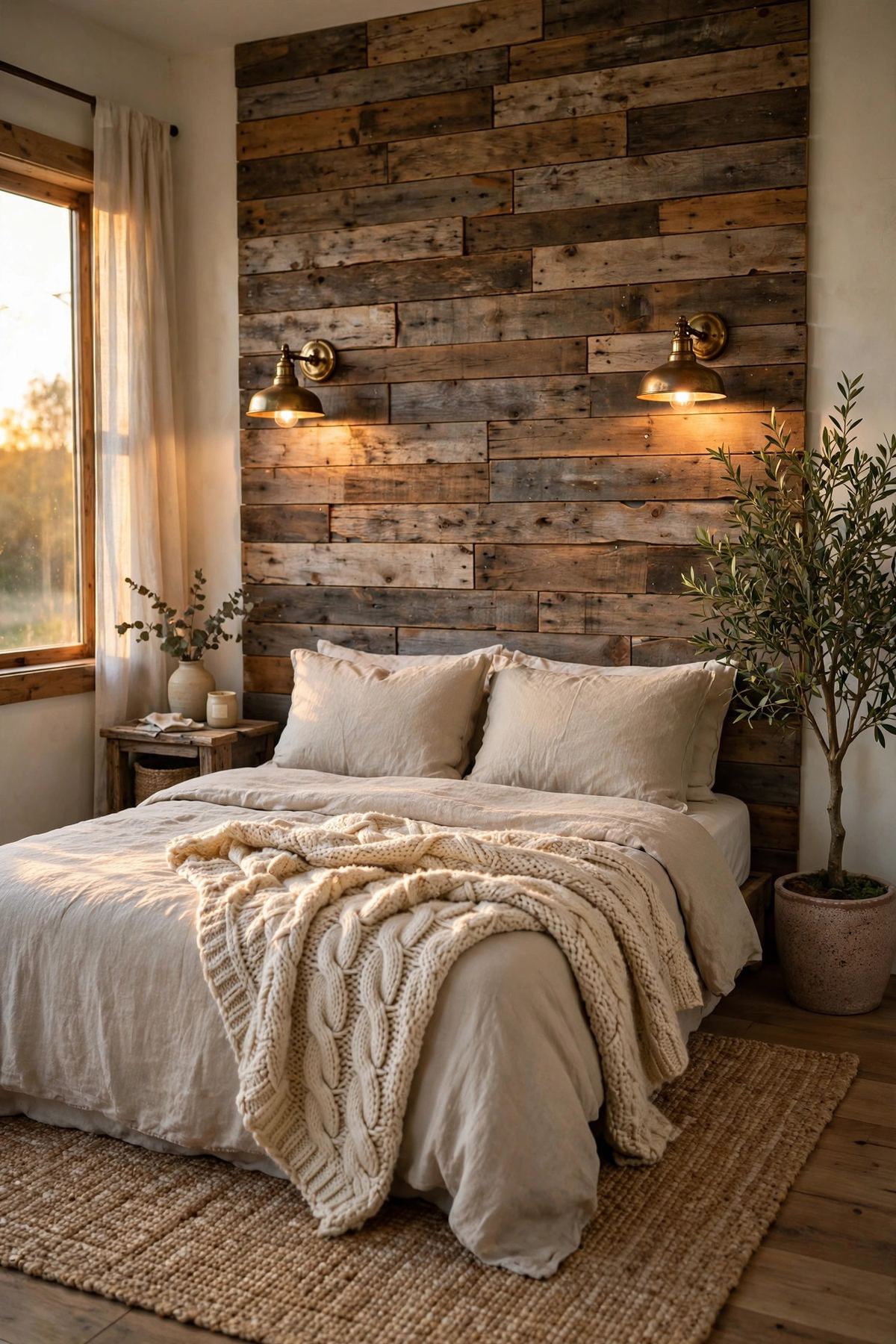
Lighting does the second half of the job. Dark walls absorb light, so plan layers: two bedside lamps minimum, warm 2700K bulbs everywhere, and a dimmer if you can. A mirror opposite the window doubles your daylight, and a light-toned rug — jute, cream wool, anything pale underfoot — stops the floor from joining the walls in darkness. For metals, brass and aged bronze glow against chocolate; matte black adds crisp definition. And if you love the warmth but want one wall in texture instead of paint, a reclaimed wood accent wall behind the bed pairs beautifully with chocolate on the remaining walls.
The Right Finish (and How Many Walls to Paint)
For the walls themselves, choose matte. On deep colors, matte reads velvety and plaster-like, adds to the cocoon mood, and hides the little bumps and seams every real wall has. Pick eggshell only if the room takes a beating from kids or pets — and if you do, keep a wet edge while you roll, because dark colors in eggshell show roller marks more easily. Dark shades also need two full coats over a gray-tinted primer for even, rich coverage; skipping the tinted primer is how chocolate ends up streaky.
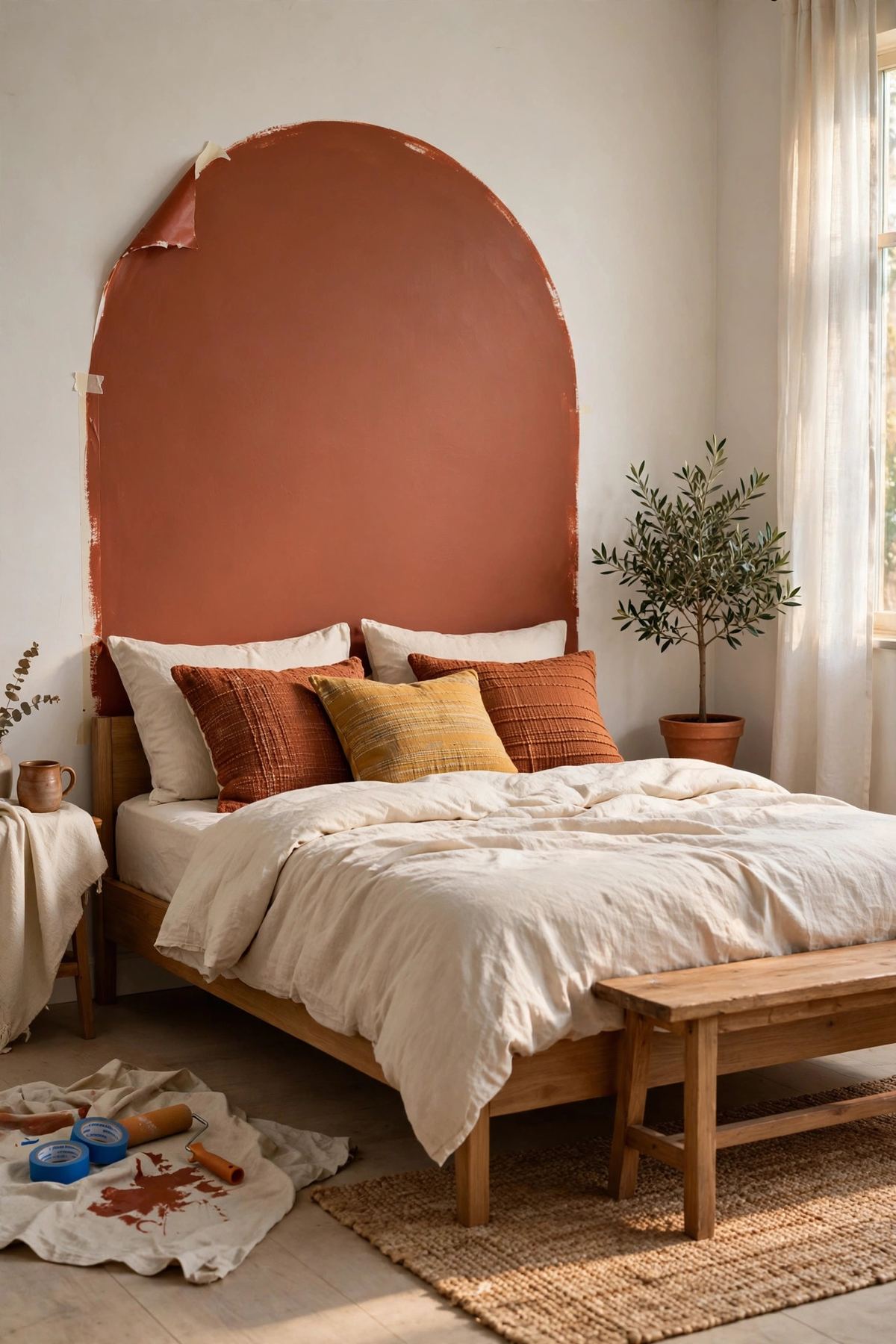
As for how much chocolate: in a small or low-light room, paint the headboard wall only and keep the other walls warm white — you get the drama with none of the risk. In an average or large bedroom, all four walls is where the calm really happens, and drenching adds the ceiling to the cocoon. Nervous about committing? Test the idea at low cost with a painted arch wall behind the bed — a soft-edged panel of chocolate that gives you the backdrop effect and can grow into a full room later. If you love the soft, chalky depth of matte brown but want a little movement in the finish, a DIY limewash accent wall is the other designer route to the same mood.
Mistakes to Avoid With Dark Brown Walls
Choosing from the chip alone. A two-inch square cannot tell you how a color behaves at wall scale in your light. The poster-board test is the whole game with dark paint.
Daylight bulbs. Cool 5000K bulbs are the fastest way to turn rich chocolate gray and muddy. Warm 2700K bulbs make the same paint look expensive.
Brown on brown on brown. A dark wood bed frame, brown bedding, and a dark rug on top of chocolate walls is how you actually get a cave. Keep bedding, curtains, and rug light, and the walls get to be the only dark note.
A stark white ceiling line. A blue-white ceiling slamming into chocolate walls looks like a mistake, not a contrast. Warm the ceiling white — or drench it — so the transition feels designed.
One overhead light. Dark rooms die in the corners without layered light. Two lamps and a mirror will do more for a chocolate bedroom than any decor you can buy.