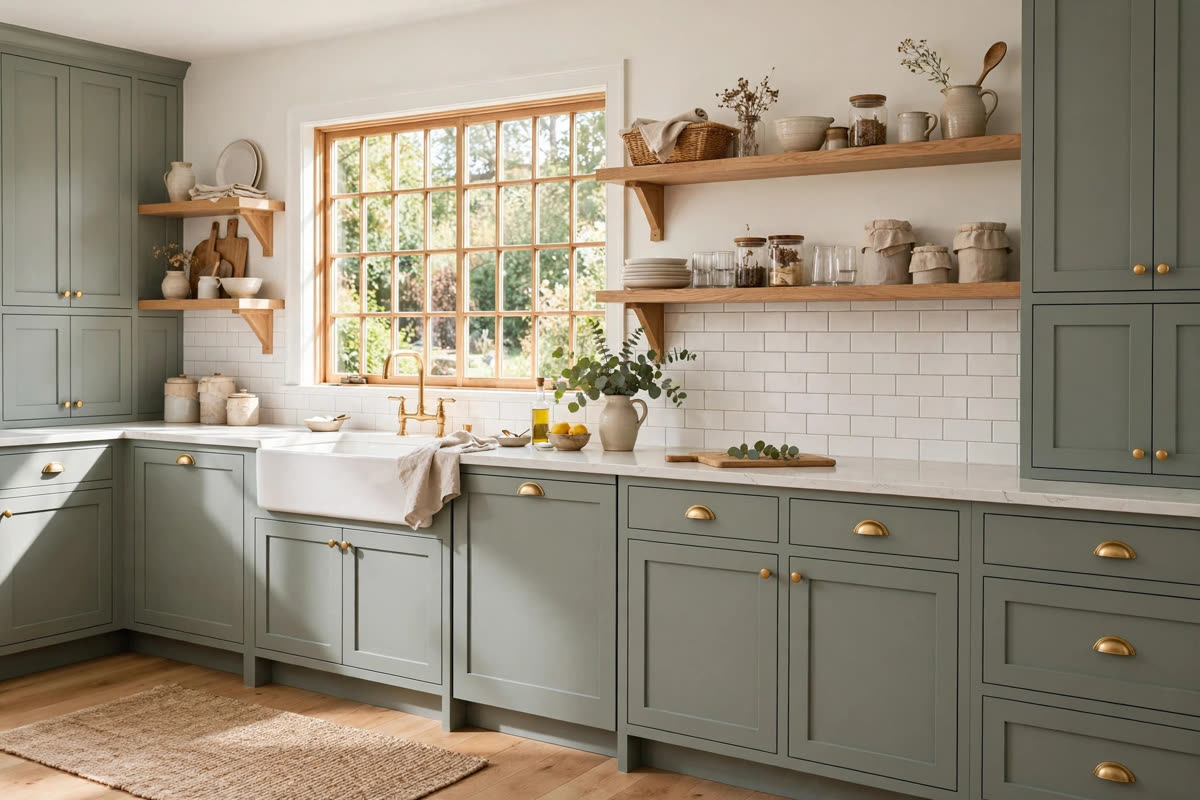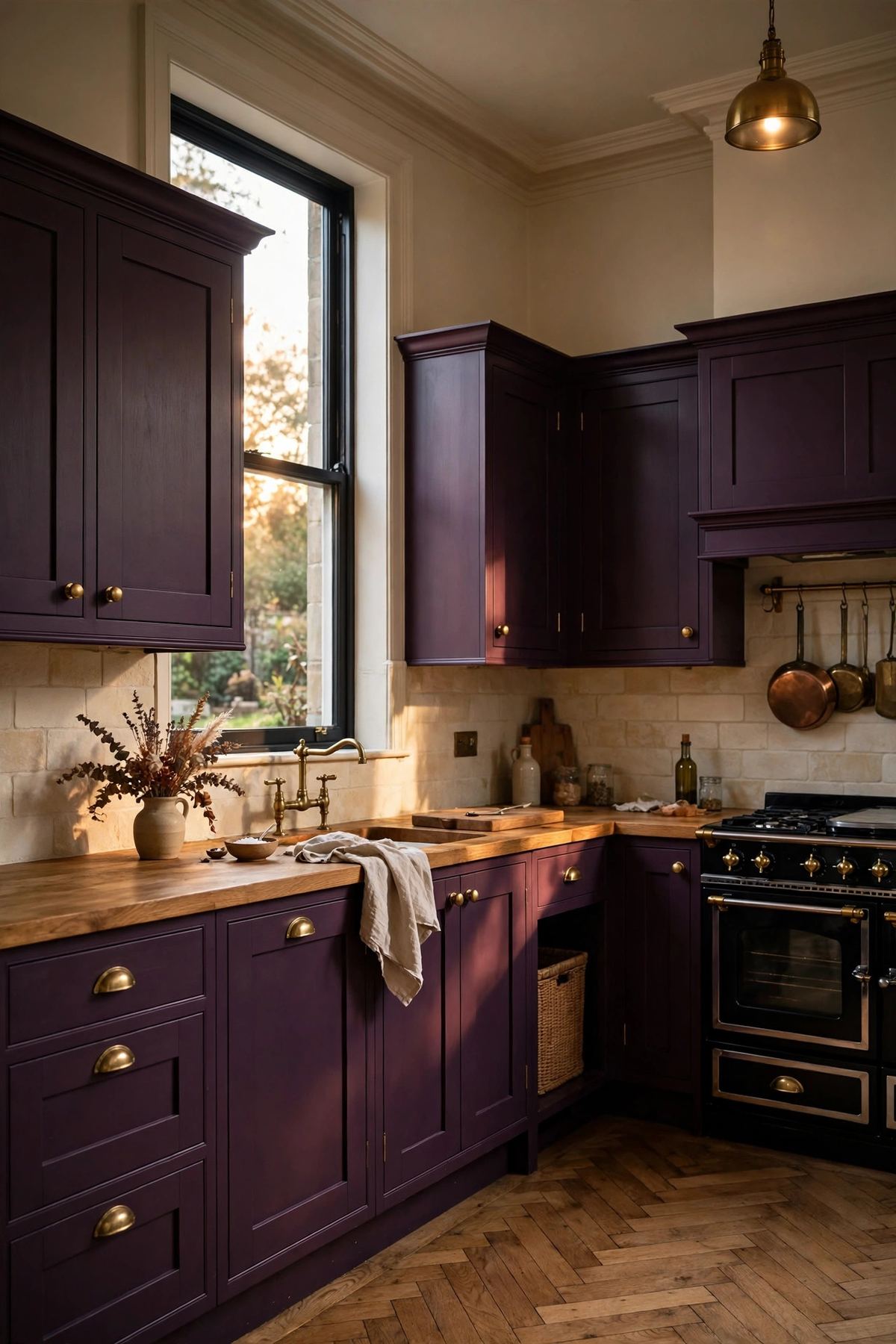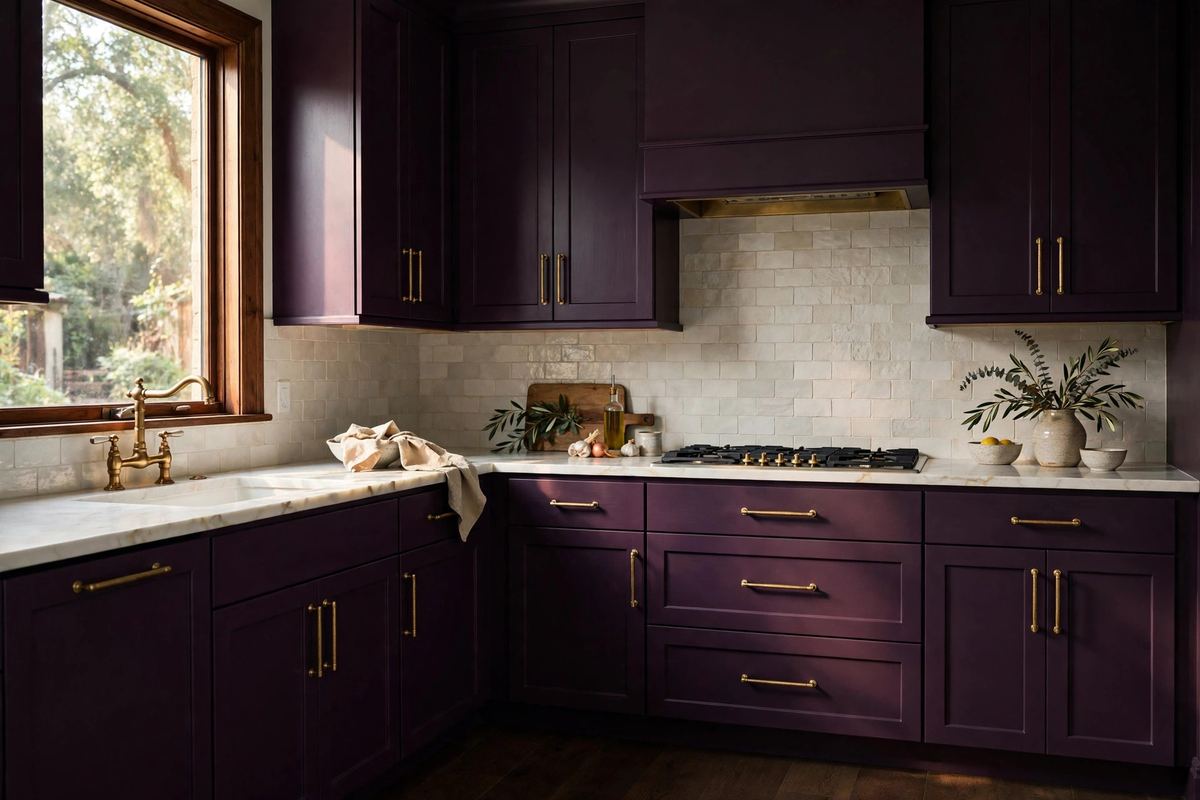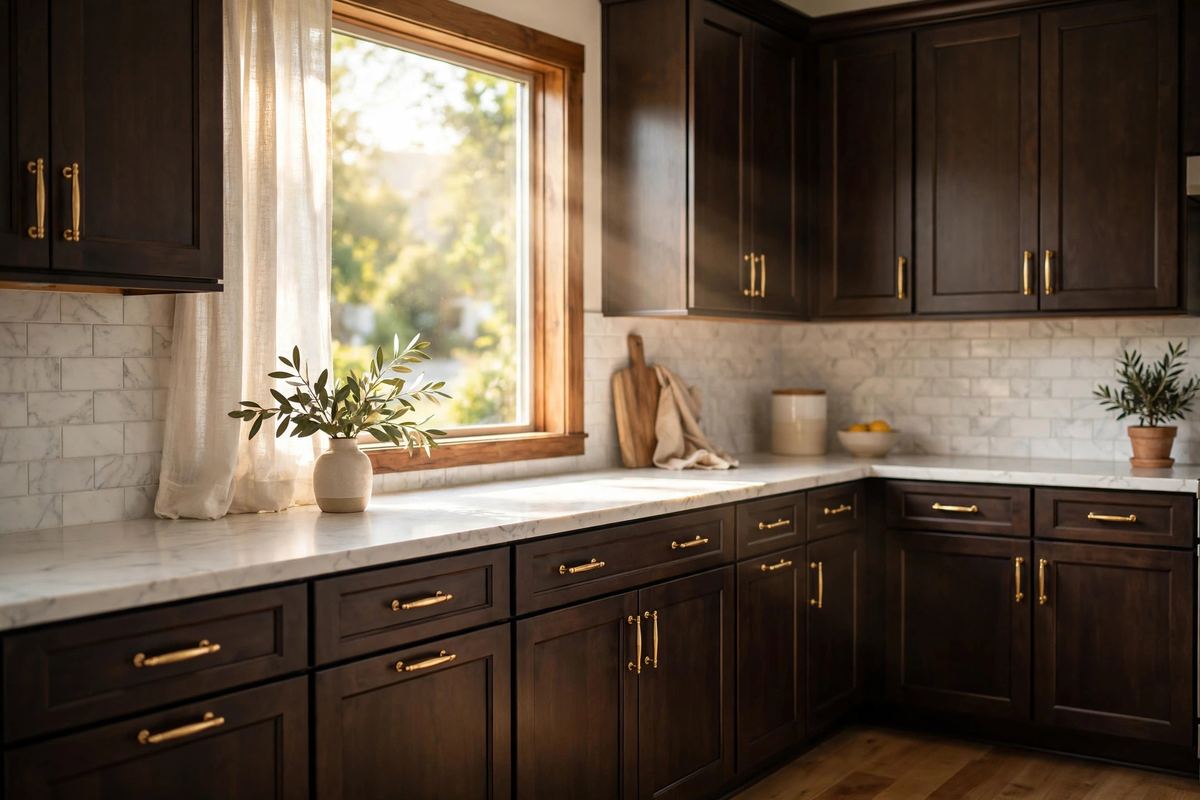
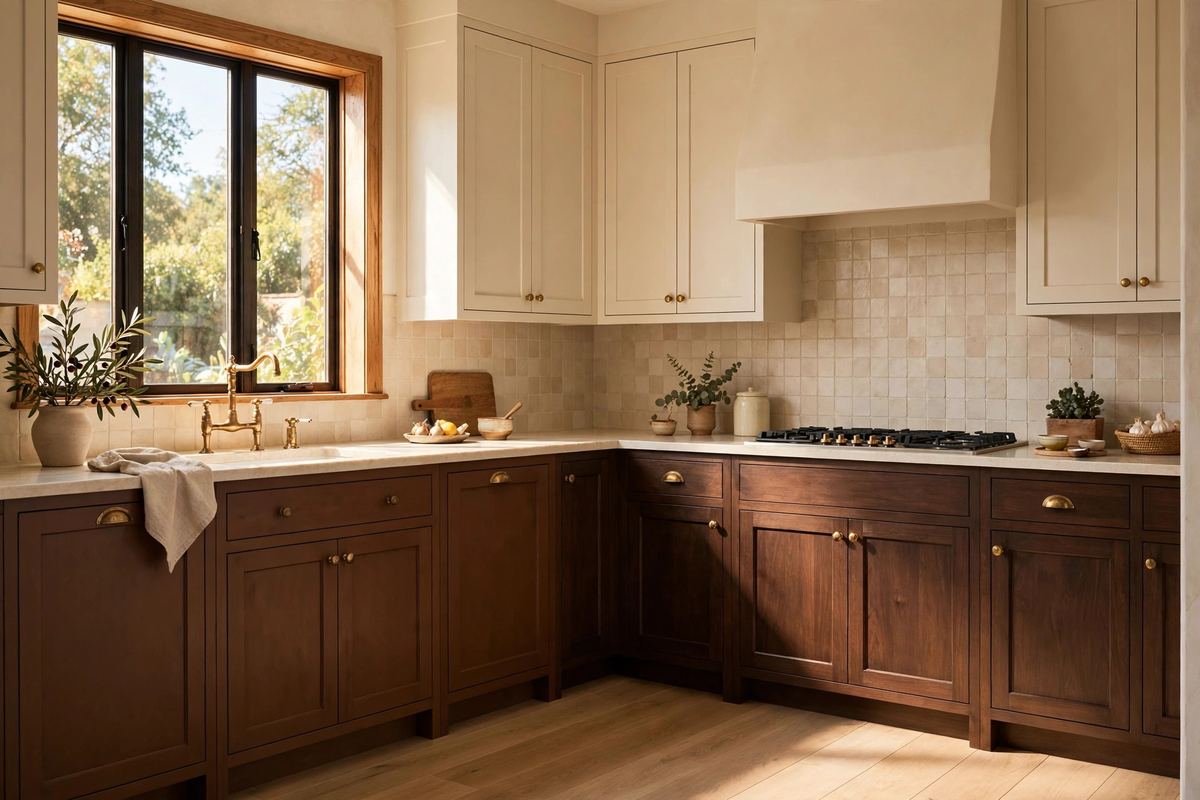
The era of the all-white kitchen is quietly ending. Warm brown kitchen cabinets, from rich walnut to deep espresso, are having one of the most convincing comebacks in home decor. Designers have been predicting it for two years, and 2026 is the year brown finally went mainstream: Benjamin Moore even named an espresso-inspired shade its 2026 Color of the Year.
But let us be honest. Brown has a reputation problem. Mention brown cabinets and half of us picture the orange-tinted honey oak of the early 2000s. The modern version is nothing like that. Today’s brown is deep, rich, and grounded: think walnut stain, chocolate paint, and moody cocoa tones styled with brass hardware and light stone counters. If you have been craving a kitchen that feels warm and collected instead of stark and sterile, this is your guide.
Why Brown Cabinets Are Back in 2026
Three forces brought brown back. First, the all-white kitchen finally wore out its welcome. After a decade of gray and white, people want kitchens with warmth and character. Second, the organic modern look, natural materials, earthy palettes, and handmade texture, needs a warm anchor, and brown cabinets do that job better than any other color. Third, brown is incredibly forgiving in real life: it hides fingerprints, smudges, and cooking splatter far better than white or cream.
The key difference from brown kitchens of the past is contrast. The 2000s paired warm cabinets with busy granite and warm walls, everything blending into one muddy tone. The 2026 version pairs brown cabinets with high contrast: crisp white or cream countertops, pale backsplashes, matte black or brass hardware, and plenty of light. If you are torn between brown and another moody shade, compare it with our navy kitchen cabinet makeover and aubergine kitchen cabinets guides before you decide.
The Best Warm Brown Paint Colors for Cabinets
Not all browns work on cabinets. You want shades with depth and red or amber warmth, not flat gray-browns that read as muddy. These are the warm brown paint colors designers reach for most:
- Benjamin Moore Silhouette (1496): the espresso-inspired 2026 Color of the Year. Nearly black-brown with incredible depth. Best in kitchens with good natural light and white counters.
- Benjamin Moore Whitall Brown (HC-69): a rich, warm walnut brown that reads expensive. A safe pick if you want brown without going nearly black.
- Benjamin Moore Char Brown (CW-265): a smoky cocoa with subtle gray undertones, perfect if your kitchen gets warm-toned floors you want to balance.
- Sherwin-Williams Fawn Brindle (SW 7640): a medium warm brown with real cozy energy. Great for two-tone kitchens where the lowers are brown and uppers are cream.
- Sherwin-Williams Middlebury Brown (SW 9584): a deep, moody brown that pairs beautifully with aged brass hardware.
- Farrow and Ball Mouse’s Back (No. 40): a softer, chalkier brown with a relaxed, old-house feel. Lovely in cottages and farmhouse kitchens.
Always test your brown on a large board propped against your actual cabinets. Brown shifts dramatically with light: a shade that looks perfect under showroom fluorescents can read orange or purple under your kitchen’s warm LEDs. Check it at noon and again at night before you commit.
Paint vs. Stain: Which Should You Choose?
You can get a walnut look two ways, and the right choice depends on what your cabinets look like now. Stain is the answer if your cabinets are real wood with attractive grain you want to show off. A gel stain like Minwax Espresso or Varathane Special Walnut goes over existing wood (and even over some existing finishes with light sanding) and delivers that genuine walnut glow in a weekend. Stain costs less, around $50 to $70 total, and looks undeniably natural.
Paint is the better move if your cabinets are a mix of materials, have damaged finishes, or are honey oak you want to cover completely. Cabinet-grade enamel in a walnut-toned brown gives you a smooth, opaque, custom-looking finish that stain can never achieve over mixed substrates. Paint also lets you go darker and moodier than stain, all the way to espresso and near-black. Whichever route you choose, the prep is identical: degrease, scuff-sand, and prime. Speaking of budget-friendly refreshes, a brass kitchen hardware refresh pairs perfectly with brown cabinets and takes an afternoon.
Weekend Plan: Painting Cabinets Warm Brown
This is a real weekend project for a typical 10x10 kitchen with about 20 doors and drawer fronts. Total cost: roughly $120 to $150 if you already own basics like tape and drop cloths.
Saturday: remove all doors, drawer fronts, and hardware, and label each piece with painter’s tape. Degrease everything with a TSP substitute, especially around the stove. Scuff-sand all surfaces with 120-grit sandpaper, wipe with a tack cloth, then apply one coat of stain-blocking bonding primer. A stain-blocking primer matters on previously stained wood, it stops tannins from bleeding yellow through your beautiful brown paint.
Sunday: lightly sand the primer with 220-grit, wipe clean, and apply two coats of cabinet-grade enamel in your brown shade, using a foam roller on flat areas and an angled brush on details. Thin, even coats are everything, thick paint drips and shows every flaw. Let doors cure flat for 24 hours before rehanging, and treat them gently for the first week while the enamel hardens fully. The full cure takes about 30 days, so hold off on heavy scrubbing until then.
Styling Brown Cabinets: Modern, Not Dated
Brown cabinets are only as modern as what surrounds them. These five pairings keep the look current:
- Countertops: white or cream stone, marble-look quartz, or warm butcher block. Light counters are the single most important contrast partner.
- Backsplash: handmade-look zellige tile in white or cream adds texture and craft. Avoid busy patterned tile, it fights with the cabinets.
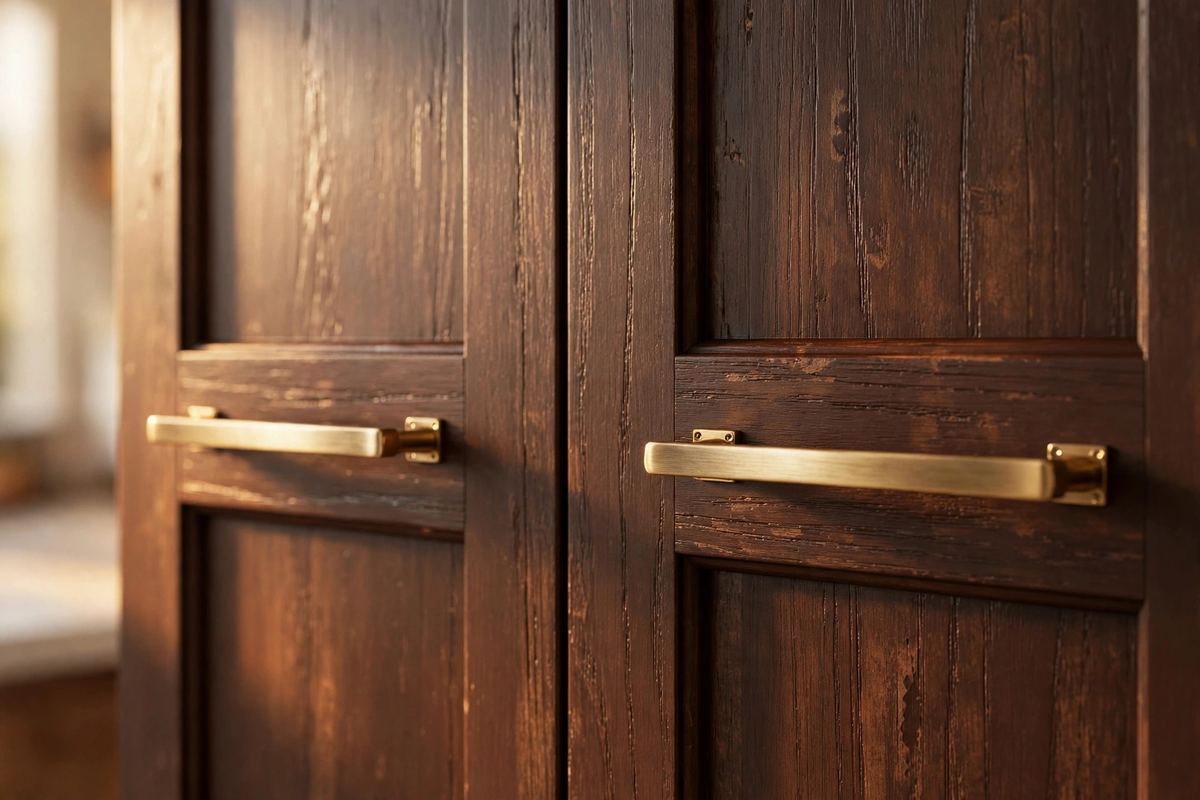
- Hardware: unlacquered brass or champagne bronze against walnut brown looks genuinely custom. Matte black works for a more graphic, contemporary feel.
- Walls: warm whites like Benjamin Moore White Dove, or a soft sage green for a cozy, organic pairing. Skip cool grays.
- Lighting: brown needs good light to shine. Warm white bulbs (2700K to 3000K), under-cabinet strips, and a statement pendant over the island keep things glowing.
Brown is showing up all over the house right now, not just in kitchens. See the same cozy palette in our warm brown bedroom paint colors roundup, or stretch your kitchen budget further with budget home makeovers under $100.
Mistakes to Avoid
Going too orange. The fastest way to ruin brown cabinets is picking a shade with heavy orange undertones. Compare your swatch against a known warm-but-safe brown like Whitall Brown. If yours looks distinctly rustier, go darker or cooler.
Matching everything. Brown cabinets plus brown counters plus brown walls plus brown floors equals a cave. Every brown surface needs a light partner nearby.
Skipping the stain-blocking primer. If you are painting over honey oak or any stained wood, a standard primer is not enough. Tannin bleed shows up weeks later as yellow or pink patches. Use a shellac-based or dedicated stain-blocking primer and you will never think about it again.
Cheap paint. Cabinet enamel is non-negotiable. Standard wall paint on cabinets chips within months. One gallon of cabinet-grade acrylic-alkyd enamel, $45 to $60, is the difference between a makeover that lasts seven years and one you redo next spring.