Here is the problem with most Christmas wreaths: they are either a thin ring of sad evergreen from the grocery store, or a $120 designer piece that looks perfect in the shop and wrong on your door. These Christmas wreath ideas fix that, because a wreath is not a decoration you buy — it is a formula you can repeat on a door, a mantel, and a window, with the same warm palette and a few swaps, for a fraction of the designer price.
This guide gives you 15 wreath looks, grouped by where they hang: five for the front door, five for the mantel, and five for windows. You will learn which evergreen holds its needles longest, when a faux wreath is actually the smarter buy, how to size a wreath to your door so it reads from the street, and how to refresh the same base year after year with a new bow and a few picks. And because a wreath rarely hangs alone, it pairs with our Christmas garland ideas, so the door, the mantel, and the staircase share one warm story.
Start With the 5 Wreath Rules
Rule one: size it to the door. A 24-inch wreath suits a standard 36-inch door, a 30-inch wreath suits a double or 8-foot door, and anything under 20 inches vanishes on a standard door. Rule two: pick one palette and hold it across every wreath in the house. This guide uses deep evergreen, cream, dried-orange amber, pinecone brown, and one accent — burgundy — because those five colors look intentional together in every room. Rule three: the bow is the outfit, the wreath is the body. Keep one good base and change the bow and picks each year, and you have a new wreath for $10 instead of $60.
Rule four: hang it where it gets seen, not where it is convenient. A door wreath belongs at eye level, centered on the door, not up near the transom where nobody looks. A mantel wreath belongs centered above the mantel, not leaning against the wall where it slides. Rule five: protect it from its two enemies, sun and heat. A south-facing door in direct sun will dry a fresh wreath in two weeks, and a wreath hung above a working fireplace dries even faster — if your mantel gets hot, hang the wreath on the wall above it or choose faux for that spot.
Fresh vs. Faux vs. Dried: Which Base to Buy
Fresh evergreen is the classic, and it smells like Christmas in a way nothing else does. Noble fir holds needles longest — three to five weeks outdoors in cold weather — followed by cedar, which is softer and fuller but sheds a little sooner. Spruce looks great for a week and then drops, so skip it unless you hang late. A fresh 24-inch wreath costs $25 to $45 at a garden center or tree lot, and it is the right buy when you love the scent and you hang after the first cold snap, not in early November.
Faux is the smart buy when you want the look every year without the annual spend. A good faux wreath costs $40 to $80, lasts five to ten seasons, and pays for itself by year two or three. The difference between a faux wreath that looks real and one that looks plastic is branch variety: real-looking faux has tips of different lengths and a full, slightly uneven silhouette, while cheap faux is thin and perfectly uniform. Fluff a faux wreath for ten minutes when it comes out of the box — spread the tips, bend a few outward — and it gains a full size of fullness. Our Thanksgiving wreath ideas use the same base logic in fall colors, if you want one wreath to carry you from November into January with a bow swap.
Dried wreaths — grapevine, dried flowers, dried oranges and cinnamon — are the third option, and they are the ones that last the longest with the least care. A grapevine base costs $8 to $15, you wire on dried elements yourself, and the finished wreath keeps for years indoors. Dried wreaths suit sheltered porches, windows, and mantels better than exposed doors, where rain will undo them. They also pair beautifully with handmade details: the dried oranges in idea 4 below are the same slices from our DIY Christmas ornament ideas, so one afternoon in a low oven stocks both the tree and the wreath.
Door Wreaths: Ideas 1 to 5
1. The classic noble fir with a burgundy velvet bow — $35 to $50. A 24-inch noble fir wreath, one wide burgundy velvet bow wired at the bottom, nothing else. This is the wreath that never looks wrong, on any door color, in any neighborhood. The velvet is doing the work here: a cheap satin bow makes a good wreath look cheap, while a $6 roll of velvet ribbon makes a grocery-store wreath look custom. Hang it on a simple over-door hook or a nail, centered at eye level, and step back to the street to check it — if you can read the bow from the sidewalk, the size is right.
2. Cedar and pinecone, no bow — $30 to $45. A full cedar wreath with six to eight natural pinecones wired in around the lower half, no bow at all. This is the look for a house that already has a lot going on at the door — a painted door, a patterned doormat, lanterns — because the wreath adds texture without competing. Cedar is softer and more feathery than fir, so it reads as lush from the street even in a smaller size. If your porch already follows our front porch Christmas decor ideas, this wreath slots straight into that lantern-and-doormat formula without changing anything else.
3. The lit wreath — $45 to $70. A pre-lit faux or fresh wreath with 50 warm-white micro lights woven through the branches, plus a simple cream ribbon. At dusk this is the wreath that stops people on the sidewalk, because it glows instead of just hanging there. Battery-operated lights with a timer — on at dusk, off after six hours — cost $8 to $12 and save you running a cord through the door frame. On a dark porch, the lit wreath does the job of a porch light and a decoration at once, which is why it is the best value on a house with poor entry lighting.
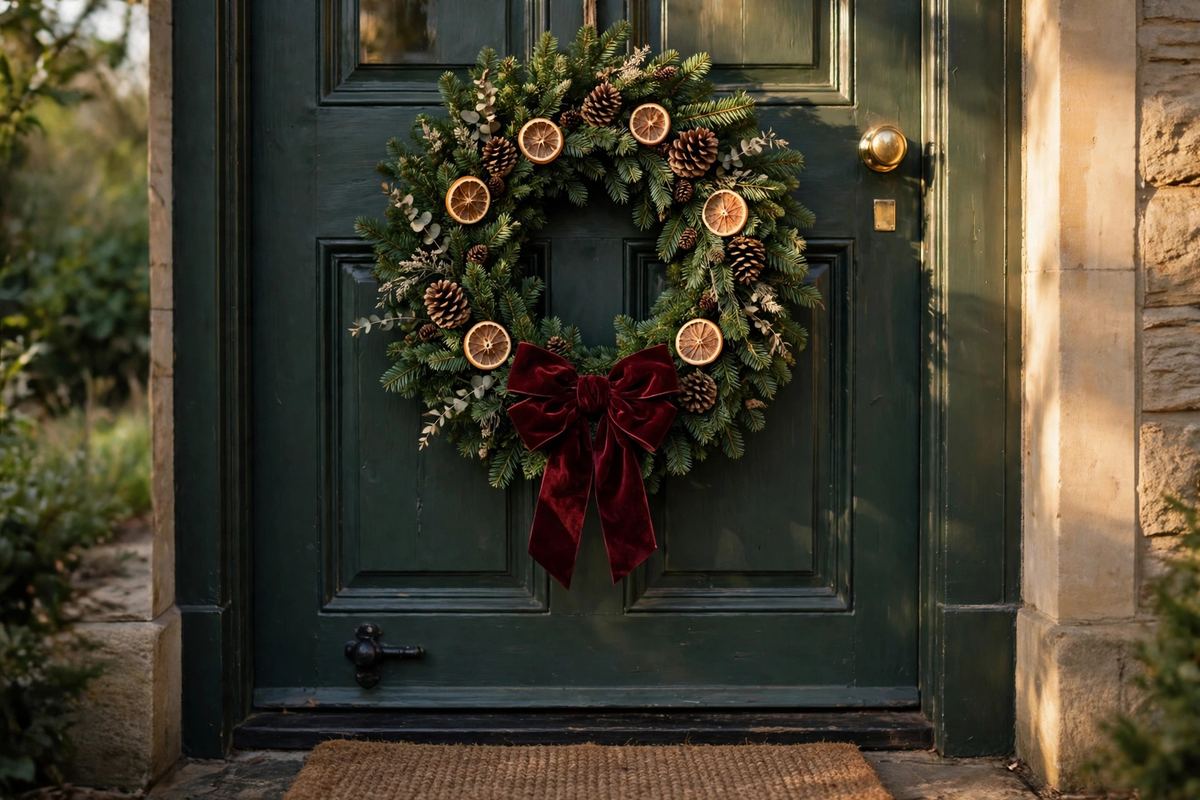
4. Dried orange and cinnamon — $20 to $30, handmade. A grapevine base, five dried orange slices, three cinnamon stick bundles, and a few sprigs of cedar, all wired on with floral wire. This is the wreath to make yourself, because every element is cheap and the whole thing takes 30 minutes: wire the oranges in a loose arc across the bottom third, tuck the cinnamon bundles between them, and finish with cedar sprigs to fill the gaps. It smells wonderful on a sheltered porch, it costs a third of a store-bought wreath, and it matches the tree ornaments in our DIY Christmas ornament ideas guide, so the door and the tree tell the same story.
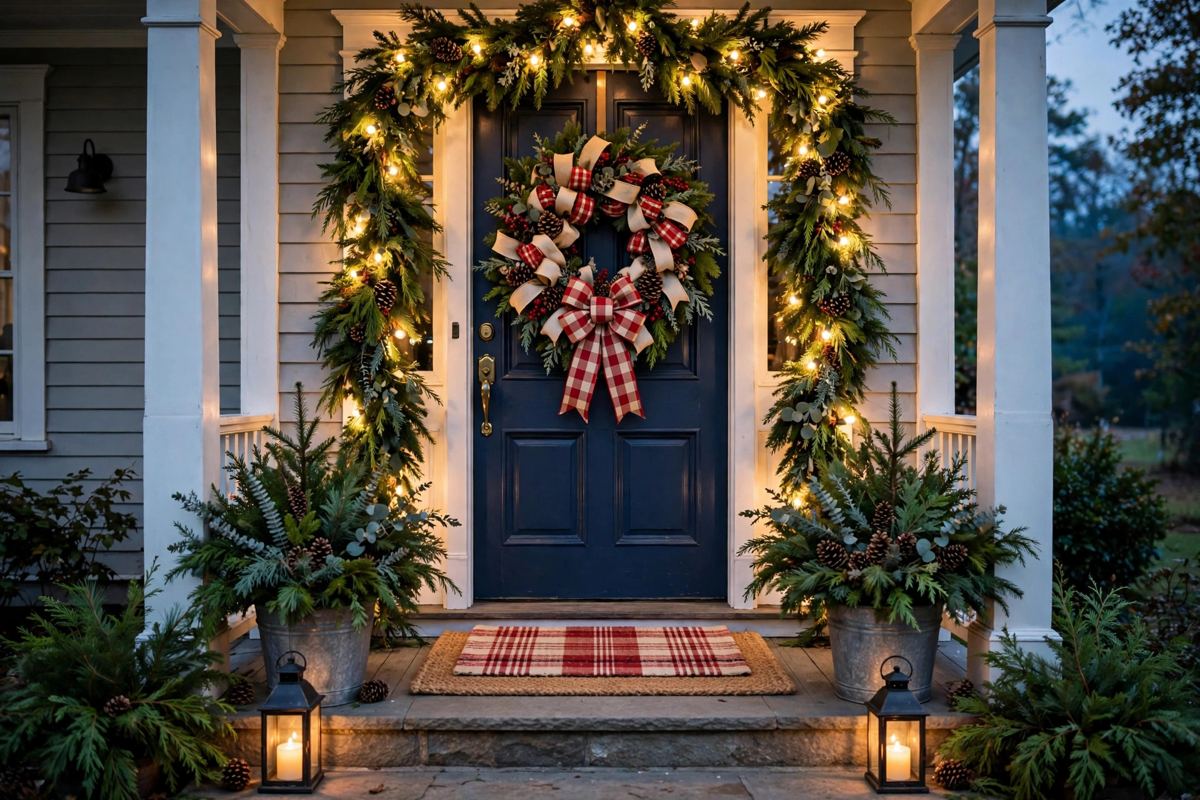
5. The oversized statement wreath — $60 to $90. A 30- to 36-inch wreath on a double door, a tall door, or a wide entry, with a large plaid or velvet bow and a few oversized pinecones. Scale is the whole idea: a normal wreath on a grand entry looks lost, while an oversized one anchors the whole facade. This is the one wreath where faux makes the most sense, because a fresh 36-inch wreath is heavy, expensive, and dries unevenly — a good faux oversized wreath, fluffed well, looks better and lasts for years. Pair it with matching planters on either side of the door and nothing else, and the entry is done.
Mantel Wreaths: Ideas 6 to 10
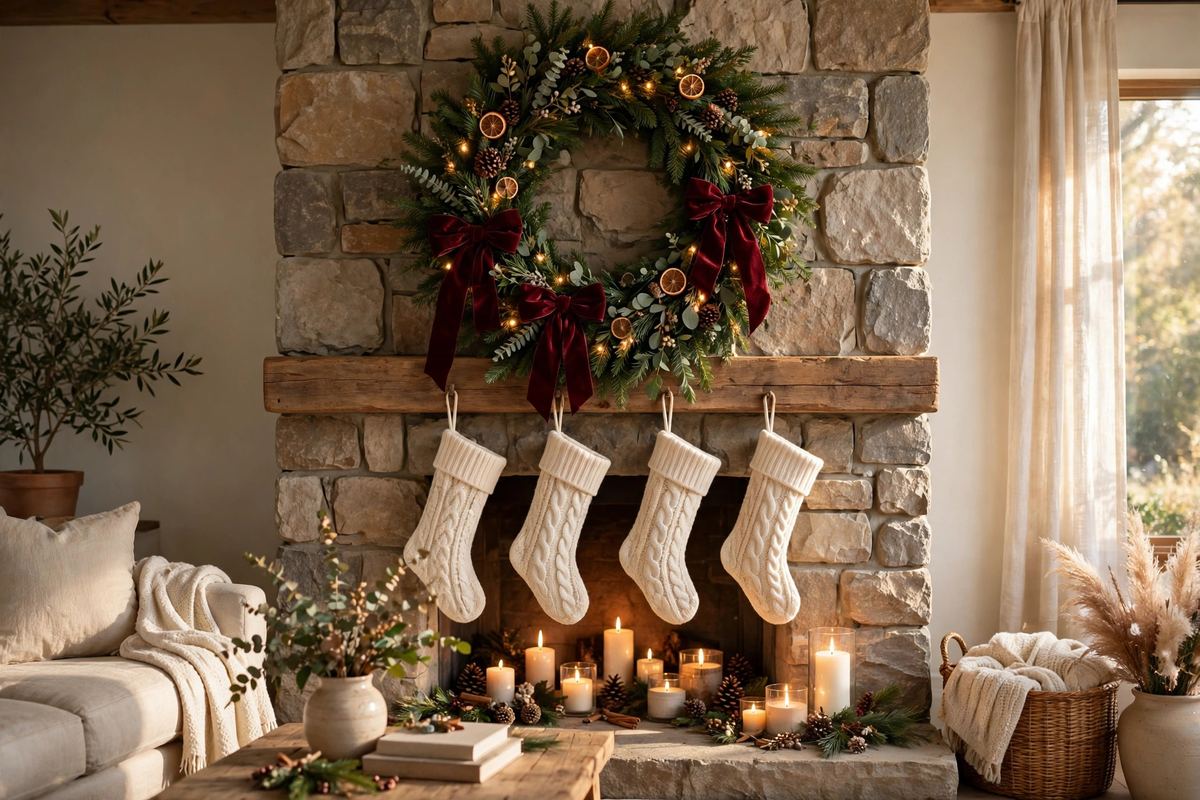
6. The wreath above the garland — $40 to $60. A 24-inch evergreen wreath hung centered above a thick mantel garland, with the garland carrying the lights and the wreath carrying the bow. This is the classic mantel formula, and it works because the two pieces do different jobs: the garland gives width and light, the wreath gives a focal point. Keep the wreath simple — fir, one bow, maybe three pinecones — because the garland already has the detail. Our Christmas garland ideas guide covers the garland half of this pairing in full, from fresh versus faux to how to hang it without nails.
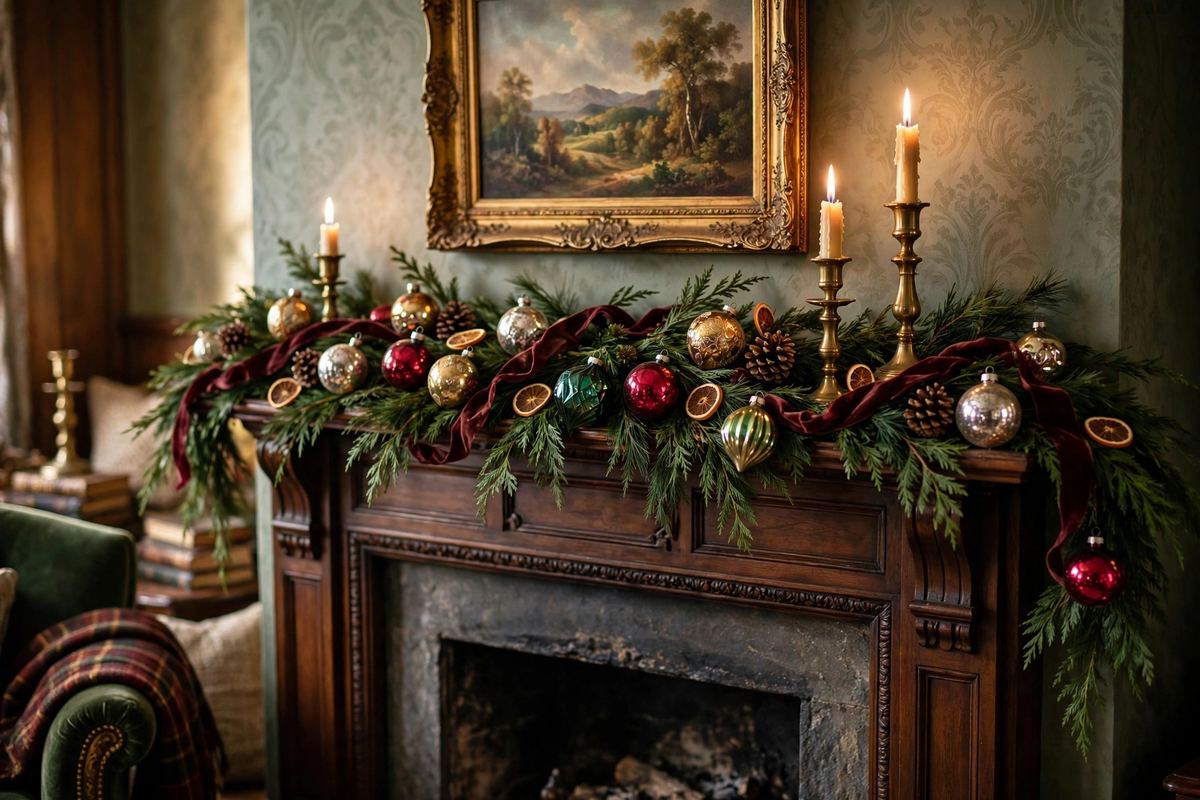
7. The vintage ornament wreath — $30 to $50. A grapevine or foam base covered in vintage-style ornaments — cream, gold, and burgundy balls in mixed sizes, glued and wired on until no base shows. This is the wreath for a mantel that already leans vintage, and it ties directly to our Victorian Christmas mantel ideas, which use the same ornament language at a larger scale. Thrift stores are the best source: a bag of mixed vintage ornaments costs $5 to $10, and a glue gun does the rest. Hang it on a small nail or a picture hook, not an adhesive strip — ornament wreaths are heavier than they look.
8. The candlelit wreath — $25 to $40. A simple evergreen wreath on the mantel wall, flanked by two tall brass or black candlesticks with cream taper candles, and nothing else on the mantel. The candles do the decorating here, and the wreath is the frame that makes them look intentional. This is the lowest-effort mantel in the guide and one of the prettiest at night, because candlelight on evergreen is the oldest Christmas trick there is. Use flameless tapers if the mantel is near curtains or if you will leave them burning while you are out of the room — real flame and dry evergreen are a combination to respect.
9. The asymmetric wreath — $35 to $55. A full evergreen wreath with all the decoration — pinecones, dried oranges, a velvet bow, a few gold picks — clustered on one side, usually the lower left, leaving the rest of the ring bare evergreen. This is the designer look, and it is easier than it looks: decorate one quadrant generously and leave the other three alone. It suits a modern or minimal mantel, where a fully decorated wreath would feel busy, and it photographs beautifully, which matters if your mantel is the backdrop for family photos all December.
10. The double wreath — $50 to $80. Two matching wreaths, one hung above the mantel and one hung on the wall opposite, or two smaller wreaths flanking a mirror above the mantel. Repetition is what makes a room feel decorated rather than just dressed, and a pair of identical wreaths is the fastest way to get it. Buy two of the same faux wreath — same size, same bow — and the room instantly looks planned. This is the idea to use when the mantel is wide or the room is large, because a single wreath can look lonely on a 6-foot mantel.
Window Wreaths: Ideas 11 to 15
11. The single window wreath on a ribbon — $15 to $25. A small 16- to 18-inch wreath hung in the center of a front window on a wide red or burgundy ribbon looped over the top of the window frame. From the street, this is the coziest look in the guide: a lit window with a wreath in the middle reads as a Christmas card. Use a suction-cup hook or the ribbon-over-the-frame method, and keep the wreath light — a small faux or grapevine wreath, not a heavy fresh one — so it stays put all season.
12. Matching wreaths on every front window — $40 to $70. The same small wreath, same ribbon, on each window across the front of the house. This is the look that makes a whole facade feel decorated with almost no effort, because repetition does the work. Buy four to six identical small faux wreaths — $8 to $12 each — and hang them all at the same height, centered in each window. From the street, the rhythm of matching wreaths is what reads as intentional, far more than any single expensive wreath would.
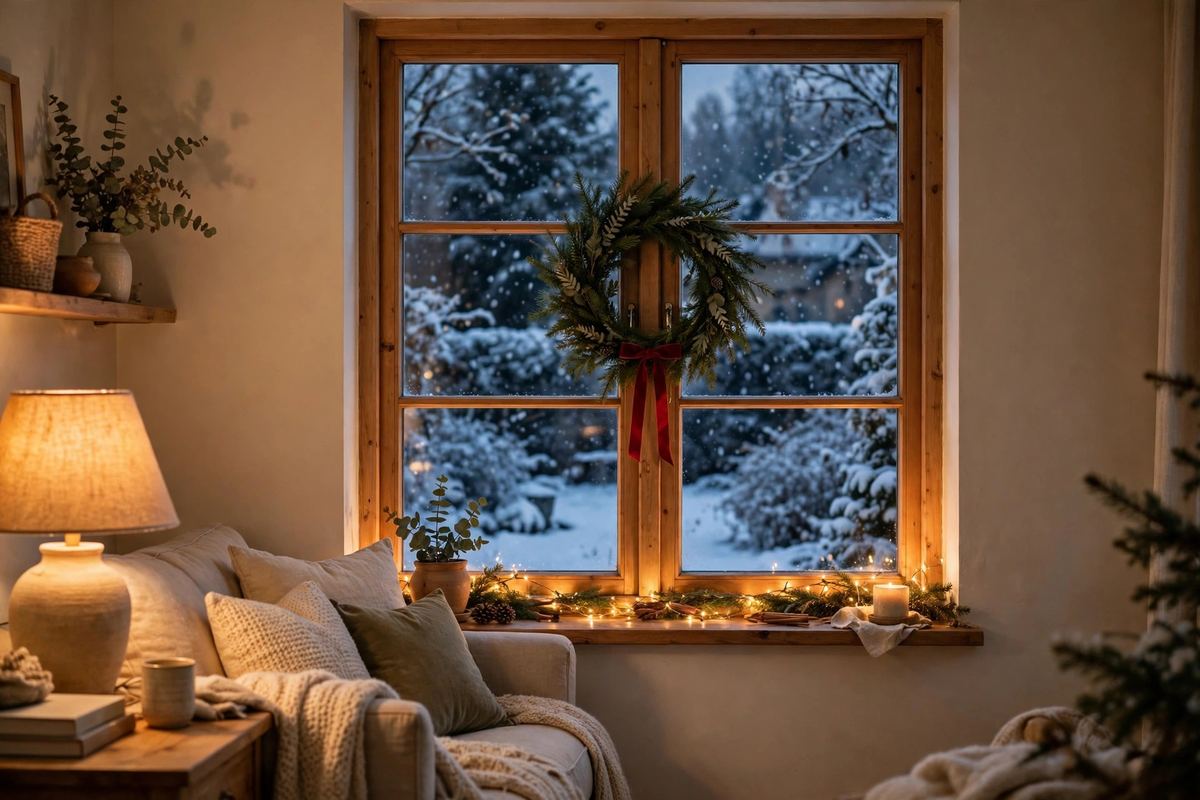
13. The wreath with fairy lights on the sill — $25 to $40. A small wreath in the window plus a string of warm fairy lights along the sill, and a couple of candles or a small lantern on the sill beside it. This is the evening look: from outside, the window glows, and the wreath is silhouetted in the middle of it. Battery fairy lights with a timer cost $6 to $10 and keep the sill cord-free. Keep the sill styling to three things at most — lights, wreath, one candle — because a crowded sill blocks the light and hides the wreath.
14. Mini wreaths on kitchen and bedroom windows — $20 to $35. Small 12-inch wreaths, one per window, in the rooms you actually live in — the kitchen window above the sink, the bedroom window, the window by the dining table. These are for you, not the street: you see them while you wash dishes and eat breakfast, and they make ordinary December mornings feel like Christmas. Our Christmas kitchen decor ideas guide pairs a mini wreath above the sink with garland on the open shelves, so the kitchen gets the same warm treatment as the front of the house.
15. The wreath on the mirror — $20 to $30. A small evergreen wreath hung on a hallway or entry mirror, on a ribbon, so it doubles in the reflection. This is the trick for a house with no good mantel or a small entry: the mirror gives you a focal point for free, and the wreath doubles visually. Hang it slightly above center on the mirror, keep the ribbon short so the wreath does not slide, and use a suction hook on the mirror glass or a ribbon over the top of the frame. It is the last wreath in the guide and the easiest to add, because it needs no nail and no new purchase if you already have a spare small wreath.
Hanging, Sizing and Hardware
For doors, an over-door wreath hanger costs $5 to $10 and needs no holes, but check that it clears your door's weather stripping — a hanger that is too thick stops the door from closing properly. A nail or a Command-style hook rated for the wreath's weight is the cleaner option on a painted door, and a suction-cup hook is the answer for glass doors and windows. For mantels, a small nail or picture hook in the wall above the mantel holds any wreath safely; adhesive strips fail on textured walls and on cold glass, so do not trust them with a heavy ornament wreath.
On size, the rule is simple: the wreath should fill about two-thirds of the door's width, and it should hang at eye level, centered. On a mantel, the wreath should be narrower than the mantel itself — a 24-inch wreath on a 48-inch mantel leaves room for stockings and candles on either side, which is exactly the balance you want. On a window, the wreath should be about half the window's width, so it reads as a centerpiece rather than a blockage. And always step back after hanging: a wreath that looks right from two feet away can look lost from the street, and the street is where the door wreath earns its keep.
The One-Weekend Plan and Real Costs
Saturday morning, buy or make your bases: one 24-inch fresh or faux wreath for the door, one for the mantel, and two to four small wreaths for the windows. Saturday afternoon, hang the door wreath first, then the mantel wreath, then the windows, stepping back to the street after each one to check the scale. Sunday, make the dried-orange wreath if you are making one, swap bows until the palette matches across all three spots, and add the fairy lights to the window sills at dusk so you can see the evening effect before you call it done.
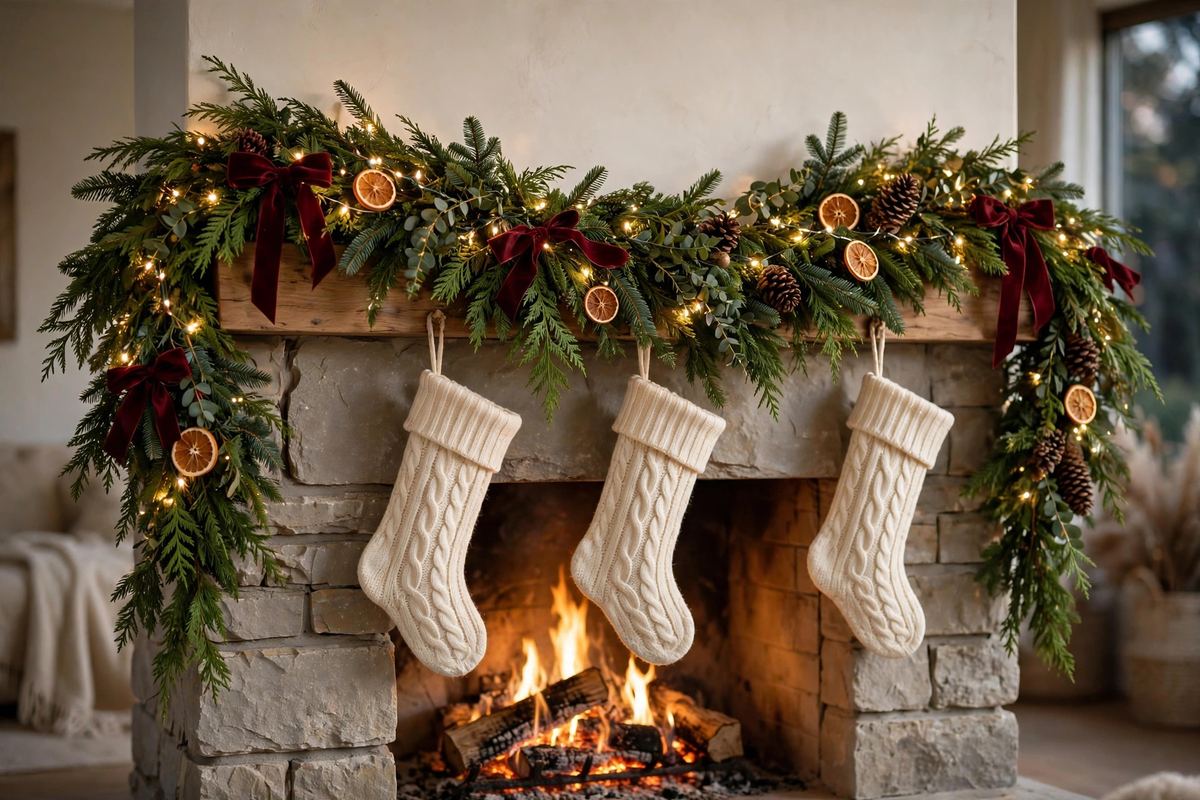
On cost, decorating a door, a mantel, and two windows with bought wreaths runs about $90 to $160: a door wreath $35 to $50, a mantel wreath $40 to $60, two small window wreaths $15 to $25 each, plus ribbon and hooks $10 to $15. Making the dried-orange wreath and reusing a faux base you already own cuts that to $40 to $60, and because a good faux wreath lasts five to ten seasons, the second year costs almost nothing — just a new bow. For the stockings that hang under the mantel wreath, our Christmas stocking ideas guide keeps the same burgundy-and-cream palette, so the whole mantel wall matches.
When the season ends, store faux wreaths in their original box or a wreath bag, hung rather than stacked, so the branches keep their shape. Fresh wreaths go to compost, and the bow and picks come off first and go back in the ribbon box for next year. Label the box with the year and the room — door, mantel, window — and next December you will hang everything in half the time, because the decisions are already made.
Mistakes to Avoid
- Buying too small. A wreath that looks generous in the store looks small on a door. Go one size up from your first instinct, especially outdoors.
- Hanging fresh wreaths too early. A fresh wreath hung in early November will be dropping needles by Christmas. Wait for the first cold snap.
- Putting a fresh wreath above a hot fireplace. Heat dries evergreen fast. Use faux above a working fireplace, or hang the wreath on the wall above the mantel shelf.
- Trusting adhesive hooks with heavy wreaths. Ornament wreaths and large fresh wreaths need a nail, a hook, or an over-door hanger rated for the weight.
- Mixing palettes across rooms. A burgundy door wreath, a silver mantel wreath, and a plaid window wreath in one house look like three different houses. One palette, everywhere.
- Forgetting the back of a window wreath. Window wreaths are seen from both sides. Tidy the wire and ribbon on the back, or the street view gives the secret away.
- Leaving the bow from last year on out of habit. A faded, crushed bow ruins a good wreath. A new $6 ribbon is the cheapest refresh in Christmas decorating.